Andrea Ghez
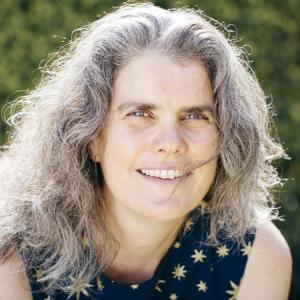
Andrea Ghez is one of the world’s leading experts in observational astrophysics and was awarded the 2020 Nobel Prize in Physics for her discovery of a supermassive black hole in the Milky Way’s center.
Beyond her work, Ghez is a fierce advocate for women in science, encouraging young women to pursue their curiosity and passions in STEM despite what an otherwise male-dominated field might tell them.
“To me, it’s always been very important to encourage young women into the sciences... It’s important to have role models.”
Andrea Ghez (UCLA Physics and Astronomy)
Early Life
Andrea Ghez was born in New York City on June 16th, 1965. Her mother was the director of Weintraub Gallery, a contemporary art gallery, and her father an economist (Art Institute of Chicago). As a child, Ghez was naturally inquisitive. She possessed an affinity for puzzles of all types, finding “the idea of logic really resonated very well.” (Origins Podcast). Her parents strongly encouraged Ghez’s curiosity and pushed her to pursue math and science. Her father even bought Ghez biographies of women in STEM to read, such as Marie Curie, Amelia Earhart, and other “frontier women,” which Ghez reflects upon as “a reminder of the importance of role models.” (Origins Podcast; UC San Diego Sally Ride Science).
When Ghez learned about the moon landings between the age of four and seven, she began “thinking about the scale of the universe.” (Origins Podcast). Though the moon landings contributed to Ghez’s scientific curiosity, she is hesitant to attribute her interest in STEM to the moon landings alone. Instead, she finds that various factors contributed to her pursuit of a future in science: her curiosity across math and science as a child, encouragement from her parents, and the visibility of other women breaking barriers in STEM.
Ghez and her family moved to Chicago in 1969 when her father began a position at the University of Chicago. Ghez’s mother also began working as director of The Renaissance Society at the University, which is “one of the oldest, most renowned, and innovative contemporary art museums in the United States” (Center for Curatorial Studies, Bard College). Through these connections, Ghez attended the University of Chicago Laboratory Schools, also known as the Lab, a private N-12 school affiliated with the university. For Ghez, the school was “very intense” and preparation for college rigor was “tremendous” (Origins Podcast). Ghez thought the school was phenomenal, in part because of the very diverse community of students.
As a student at the Lab, Ghez was most inspired by a high school chemistry teacher, who was “one of the few female teachers” in Ghez’ life (Origins Podcast). When counselors at the Lab discouraged Ghez from applying to certain schools because of their rigor and reputation for not accepting women, Ghez’s chemistry teacher was a strong encourager: “What’s the worst they can do? Say no?” (Origins Podcast). Ghez applied to the Massachusetts Institute of Technology (MIT) and was accepted with no difficulty, further demonstrating the power of encouragement for young women pursuing STEM.
College, Early Career, and Nobel Prize-Winning Research
Though Ghez arrived at MIT wanting to be a math major and briefly considered chemistry, she settled on physics “as being the language and focus that did speak to me” (Origins Podcast). After earning her bachelor’s in science from MIT in 1987, she pursued her PhD from the California Institute of Technology (Caltech) because of the opportunities it allotted to her in research opportunities and career prospects (American Academy of Arts and Sciences). As Ghez believes, “Being female, people will take you more seriously if you have a degree that is considered at the top of the game.” (Origins Podcast).
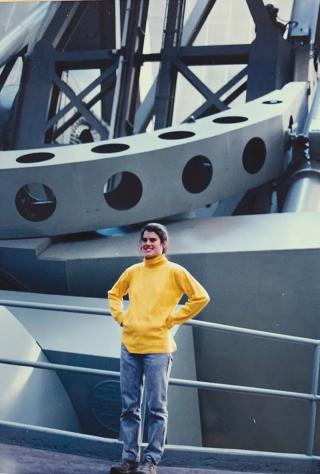
Figure 1. Andrea Ghez during her first year of graduate school at Caltech.
At Caltech, Ghez felt as though a lack of women’s visibility and representation in the faculty made it “hard to envision myself in that role. I felt like I was on the wrong playground” (UC San Diego Sally Ride Science). Despite this, she chose mentors whom she felt were “capable of supporting [her] professional development,” which made all the difference (UC San Diego Sally Ride Science). Ghez was pushed in a new academic direction when she joined a project on campus that used speckle imaging to find supermassive black holes in other galaxies. Ghez succeeded in her work, and within two years of graduating Caltech accepted a position on the faculty of University of California, Los Angeles (UCLA).
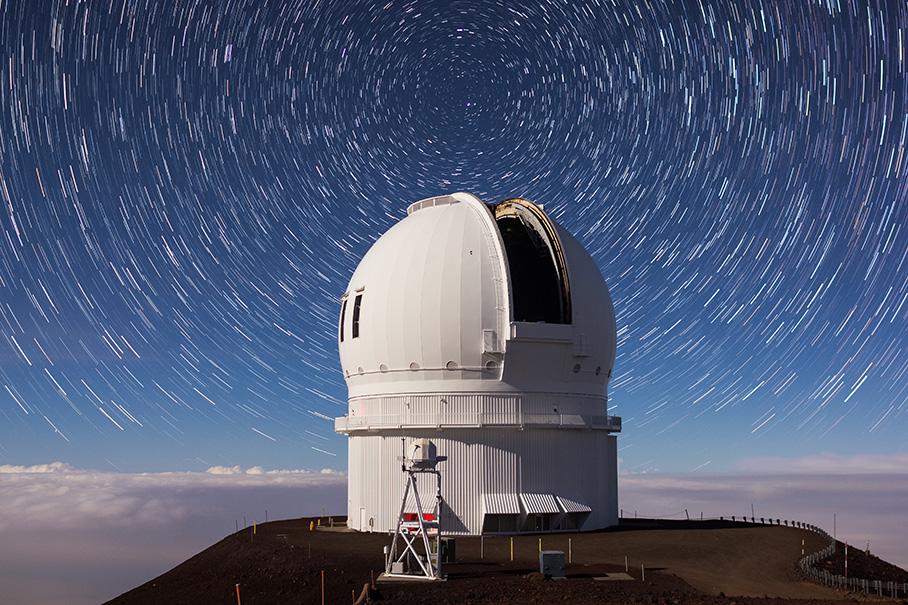
In her first year at UCLA, Ghez began her research proposal that would ultimately bring her the Nobel Prize. Ghez attributes these successes to her being hired young, her ability to find “new problems” to be solved, and having “a fair amount of risk tolerance” (Origins Podcast). At UCLA, Ghez had new access to the powerful Keck telescope located on Mauna Kea in Hawai’i (UC San Diego Sally Ride Science). This allowed for a clearer view of the stars and higher-quality imaging. With time—and many visits to Mauna Kea—Ghez and her team were able to create “movies” of the stars’ movements near the center of the galaxy, revealing that the stars were “spiraling at a blinding speed around an incredibly dense object” (UC San Diego Sally Ride Science). This is incredible evidence that there is a supermassive black hole located at the center of the Milky Way.
Her early work at UCLA won her the Crafoord Prize in Physics in 2005 from the Royal Swedish Academy of Science. She was the first woman to receive a Crafoord prize in any field (American Academy of Arts and Sciences). Ghez also received the Bakerian Medal from the Royal Society of London and a MacArthur Fellowship for her work. Most notably, Ghez was awarded the Nobel Prize in 2020 for her discoveries. One half of the award was shared with Reinhard Genzel, another astronomer working independently on black hole discovery. The other half went to Roger Penrose. Ghez is only the fourth woman to ever receive the Nobel Prize, which Ghez connects to the importance of women’s visibility in STEM barrier-breaking: “To me, it’s always been very important to encourage young women into the sciences, so to me the Nobel Prize means an opportunity and a responsibility to encourage the next generation of scientists who are passionate about this kind of work into the field. It’s important to have role models” (UCLA Physics and Astronomy).
Recent Research and Ongoing Legacy
Today, Ghez and her group is focused on using a similar approach to discovering the supermassive black hole at the center of our galaxy to “understand the physics of gravity near a black hole and the role that black holes play in the formation and evolution of galaxies” (American Academy of Arts and Sciences). Additionally, Ghez teaches introductory courses to physics at UCLA, recognizing how this gives her “a chance to influence the thinking of people about women in sciences” (UC San Diego Sally Ride Science).
Reflecting on her life and work, Ghez explains, “At every stage, someone has always said no, you can’t do this because you’re a girl. I got very used to ignoring when people said I couldn’t do something. There were times when people didn’t believe our approaches would work. I was pretty well trained by then to believe in myself” (UCLA Physics and Astronomy). Ghez is a constant reminder of the power of representation of women in STEM and the importance of following your interests, even if they might go against a male-dominated field. As she says: “Find good science and do it” (Origins Podcast).
American Academy of Arts and Sciences. “Andrea Mia Ghez.” American Academy of Arts and Sciences, October 2025. https://www.amacad.org/person/andrea-mia-ghez.
Art Institute of Chicago. “Ghez, Suzanne – Artists Oral History Archive.” Artists Oral History Archive, June 11, 2013. https://artic.contentdm.oclc.org/digital/collection/artists/id/42/.
Center for Curatorial Studies. “Suzanne Ghez.” Bard College, n.d. https://ccs.bard.edu/people/2319-susanne-ghez.
Krauss, Lawrence, host. The Origins Podcast. “Andrea Ghez.” February 21, 2021. Podcast, 1 hour, 45 min. https://www.youtube.com/watch?v=33X4nK3dDa0.
Nobel Prize. “Andrea Ghez – Facts – 2020.” Nobel Prize, December 3, 2025. https://www.nobelprize.org/prizes/physics/2020/ghez/facts/.
UCLA Physics and Astronomy. “Andrea Ghez.” University of California, Los Angeles Physics and Astronomy, 2025. https://www.astro.ucla.edu/~ghez/index.html.
UC San Diego Sally Ride Science. “Nobel Prize winner Andrea Ghez: How a girl who loved puzzles grew up to solve a galactic mystery.” University of California San Diego, Sally Ride Science, October 2020. https://sallyridescience.ucsd.edu/how-a-girl-who-loved-puzzles-grew-up-to-solve-a-galactic-mystery/.
MLA — “Andrea Ghez.” National Women’s History Museum, 2025. Date accessed.
Chicago — “Andrea Ghez.” National Women’s History Museum. 2025. https://www.womenshistory.org/education-resources/biographies/andrea-ghez.
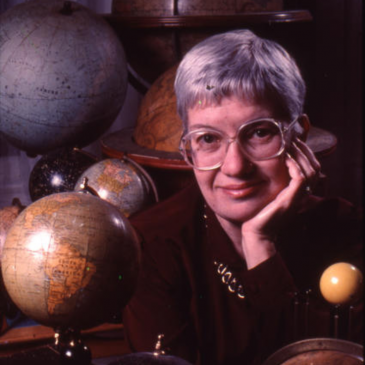
Vera Rubin
Maria Mitchell
Sally Ride