bell hooks

A groundbreaking feminist theorist, cultural critic, and writer, bell hooks profoundly shaped contemporary conversations about the intersection of race, gender, class, and love.
Raised in segregated Kentucky and educated at Stanford, University of Wisconsin, and University of California Santa Cruz, she emerged as a voice of radical Black feminism during and beyond the civil rights era.
hooks authored over 30 influential books, most notably “Ain’t I a Woman?: Black Women and Feminism” and “All about love: New Visions”.
“It is obvious that many women have appropriated feminism to serve their own ends, especially those White women who have been at the forefront of the movement; but rather than resigning myself to this appropriation I choose to re-appropriate the term ‘feminism’, to focus on the fact that to be ‘feminist’ in any authentic sense of the term is to want for all people, female and male, liberation from sexist role patterns, domination, and oppression.”
hooks, “Ain’t I A Woman: Black Women and Feminism”, 1981
Early Life and Context
Gloria Jean Watkins, who later adopted the pen name bell hooks, was born on September 25, 1952, in Hopkinsville, Kentucky, a racially segregated small town in the American South (University of Illinois Chicago). Jankowski explained that her life was “marked by dysfunction. Her father…represented the fierce oppression she would come to associate with the patriarchy.” In her memoir “Bone Black” Memories of Girlhood (1996), hooks wrote through a third-person lens about the physically abusive relationship between her parents. Although she tried to establish a close relationship with her mother, their bond remained strained.
In addition to a difficult home life, hooks faced economic hardship and entrenched segregation. Even though Brown v. Board of Education Topeka, Kansas had declared state-mandated segregation in public schools unconstitutional in 1954, she attended racially segregated public schools before transferring to an integrated school in the late 1960s. While enrolled in segregated schools, she learned from dedicated teachers, mostly Black, single women, who nurtured her confidence and self-esteem (Encyclopedia of World Biography). The transition to integrated classrooms shaped her understanding of educational inequality and later informed her critique of traditional teaching practices. These experiences became central to her scholarship on liberatory education, most notably in Teaching to Transgress: Education as the Practice of Freedom. Growing up in a racially divided America laid the foundation for her lifelong interrogation of racism, patriarchy, and class-based oppression. By the age of ten, hooks had begun writing her own poetry and performing readings of works by Gwendolyn Brooks, Langston Hughes, and Elizabeth Barrett Browning (Poetry Foundation).
hooks found solace in poetry, church recitation, and bold defiance—what she later described as “talking back” against prevailing power structures (NMAAHC). Although she discovered sanctuary in writing, many, including her own family, did not support her ambitions. Family members believed that women were “better suited for a more traditional role” (Jankowski , 2019). Rebelling against these expectations, hooks adopted her great-grandmother’s name, “creating another self that was linked to female ancestors who were defiant in their need to achieve speech,” (Jankowski , 2019). Regarding her name selection, hooks (2014) wrote,
“I was a young girl buying bubble gum at the corner store when I first ‘really’ heard the full name Bell Hooks: I had just ‘talked back’ to a grown person. Even now I can recall the surprised look, the mocking tones that informed me I must be kin to Bell Hooks—a sharp-tongued woman, a woman who spoke her mind, a woman who was not afraid to talk back. I claimed this legacy of defiance, of will, of courage, affirming my link to female ancestors who were bold and daring in their speech. Unlike my bold and daring mother and grandmother, who were not supportive of talking back, even though they were assertive and powerful in their speech, Bell Hooks, as I discovered, claimed, and invented her, was my ally, my support” (p. 127).
The choice to write her name without capital letters was made by hooks so that people would pay more attention to her ideas than to her name.
Education and Formation of a Scholar
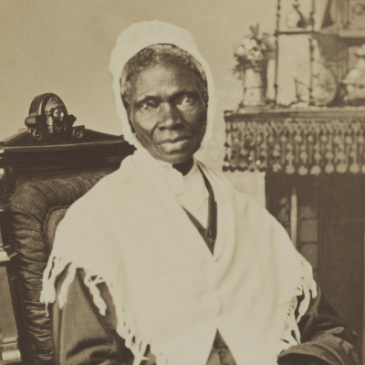
hooks began writing her first full-length book, Ain’t I a Women: Black Women and Feminism, (inspired by Sojourner Truth’s speech) at the age of 19 (Britannica). Two years later, in 1973, she earned her B.A. in English from Stanford University. At that time, the United States grappled with the aftermath of the civil rights movement. Although landmark laws like the Civil Rights Act (1964) and Voting Rights Act (1965) had passed, racial segregation and discrimination persisted in schools, housing, and employment. The early 1970s were also marked by debates over busing to integrate schools and efforts to enforce affirmative action. These tensions created a climate of “unfinished business” around racial justice, a reality that deeply shaped hooks’ thinking.
The second-wave feminism, which began in the early 1960s, focused on issues such as workplace equality, reproductive rights, and challenging traditional gender roles. Landmark legislation like Title IX (1972) prohibited sex discrimination in education, and activists pushed for the Equal Rights Amendment. However, mainstream feminism often centered on the experiences of White, middle-class women, leaving women of color and working-class women once again marginalized, a significant oversight that hooks recognized early and made a cornerstone of her work.
Earning an M.A. in English from the University of Wisconsin–Madison in 1976 and a Ph.D. in literature from UC Santa Cruz in 1983 (Britannica). Universities began offering women’s studies programs, and scholars debated race, gender, and class in new ways. hooks used this moment to articulate an intersectional critique, arguing that liberation movements must confront all forms of oppression simultaneously.
Her later works, such as Teaching to Transgress (1994), which was heavily influenced by Paulo Freire, extended these ideas into education, calling for classrooms to become spaces of freedom rather than sites of domination (EBSCO). Her first published book, a collection of poetry titled And there we wept, was released in 1978.
Pioneering Feminist Thought
Officially published four years later, in 1981, Ain’t I a Woman became a groundbreaking text in feminist theory. In this book, hooks examined how racism and sexism had been intertwined since the era of slavery, exposing deep-seated misogyny in both White and Black communities. She argued that liberation movements could not succeed if they addressed only one form of oppression, insisting that race, gender, and class must be considered together. This approach anticipated what scholars later called “intersectionality,” a concept hooks championed long before it entered mainstream discourse. hooks challenged dominant narratives in both civil rights and feminist movements by criticizing White feminist leaders for ignoring the experiences of Black women and working-class women, while also calling out sexism within Black liberation movements. Her analysis revealed how these exclusions perpetuated inequality even within movements for justice. By centering the voices of Black women, hooks reframed feminism as a struggle for collective liberation rather than a single-issue cause.
Ain’t I a Woman marked the beginning of hooks’ prolific literary career. She followed with Feminist Theory: From Margin to Center (1984), which expanded her critique of White-centered feminism and argued for a more inclusive vision that embraced marginalized voices. She introduced the idea that feminism must move beyond the “center” (dominated by privileged women) and engage those at the margins who experienced multiple forms of oppression. Her call for a transformative feminism resonated widely, influencing academic scholarship, grassroots activism, and classroom teaching.
hooks’ early writings offered a blueprint for change. She emphasized that feminist theory should be accessible, practical, and connected to everyday life. This commitment to accessibility shaped her later works, where she wrote in clear, direct language to reach audiences beyond academia. Her insistence on linking theory to lived experience became a hallmark of her intellectual legacy.
Academic Career and Public Engagement
hooks began her teaching career in 1976 at the University of Southern California, where she taught English and ethnic studies (Snyder, 2022). Over the next two decades, she held positions at prestigious institutions, including UC Santa Cruz (early 1980s–mid 1980s), Yale University (1985-1988), Oberlin College (1988-1994), and City College of New York (1994-2004). In 1994, hooks earned recognition as the Distinguished Lecturer of English Literature at the City College of New York (Quintana). Her presence, at a time when few Black women were represented in elite academic circles, brought critical perspectives on race, gender, and class into classrooms that often lacked such voices.
Beyond academia, hooks extended her commitment to community building. She established Sisters of the Yam, a support collective for Black women that celebrated Black sisterhood (Britannica). This initiative reflected her belief that healing and resistance must occur both inside and outside institutional spaces. Through workshops, writings, and public lectures, hooks created spaces where Black women could affirm their identities and challenge oppressive norms.
Figure 1. John A. Powell & bell hooks: Dialogue at the Othering & Belonging Conference in 2015. Courtesy of Othering & Belonging Institute.
Expanding Conversations: Love, Buddhism, and Media
By the late 1990s, hooks shifted her focus from analyzing systems of domination to exploring possibilities for personal and social transformation. Central to this evolution was her belief that love could serve as a radical political force. In All About Love: New Visions (2000), hooks argued that American culture often misunderstands love, reducing it to sentimentality or desire rather than recognizing it as an ethic of care and responsibility. She stated that choosing love means resisting domination and creating conditions for freedom. She wrote, “When we choose to love, we choose to move against fear—against alienation and separation. The choice to love is a choice to connect—to find ourselves in the other,” (p. 93). This work marked a significant turn in feminist thought, framing love not as a private emotion but as a public practice essential to justice.
hooks also engaged deeply with spirituality, particularly Buddhism, which influenced her thinking about mindfulness, compassion, and interconnectedness. In a 2015 New York Times interview, she explained that Buddhist practice helped her “let go of attachment to outcomes” and cultivate compassion as a foundation for social justice. She connected this spiritual discipline to her lifelong commitment to loving Blackness, stating that mindfulness allowed her to resist despair and remain grounded in hope. In Belonging: A Culture of Place (2009), she echoed this sentiment.
Her cultural criticism remained sharp during this period. In Black Looks: Race and Representation (1992) and Outlaw Culture: Resisting Representations (1994), hooks examined how media perpetuates stereotypes of Black identity and reinforces systems of power. She challenged readers to develop a “critical consciousness” about popular culture, arguing that representation is never neutral but deeply tied to politics and economics. Later, in We Real Cool: Black Men and Masculinity (2004), she explored how patriarchal norms harm Black men, calling for new models of masculinity rooted in love and mutual respect.
hooks continued to write about education as a liberatory practice. After Teaching to Transgress, she published two companion books: Teaching Community: A Pedagogy of Hope (2003) and Teaching Critical Thinking: Practical Wisdom (2009). In these works, hooks deepened her call for education that integrated intellectual rigor with emotional well-being. She argued that care, vulnerability, and authenticity were essential to meaningful learning, framing teaching as a practice rooted in love and community. These books extended her earlier vision by offering practical strategies for fostering critical dialogue and inclusive classrooms. While her ideas emerged during the multicultural education debates of the late 20th century, these later texts moved beyond representation to advocate structural change in how knowledge was produced and shared, emphasizing hope, critical inquiry, and transformative relationships as the foundation of democratic education.
The bell hooks Institute and Lasting Legacy
In 2004, hooks accepted the role of Distinguished Professor in Residence at Berea College in Kentucky, a deliberate return to her roots in Appalachia. At Berea, she continued teaching and mentoring while creating spaces for dialogue on race, gender, and justice.
In 2014, hooks founded the bell hooks center at Berea College.
Figure 2. introduction of the bell hooks center. Courtesy of Berea College.
The Institute preserves her extensive archives, including manuscripts, photographs, and recorded lectures, and serves as a hub for scholars and activists engaging with her work. Its mission reflects hooks’ belief that ideas should remain accessible and connected to lived experience. Through exhibitions, public programs, and research initiatives, the Institute promotes her vision of love, justice, and belonging as transformative forces in society. The inaugural event, on September 7, 2015, featured a conversation between trans actress and activist, Laverne Cox, and hooks, where they discussed dismantling imperialist-White-supremacist-capitalistic-patriarchy (Berea). This was not the first time that hooks and Cox had a public dialogue. On October 13, 2014, they met for a discussion at the New School hosted by the Eugene Lang College of Liberal Arts.
Figure 3. A Public Dialogue between bell hooks & Laverne Cox hosted by Eugene Lang College of Liberal Arts. Courtesy of The New School.
hooks’ work earned numerous honors, including the American Book Award (received in 1991 for Yearning: Race, Gender, and Cultural Politics), Lila Wallace–Reader's Digest Fund Writer's Award (received in 1994), and Black Caucus of the American Library Association (BCALA) Best Poetry Award (awarded in 2013 for Appalachian Elegy: Poetry and Place).
She was inducted into the Kentucky Writers Hall of Fame in 2018, named by Time Magazine as part of 100 Women of the Year in 2020, and, posthumously, received the UC Santa Cruz Alumni Achievement Award.

Figure 4. hooks on the cover of Time Magazine. Courtesy of Time.com
hooks remained influential across generations until her passing on December 15, 2021, in Berea, Kentucky. Tributes poured in from educators, writers, and activists worldwide, underscoring her role as a guiding voice in feminist theory, cultural criticism, and social justice movements.
Significance and Influence
hooks’ enduring significance lay in her synthesis of intersectionality, pedagogy, cultural critique, and an ethic of love. She insisted that education must empower rather than dominate, that love could dismantle systems of oppression, and that feminism must challenge racism, classism, and sexism simultaneously. Her writings continued to shape feminist theory, critical race studies, and educational practice globally.
Her influence extended beyond academia. hooks’ calls for radical love resonated in contemporary movements for racial and gender justice, while her critiques of media and representation remained vital in an era of digital culture. By linking theory to everyday life, hooks made complex ideas accessible, ensuring that her work spoke not only to scholars but to anyone committed to building a more just and loving world.
 Primary Source Analysis Strategies

Style: Analyzing Primary Sources
Dialogue at the Othering & Belonging Conference in 2015.
Caption: john a. powell & bell hooks converse at the Othering & Belonging Conference in 2015
Primary source inquiry:
-
How does the exchange between hooks and powell frame “belonging” as both a personal and structural concept?
-
What language or examples do they use to connect belonging to race, gender, and systemic inequality?
-
What silences in the conversation might reflect broader tensions in social justice discourse at the time?
Style: Analyzing Books & Other Printed Texts
Ain’t I a Woman? Black Women and Feminism
Caption: hooks’ first published book, Ain’t I a Woman? Black women and feminism (1981)
Primary source inquiry:
-
How does hooks historicize the intersection of race and gender oppression, and what sources or evidence does she privilege?
-
In what ways does the book critique both mainstream feminism and Black liberation movements, and how does that dual critique shape its political intervention?
-
How does hooks’ rhetorical style (tone, structure, and use of historical narrative) invite or challenge different audiences?
Style: Analyzing Primary Sources
bell hooks and Laverne Cox in a public dialogue at The New School
Caption: A Public Dialogue between bell hooks & Laverne Cox hosted by Eugene Lang College of Liberal Arts. Courtesy of The New School
Primary source inquiry:
-
How do hooks and Cox articulate the relationship between gender identity, race, and media representation in this dialogue?
-
What strategies do they use to connect personal narrative to structural critique, and how does that interplay affect the audience’s understanding?
-
What does the dialogue reveal about evolving feminist and trans discourses in the mid-2010s, and what tensions or solidarities emerge?
bellhooksbooks. (n.d.). Retrieved November 13, 2025, from https://bellhooksbooks.com
Berea College. (n.d.). About bell hooks. The bell hooks Center. Retrieved November 13, 2025, from https://www.berea.edu/centers/the-bell-hooks-center/about-bell
Britannica Editors. (2025, September 21). Bell hooks. Encyclopedia Britannica. https://www.britannica.com/biography/bell-hooks
EBSCO Research Starters. (n.d.). Bell hooks. Retrieved November 13, 2025, from https://www.ebsco.com/research-starters/women-s-studies-and-feminism/bell-hooks
hooks, b. (2014). Talking back: Thinking feminist, thinking black (2nd ed.). Routledge. https://doi.org/10.4324/9781315743134
Jankowski, L. (2019, February 16). Bell hooks biography. ThoughtCo. https://www.thoughtco.com/bell-hooks-biography-3530371
National Museum of African American History & Culture. (n.d.). Bell hooks. Retrieved November 13, 2025, from https://nmaahc.si.edu/explore/stories/bell-hooks
Poetry Foundation. (n.d.). Bell hooks. Retrieved November 13, 2025, from https://www.poetryfoundation.org/poets/bell-hooks
Quintana, M. L. (2010, January 11). Bell hooks (Gloria Jean Watkins). BlackPast. https://blackpast.org/african-american-history/hooks-bell-gloria-jean-watkins-1952/
Snyder, N. (2022, May 17). Bell hooks: Poet, essayist, public intellectual. Literary Ladies Guide. https://www.literaryladiesguide.com/author-biography/bell-hooks-poet-essayist-public-intellectual/
TIME Staff. (2020, March 5). Bell hooks: 100 women of the year. TIME. https://time.com/5793676/bell-hooks-100-women-of-the-year/
University of Illinois Chicago. (n.d.). Bell hooks research guide. Retrieved November 13, 2025, from https://researchguides.uic.edu/bellhooks
Yancy, G., & hooks, b. (2015, December 10). Bell hooks: Buddhism, the Beats and loving Blackness. The New York Times. https://archive.nytimes.com/opinionator.blogs.nytimes.com/2015/12/10/bell-hooks-buddhism-the-beats-and-loving-blackness/
MLA — Robledo-Allen Yamamoto, Asami. “bell hooks.” National Women’s History Museum, 2025. Date accessed.
Chicago — Robledo-Allen Yamamoto, Asami. “bell hooks.” National Women’s History Museum. 2025 www.womenshistory.org/education-resources/biographies/bell-hooks
Sojourner Truth
Stacey Abrams

Ruby Bridges

This biography is sponsored in part by the Library of Congress Teaching with Primary Sources Eastern Region Program, coordinated by Waynesburg University. Content created and featured in partnership with the TPS program does not indicate an endorsement by the Library of Congress.
For further information or questions, please contact [email protected].