Cecilia Payne-Gaposchkin
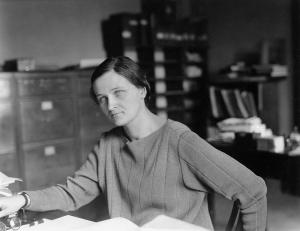
Payne-Gaposchkin revolutionized astronomy by discovering that stars are primarily composed of hydrogen and helium, fundamentally changing our understanding of the universe.
She was the first person to earn a Ph.D. in astronomy from Radcliffe College
Payne-Gaposchkin was the first woman to become a full professor at Harvard University’s Faculty of Arts and Sciences.
“Do not undertake a scientific career in quest of fame or money. There are easier and better ways to reach them. Undertake it only if nothing else will satisfy you; for nothing else is probably what you will receive. Your reward will be the widening of the horizon as you climb. And if you achieve that reward you will ask no other.”
Cecilia Payne-Gaposchkin from Cecilia Payne-Gaposchkin: An Autobiography and Other Recollections
Early Life and Education
Cecilia Helena Payne-Gaposchkin was born on May 10, 1900, in Wendover, England. Her father, Edward Payne, was a lawyer and musician who died when she was only four years old (Christ, 2023). Her mother, Emma, descended from a notable Prussian family and raised Cecilia and her two younger siblings after Edward’s death. Emma fostered her eldest daughter’s early interests in literature, music, painting, and gardening through a close and supportive relationship.
Payne-Gaposchkin began her education at a small private elementary school where she saw her first meteorite and became fascinated with astronomy. At age ten, she witnessed both the Great Daylight Comet (C/1910 A1) and Halley’s Comet—experiences that deepened her interest in celestial phenomena (Bailey, 2023). Although naturally left-handed, her teachers forced her to write with her right hand. In response, she trained herself to become ambidextrous and even learned to write upside down (iHeart, 2020, 3:46).
At age twelve, her family relocated to London, where she enrolled at St. Mary’s College in Paddington. The school emphasized classical languages and offered limited science and math instruction. Eager to expand her academic horizons, she studied botany and mathematics independently and received tutoring in German, a critical language for scientific scholarship at the time (Bailey, 2023). Later, she transferred to St. Paul’s Girls’ School, where she was finally able to take formal science courses (Christ, 2023).
Discovering Astronomy at Cambridge
In 1919, Payne-Gaposchkin earned a scholarship to Newnham College at the University of Cambridge to study natural sciences, initially focusing on biology. However, her academic path shifted after she attended a lecture by physicist Sir Arthur Eddington, who had just returned from observing a solar eclipse that offered evidence for Einstein’s general theory of relativity (Hayes, 2025). This lecture impacted her so much she shifted her academic focus from biology to astronomy (Bailey, 2023). She later described the lecture as “a complete transformation of my world picture,” recalling, “When I returned to my room I found that I could write down the lecture word for word (American Museum of Natural History, n.d.).
Astronomy, treated as a subset of mathematics at Cambridge, did not offer a direct course of study. Payne-Gaposchkin continued her coursework in biology and chemistry while attending every astronomy lecture available. Despite her academic success, she could not receive a degree due to her gender. Cambridge did not grant degrees to women until 1948 (Christ, 2023). Seeking greater opportunities for women in science, she accepted a fellowship to study at the Harvard College Observatory in Cambridge, Massachusetts, and immigrated to the United States in 1923 (Gregersen, 2025).
Breaking Barriers at Harvard
Payne-Gaposchkin enrolled at Radcliffe College, Harvard’s affiliated women’s institution, since Harvard itself did not confer doctoral degrees to women. Under the mentorship of Harlow Shapley, director of the Harvard College Observatory, she conducted pioneering research in stellar spectroscopy (Gregersen, 2025). While in Massachusetts, she formed lasting friendships with several women scientists, including Annie Jump Cannon, the Curator of the Observatory’s Astronomical Photographs (Christ, 2023).

Figure 1. “Observatory Women” including Payne-Gaposchkin (back row) and Annie J. Cannon (middle row).
Image courtesy of The Harvard University Archives
In 1925, Payne-Gaposchkin completed her dissertation, Stellar Atmospheres; A Contribution to the Observational Study of High Temperature in the Reversing Layers of Stars. She applied emerging quantum physics principles to analyze stellar spectra, demonstrating that stars were composed primarily of hydrogen and helium. Her findings challenged the dominant scientific belief that stars had a composition similar to Earth.
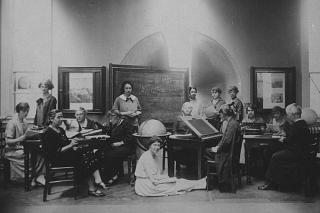
Figure 2. Margaret Harwood, Harvia Wilson, Annie Cannon, Antonia Maury, and Payne-Gaposchkin on May 19, 1925.
Image courtesy of the Harvard University Archives.
Although her research committee included Henry Norris Russell, one of the leading astronomers of the time, he disagreed with her conclusions about stellar composition. As a result, Payne-Gaposchkin reluctantly added a disclaimer in her thesis suggesting her results were likely incorrect (Hayes, 2025). However, four years later, Russell published similar findings and received widespread recognition, while Payne-Gaposchkin’s original contribution remained overlooked for decades. Her dissertation is now considered one of the most influential in the history of astronomy. Nobel laureate Otto Struve later described it as “undoubtedly the most brilliant Ph.D. thesis ever written in astronomy” (Gregersen, 2025).
Persevering in a Male-Dominated Field
After earning her doctorate, Payne-Gaposchkin remained at the Harvard College Observatory for the rest of her career. Although Shapley had supported her academic entry into Harvard, he later directed her work away from stellar spectra and toward studying stellar brightness using outdated photographic methods. She later reflected that this redirection hindered her progress and made the end of that decade especially difficult. Nonetheless, she continued her research and published Stars of High Luminosity in 1930, focusing on Cepheid variable stars (Gregersen, 2025).
In 1931, she became a U.S. citizen. Two years later, she traveled to Europe to collaborate on a book about variable stars with Russian astronomer Boris Gerasimovich. During her trip, she met Sergey Gaposchkin, a fellow astronomer working in increasingly dangerous conditions in Germany. Payne-Gaposchkin secured him a position at Harvard, and they married in 1934 (Gregersen, 2025).
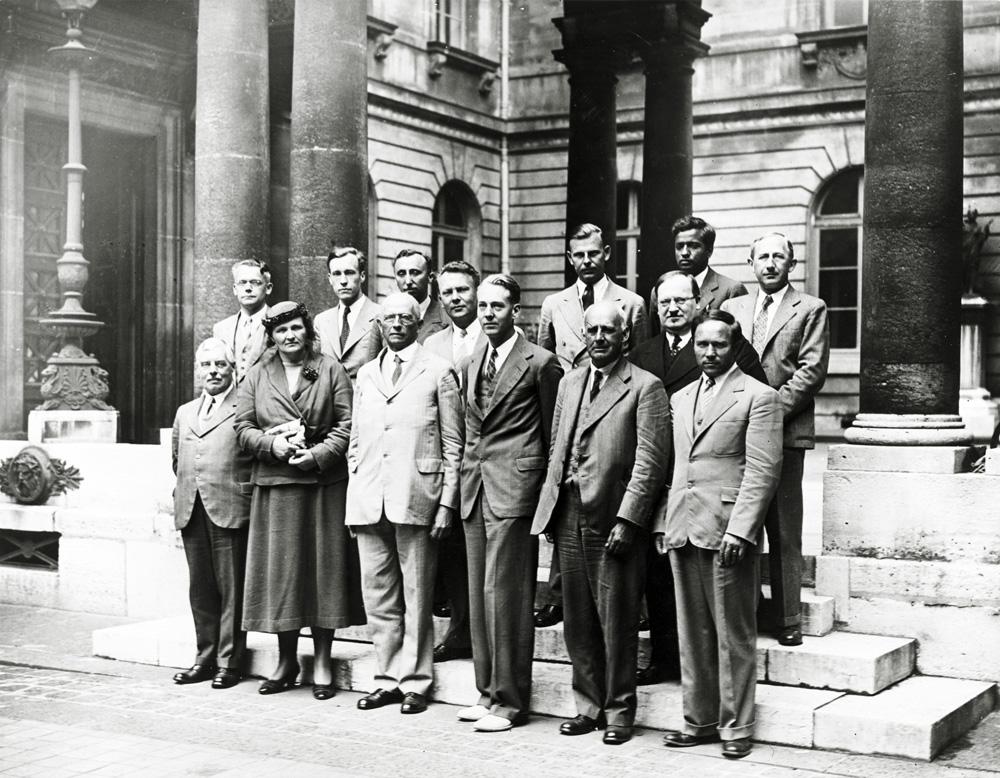
Figure 3. Payne-Gaposchkin at the International Astrophysical Conference on Novae and White Dwarf stars, 1939.
Image courtesy of The University of Chicago Photographic Archive.
Together, the couple formed a prolific research partnership centered on the study of variable stars. Drawing on Harvard’s vast photographic plate collection, they aimed to classify different types of variable stars based on brightness changes. Their book Variable Stars was published in 1938. By 1950, they had recorded nearly two million brightness estimates and added another two million by 1975, resulting in dozens of publications.
The couple had three children. Payne-Gaposchkin worked throughout her pregnancies, and their children frequently visited the observatory (Center on Science and Technology, n.d.) Two of her children also grew up to astronomers and one became a neurosurgeon (Christ, 2023). Later in her career, Payne-Gaposchkin collaborated with her daughter, Katherine Haramundanis, on several scientific papers (Bailey, 2023).
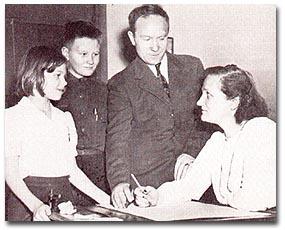
Figure 4. Payne-Gaposchkin and her family in her office in 1946.
Courtesy of Katherine Haramundanis.
Recognition and Academic Leadership
In 1943, Payne-Gaposchkin became a fellow of the American Association for the Advancement of Science. During the 1950s, she published several influential books and articles, including Stars in the Making (1952), The Galactic Novae (1957), and Variable Stars and Galactic Structure (1954). She also wrote a widely used textbook, Introduction to Astronomy (1954), and taught popular classes at Harvard. Despite these achievements, the university did not recognize her as a faculty member for many years (Bailey, 2023).
Finally, in 1956, Payne-Gaposchkin became the first woman to receive a full professorship in Harvard’s Faculty of Arts and Sciences. She also became the first woman to chair a department—the Department of Astronomy (Hayes, 2025). Her appointment represented a major breakthrough for women in academia and signaled institutional change in the recognition of women’s scientific contributions.
Throughout her life, Payne-Gaposchkin received numerous accolades. She was the first recipient of the Annie Jump Cannon Award in 1934, an honor recognizing exceptional contributions to astronomy by a woman. She received the Radcliffe Award of Merit in 1952 and was named the Phillips Professor of Astronomy in 1958. Other honors included the Rittenhouse Medal (1961), the Henry Norris Russell Prize (1976), and six honorary degrees, including one from the University of Cambridge (Christ, 2023).
She was also an active member of prestigious scientific societies, including the Royal Astronomical Society, the American Academy of Arts and Sciences, the American Astronomical Society, and the American Philosophical Society (Bailey, 2023).
Final Years and Legacy
Payne-Gaposchkin retired from Harvard in 1966 but continued conducting research and publishing until the end of her life. In 1977, the astronomical community honored her by naming Asteroid 2039 “Payne-Gaposchkin” (Bailey, 2023). She died of lung cancer on December 7, 1979.
Her legacy endures through her groundbreaking discoveries, her persistence in the face of discrimination, and her advocacy for women in science. Her life’s work revolutionized the field of stellar astrophysics and opened doors for generations of women astronomers.
 Primary Source Analysis Strategies

Style: Analyzing Oral Histories
https://repository.aip.org/payne-gaposchkin-cecilia-helena-1968-march-5
Caption: The transcript of an oral history of Payne-Gaposchkin on March 5, 1968
Primary Source Inquiry
-
What insights does Payne-Gaposchkin’s language and tone provide about her experience as a woman in early 20th-century astronomy?
-
How does she describe institutional or cultural barriers in her scientific career, and what strategies did she use to navigate them?
-
What does this oral history reveal about how Payne-Gaposchkin perceived her own contributions versus how others may have recognized them?
-
In what ways does this oral history challenge or confirm dominant historical narratives about who gets credit in scientific discovery?
Style: Analyzing Books and Other Printed Texts
Cecilia Payne-Gaposchkin: An Autobiography and Other Recollections Second Edition
Caption: An autobiography of Payne-Gaposchkin edited by her daughter Katherine Haramundanis
Primary source inquiry:
-
How does Payne-Gaposchkin frame her own scientific journey, and what themes of gender, recognition, or collaboration emerge?
-
What role does personal narrative play in documenting contributions that might otherwise be overlooked in official scientific records?
-
How does the editorial perspective (from her daughter and others) influence the framing of Payne-Gaposchkin’s legacy?
-
What can this autobiography tell us about the broader context of women’s participation in science in the early-to-mid 20th century?
Style: Analyzing Photographs & Prints
Caption: Margaret Harwood, Harvia Wilson, Annie Cannon, Antonia Maury, and Payne-Gaposchkin on May 19, 1925. Image courtesy of the Harvard University Archives.
Primary source inquiry:
-
How does the visual presentation (clothing, posture, group arrangement) reflect the professional identity and status of the women depicted?
-
What can we infer about institutional acknowledgment of women astronomers through images like this one?
-
How might this photo serve as evidence of community, mentorship, or collaboration among early women scientists?
American Museum of Natural History. (n.d.). Cecilia Payne-Gaposchkin. https://www.amnh.org/learn-teach/curriculum-collections/cosmic-horizons-book/cecilia-payne-profile
Bailey, E. (2023). Cecilia Payne-Gaposchkin. EBSCO. https://www.ebsco.com/research-starters/biography/cecilia-payne-gaposchkin
Carrigan, H. (2025, April 28). Cecilia Payne-Gaposchkin (1900–1979). Science History Institute. https://www.sciencehistory.org/education/scientific-biographies/cecilia-payne-gaposchkin/
Christ, M. (2024, April 24). Cecilia Payne-Gaposchkin (1900–1979). American Philosophical Society. https://www.amphilsoc.org/blog/cecilia-payne-gaposchkin-1900-1979
CST Princeton. (n.d.). Cecilia Payne-Gaposchkin. Center for Science and Technology Policy. https://cst.princeton.edu/people/cecilia-payne-gaposhkin
Gregersen, E. (2025, July 15). Cecilia Payne-Gaposchkin. Encyclopaedia Britannica. https://www.britannica.com/biography/Cecilia-Payne-Gaposchkin
Harvard Gazette. (2017, April 5). Star analysts of Harvard College Observatory inspired new book by Dava Sobel. https://news.harvard.edu/gazette/story/2017/04/star-analysts-of-harvard-college-observatory-inspired-new-book-by-dava-sobel/
Harvard Square Library. (n.d.). Cecilia Payne-Gaposchkin and her family in her office in 1946. https://www.harvardsquarelibrary.org/biographies/cecilia-payne-gaposchkin-3/
iHeartRadio. (2020, November 9). Cecilia Payne-Gaposchkin [Podcast episode]. Stuff You Missed in History Class. https://www.iheart.com/podcast/105-stuff-you-missed-in-histor-21124503/episode/cecilia-payne-gaposchkin-73515793/
Photo Archive, University of Chicago Library. (n.d.). Women in science: Cecilia Payne-Gaposchkin. https://photoarchive.lib.uchicago.edu/db.xqy?show=browse6.xml|138
Williams, R. (2015, January). This Month in Physics History: Cecilia Payne-Gaposchkin. American Physical Society News. https://www.aps.org/archives/publications/apsnews/201501/physicshistory.cfm
Women at the Harvard Observatory. (n.d.). “Observatory Women,” including Payne-Gaposchkin and Annie J. Cannon. The Harvard University Archives. https://hea-www.harvard.edu/~fine/Observatory/cpayne.html
Women in Physics, Carleton College. (n.d.). Cecilia Payne-Gaposchkin.https://www.carleton.edu/goodsell/research/student-research/women/payne/
MLA — Robledo-Allen Yamamoto, Asami. “Cecilia Payne-Gaposchkin.” National Women’s History Museum, 2025. Date accessed.
Chicago — Robledo-Allen Yamamoto, Asami. “Cecilia Payne-Gaposchkin.” National Women’s History Museum. 2025 www.womenshistory.org/education-resources/biographies/Cecilia-Payne-Gaposchkin.
Annie Jump Cannon

Maria Mitchell