
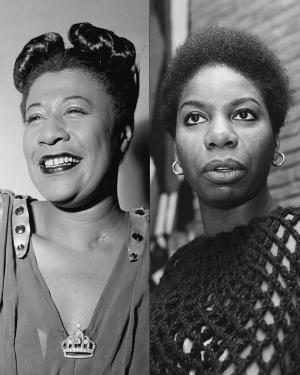
Artistry and Activism: Comparing Two Pioneers of American Music
Grade Level
9th • 10th • 11th • 12th
Subject Area
U.S. History, Music, African American Studies, Social Studies
This lesson plan, created as a part of the 2025 For Educators By Educators cohort, takes a closer look at how music can be used to influence American culture and society. During the lesson, students will analyze primary sources to explore how two influential singers used music as a tool for social change.
Guiding Questions
- How did Ella Fitzgerald and Nina Simone use music to influence American culture and society?
- What do their careers reveal about the relationship between art, identity, and activism?
- In what ways can music be both a form of entertainment and a tool for social change?
1 Class Period (50–60 minutes)
- Analyze the unique musical contributions and personal journeys of Ella Fitzgerald and Nina Simone.
- Compare how each artist influenced American culture through entertainment and activism.
- Evaluate primary source material to interpret voice, message, and impact.
- Reflect on the role of music as both an art form and a tool for social commentary.
Vocabulary and Key Terms
- Scat Singing
- Jazz
- Soul Music
- Improvisation
- Vocal Range
- Microphone Technique
- Segregation
- Jim Crow Laws
- Civil Rights Movement
- Racism
- Activism
- Protest Song
- Touring
- Legacy
Biographical Articles
Primary Sources
Ella Fitzgerald
- Audio Clip: “A-Tisket, A-Tasket” (1938)
- Interview excerpt about touring and racial segregation (1963)
Nina Simone
- Audio/video: “Mississippi Goddam” (1964)
- Interview excerpt on the song and civil rights activism (1964)
Printed Assignments/Worksheets
- Students will need a device with internet access to visit the NWHM website’s biographical articles and the primary source analysis worksheet links.
- Audio/video playback equipment with computer-linked projector and screen.
Lesson Introduction/Hook
Play short audio clips of each artist (30–45 seconds total)
- Ella Fitzgerald singing “Summertime”—smooth, soaring vocals
- Nina Simone performing “Mississippi Goddam”—urgent, defiant tone
Script
“You’ve just heard two powerful voices in American music—but they used their voices in very different ways. One captivated audiences with technical brilliance and broke racial barriers with grace and swing. The other demanded justice and sang protest into every note. Ella Fitzgerald and Nina Simone didn’t just sing—they shaped the sound and soul of a nation.”
Short Discussion Question
“What can music tell us about the world it comes from? Can an artist entertain and challenge society at the same time?”
Direct Instruction
Biographical Context
Show students how to access the biographies of the two women (and others) on the NWHM website using a device with internet access. Present short overviews of each artist, by reading a short summary for each.
Summaries
Ella Fitzgerald was a groundbreaking jazz vocalist known as the “First Lady of Song.” Rising from poverty and a troubled childhood, she became one of the most celebrated and influential performers in American music history. With her pure tone, impeccable diction, and improvisational skill, she transformed jazz vocals and broke racial barriers in the entertainment industry.
Nina Simone was a classically trained pianist, singer, and songwriter who used her powerful voice to fight for civil rights and social justice. Known for blending jazz, blues, gospel, and classical music, Simone’s work went beyond entertainment—her songs became anthems of protest and empowerment during a time of racial struggle and cultural transformation in America.
Guided Practice
Allow students 2–3 minutes to identify and write down a key fact about each artist.
Independent Practice
Primary Source Analysis Worksheet
After completing the Primary Source analysis worksheet, students will transition to collaborative work in pairs or groups on a Venn diagram comparing and contrasting both artists.
Venn Diagram
Concepts for students to consider while completing the Venn diagram to be displayed on the projector screen.
Closure
Formative Assessment
Completed primary source analysis worksheet.
Summative Assessment
Assess historical understanding, comparative analysis, and content synthesis by evaluating students’ Venn diagrams.
Differentiation/Accommodations
- Provide simplified excerpts of the interviews or summarized transcripts for students reading below grade level.
- Offer sentence starters or word banks for students who need help forming written responses.
- Encourage students to analyze a second song by each artist or compare to modern musicians who address social issues (e.g., Beyoncé, Kendrick Lamar).
- Extended Time on the Primary Source Analysis worksheet, the Venn diagram, and written reflections.
- Chunked Assignments: Break down tasks into steps (e.g., analyze audio first, then read transcript).
- Alternative Formats: Allow oral responses, typed answers, or drawing ideas on sticky notes.
Extension Activity
Historical Research
Explore how other women musicians (like Billie Holiday, Mahalia Jackson, or Aretha Franklin) contributed to cultural change through music.
Standards Addressed
Apply state-specific standards as applicable.