Tyonajanegen

Tyonajanegen was an Oneida warrior best known for fighting at the Battle of Oriskany during the American Revolution.
She played a crucial role as a messenger, fighter, and supporter of the American cause, helping secure a strategic victory in 1777.
Her life reflected the broader involvement of Indigenous nations, particularly the Oneida, in the Revolutionary War and the internal divisions within the Haudenosaunee Confederacy.
Early Life
Tyonajanegen, also known as “Two Kettles Together,” was born around 1738 in what became New York, within the ancestral homelands of the Oneida Nation, one of the Six Nations of the Haudenosaunee Confederacy. During this period, the Haudenosaunee maintained sovereignty over vast territories in the Northeast while actively managing complex diplomatic and economic relationships with European colonizers. These interactions created both opportunities and significant threats as colonial expansion intensified.
The Oneida Nation distinguished itself during the American Revolution by largely supporting the American cause, a decision rooted in long-standing diplomatic relationships and strategic considerations (NPS). Oneida leaders expressed this alliance clearly, explaining that they had committed themselves “to hold the Covenant Chain with the United States” and to share in either its victories or losses (Oneida Nation). Their support came at a profound cost, as the war brought devastation to Oneida communities and lands.
The Oneida preserved their histories through oral traditions and wampum records; however, colonial documentation largely excluded Indigenous women. As a result, written sources did not record most details of Tyonajanegen’s early life prior to her marriage.
Marriage, Family, and Community Leadership
Tyonajanegen married Han Yerry Tewahangarahken, a prominent warrior of the Wolf Clan, in the 1750s (NPS). The couple established their home in the Oneida village of Oriska, near present-day Oriskany, New York. There, they built a successful life as farmers and respected members of their community.
Their prosperity reflected both agricultural skill and participation in regional trade networks with American colonists, demonstrating the Oneida Nation’s strategic adaptation to a changing political economy. At the same time, Tyonajanegen raised four children while maintaining an active role in the village’s economic and social life (Mae). Among the Oneida and other Haudenosaunee nations, women held significant authority within a matrilineal system in which lineage and inheritance passed through the mother. They were responsible for cultivating staple crops such as corn, beans, and squash, managing household resources, and sustaining local economies. Women also held political influence through positions such as clan mothers, who selected and advised male leaders and helped guide community decision-making (Haudenosaunee Confederacy).
As tensions escalated into war, Tyonajanegen and Tewahangarahken aligned themselves with Oneida leaders who supported the Continental Army (NPS). This decision placed them directly within central military campaigns in New York.
Warning the Mohawk Valley
In 1777, British forces advanced toward Fort Stanwix, forcing Haudenosaunee nations to confront difficult decisions about alliances (Mae;NPS). During this critical moment, Tyonajanegen contributed to early warning efforts that proved essential to colonial defenses. She likely traveled with a small group of Oneida individuals through dangerous territory to alert nearby settlements of the British advance (NPS).
In wartime, the responsibilities women held in Haudenosaunee society translated into strategic roles. Their management of resources and connections across kinship networks enabled them to coordinate supplies, relay information, and move between communities with purpose and legitimacy. As a result, women often served as messengers and logistical organizers, and in some cases participated directly in combat. In this context, Tyonajanegen’s actions required courage, and practical knowledge and strategic awareness developed through her everyday responsibilities (Chemung County Historical Society).
The Battle of Oriskany
Tyonajanegen’s most well-documented contributions occurred during the Battle of Oriskany on August 6, 1777, one of the bloodiest engagements of the American Revolution (American Battlefield Trust). American militia forces and their Oneida allies marched to relieve Fort Schuyler when British troops and their allies ambushed them.
Tyonajanegen rode into battle on horseback, carrying two pistols and fighting alongside Tewahangarahken and her son (Mae). During the fighting, a musket ball wounded her husband’s wrist. Tyonajanegen immediately assisted him by reloading his weapon repeatedly so he could continue to fight (NPS). Her quick actions allowed him to remain engaged and helped sustain their side’s resistance.
Following the battle, Tyonajanegen continued riding to nearby settlements to report the outcome and prepare communities for wounded soldiers returning from the battlefield (Oneida Nation).
Service Beyond Oriskany
In the fall of 1777, Tyonajanegen accompanied Tewahangarahken to treat his injuries and assist as a messenger. Together, the couple joined American forces at Saratoga, a turning point in the war (NPS). Tyonajanegen combined caregiving responsibilities with military support, illustrating the essential and often unrecognized labor Indigenous women contributed during wartime. Like many women attached to military campaigns, caregiving could involve tending wounds, preparing food, transporting supplies, and caring for soldiers recovering from illness or injury, often in difficult and mobile camp conditions (Encyclopedia Virgina). As a messenger, she likely carried information between units and settlements, relying on speed, familiarity with terrain, and trusted status within allied networks to relay critical updates. These overlapping roles blurred the line between domestic labor and military service, making women indispensable to army operations.
In acknowledgment of her service, General Horatio Gates ordered that she receive provisions to sustain her family through the winter (NPS). While women who followed the Continental Army, often called “camp followers”, sometimes received rations or limited compensation for their labor, such recognition was typically informal and tied to their usefulness to specific units rather than official military status. While other women also received support for their essential labor, Indigenous women were far less frequently documented in these records, meaning Tyonajanegen’s recognition was both significant and indicative of how rarely such contributions were formally acknowledged in Revolutionary War narratives.
Loss and Resilience
The war brought severe consequences to Tyonajanegen and her community. After the Battle of Oriskany, pro-British forces attacked and destroyed the Oneida village of Oriska, including her home and property (Glatthaar & Martin). This destruction reflected a wider pattern of violence experienced by Indigenous communities during the Revolution, particularly those who supported the American cause. The conflict fractured the Haudenosaunee Confederacy and resulted in widespread displacement, loss of land, and long-term instability (Mae). Despite these hardships, Tyonajanegen continued to support her family and community. Her persistence highlighted the enduring strength of Oneida women and underscored the often-overlooked sacrifices Indigenous allies made, sacrifices that postwar narratives frequently minimized or erased.
Later Life
After the war, Tyonajanegen lived in a rapidly changing political environment as the new United States expanded and further encroached on Indigenous lands. Tewahangarahken died sometime before 1794, leaving her as a widow during a period of continued disruption.
Records from her later years remained limited, but some accounts suggested that her health declined and that she may have gone Blind before her death (J. Glatthaar & J. Martin). She died in the early nineteenth century, around 1822.
Although written records only partially preserved her story, Tyonajanegen’s life reflected the broader experiences of Oneida women who demonstrated resilience, leadership, and dedication to their people during a period of colonization and war.
“Battle of Oriska.” National Park Service. Accessed May 28, 2026. https://www.nps.gov/articles/000/the-battle-at-oriska.htm.
“Forgotten Allies: The Oneida Indians and the American Revolution.” Glatthaar, Joseph T., and James Kirby Martin. Forgotten Allies: The Oneida Indians and the American Revolution. New York: Hill and Wang, 2006.
“First Allies: The Revolutionary War.” Oneida Indian Nation. Accessed May 28, 2026. https://www.oneidaindiannation.com/first-allies-the-revolutionary-war.
“History and Culture.” Oneida Indian Nation. Accessed May 28, 2026. https://www.oneidaindiannation.com/history-and-culture.
“Honoring Patriots: Sarah Martin Tyonajanegen.” Daughters of the American Revolution. Accessed May 28, 2026. https://honoringourpatriots.dar.org/patriots/sarah-martin-tyonajanegen-two-kettles-together/.
Mae, Tara. “Tyonajanegen and Hanyery: Native New Yorkers.” The Village Historical Society. November 15, 2020. https://www.tvhs.org/post/tyonajanegen-and-hanyery-native-new-yorkers.
“Sarah ‘Two Kettles’ Tyonajanegen.” New York Almanack. March 8, 2026. https://www.newyorkalmanack.com/2026/03/two-kettles-sarah-tyonajanegen.
“Stories and Heritage.” Oneida Indian Nation. Accessed May 28, 2026. https://www.oneidaindiannation.com/stories-and-heritage.
“The Battle of Oriskany: Oneida Han Yerry and Mohawk Joseph Brant.” Oneida Indian Nation. Accessed May 28, 2026. https://www.oneidaindiannation.com/the-oriskany-battle-of-oneida-hanyery-and-mohawk-joseph-brant.
“The Color of Freedom: Tyonajanegen.” Omeka Exhibit. Accessed May 28, 2026. https://mwm.omeka.net/exhibits/show/the-color-of-freedom/item/12.
“The Oneida Nation in the American Revolution.” National Park Service. Accessed May 28, 2026. https://www.nps.gov/articles/the-oneida-nation-in-the-american-revolution.htm.
“The Oneidas: America’s First Allies.” Oneida Indian Nation. Accessed May 28, 2026. https://www.oneidaindiannation.com/the-oneidas-americas-first-allies.
“The Revolutionary War.” Oneida Indian Nation. Accessed May 28, 2026. https://www.oneidaindiannation.com/revolutionary-war.
“Tyonajanegen (Two Kettles Together).” National Park Service. Accessed May 28, 2026. https://www.nps.gov/people/tyonajanegan-or-two-kettles-together.htm.
“Who We Are.” Haudenosaunee Confederacy. Accessed May 28, 2026. https://www.haudenosauneeconfederacy.com/who-we-are/.
“Women in the Revolution: Tyonajanegen.” Milwaukee Public Museum. Accessed May 28, 2026. https://www.mpm.edu/index.php/content/wirp/ICW-168.
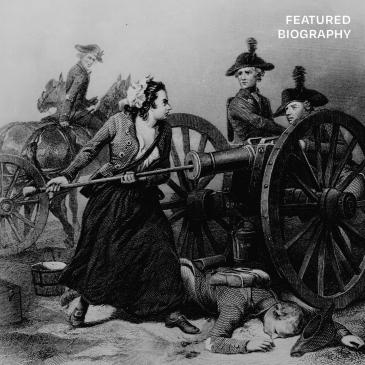
Mary Ludwig Hays
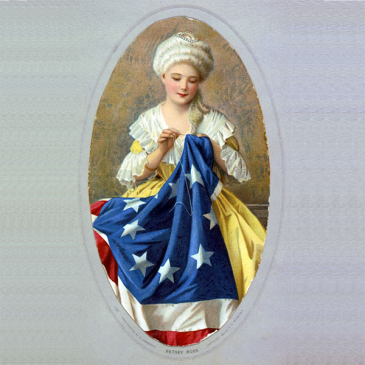
Betsy Ross
Martha Washington