Hazel Ying Lee
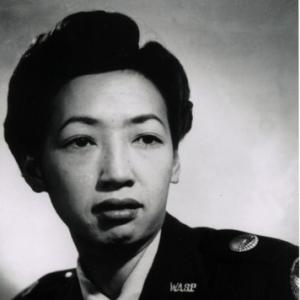
Lee broke racial and gender barriers in American aviation as the first Chinese American woman to fly for the U.S. military, serving as a Women Airforce Service Pilots (WASP) ferry pilot during World War II.
Lee’s life illustrated how global conflict and U.S. discrimination influenced who could serve and how.
Lee’s story mattered because the WASPs’ dangerous, essential domestic missions freed male pilots for combat and helped redefine women’s and Asian Americans’ place in U.S. military and aviation history.
“We showed the world that an airplane knows no sex.”
WASP Bernice “Bee” Haydu, oral history, The National World War II Museum
Early Life in Portland’s Chinatown
Hazel Ying Lee (李月英) was born on August 24, 1912, in Portland, Oregon to Chinese immigrant parents, Yuet Lee and Ssiu Lan Lee (Burmeister). Lee’s father had immigrated from China because of conflicts between Chinese Nationalists and Communists, and her parents later met in Oregon (National Park Service).
The Chinese American family of ten navigated both opportunity and exclusion at a time when anti-Chinese sentiment remained high. The nation still operated under the legacy of the Chinese Exclusion Act of 1882 and its later expansions, which barred most Chinese immigration and encouraged discrimination. Economic anxieties, labor disputes, and long-standing racial stereotypes intensified hostility toward Chinese communities. Because of these pressures, Lee’s childhood blended ordinary American pastimes (sports, friendships, and teenage independence) with the daily reality that Chinese Americans were often treated as outsiders (Burmeister; National WWII Museum).
Despite these injustices, Lee grew up known for her vibrant, funny, athletic, and adventurous personality. She attended Portland public schools and graduated from Commerce High School (now Cleveland High School) (National WWII Museum). At nineteen, she discovered her passion for flying after sitting in on a friend’s flight lesson at a local airstrip (National Museum of the United States Army). She worked as an elevator operator at H. Liebes & Co., a Portland department store, and saved money to pay for her own flight lessons. Lee and her brother, Victor, both enrolled in lessons and joined the Chinese Flying Club of Portland (Issitt, 2024). In October 1932, she earned her pilot’s license, becoming the first Chinese American woman in the country to do so.
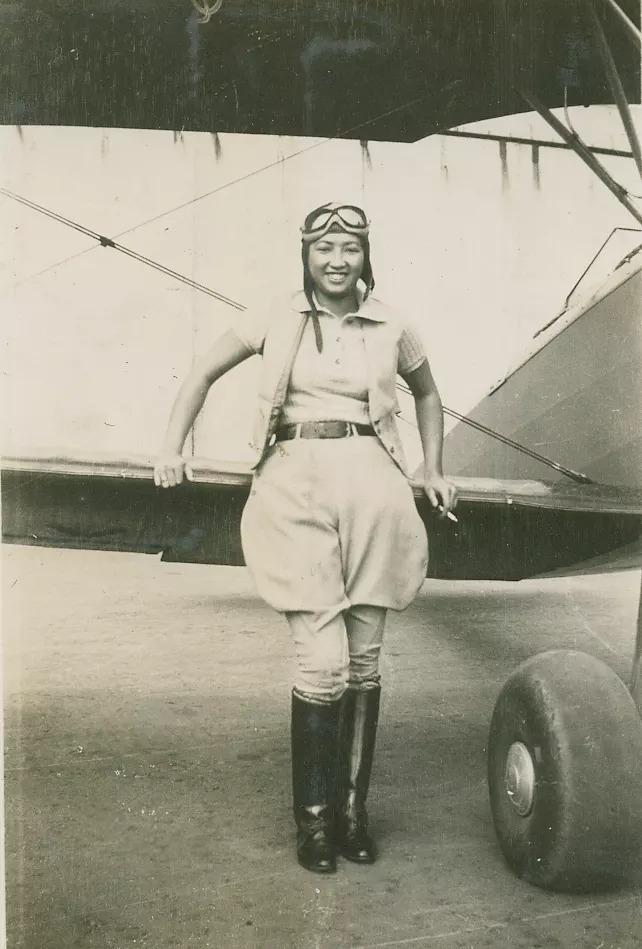
Figure 1. Lee standing in front of a plane in 1932.
Lee’s pathway into aviation grew not only from personal determination but also from community support. Portland’s Chinese Benevolent Society backed aviation training, and the local Chinese American community helped make lessons financially possible (Ryerson).
China and the Limits of Gender
Lee’s early flying years were shaped by geopolitics. In the 1930s, the Empire of Japan invaded Manchuria, modern-day Northeast China, and expanded throughout China. As the Chinese military sought pilots, many Chinese Americans and Chinese citizens, including Lee, traveled to China to contribute to the defense effort (National WWII Museum). She joined a Portland-based volunteer squadron training for service, and during this period she met Clifford Yin Cheung Louie, whom she would marry nearly ten years later.
When Lee arrived in China hoping to join the Chinese Air Force, she confronted a direct barrier: the military refused to accept women pilots despite needing trained aviators. She persisted, taking administrative roles and flying commercial aircraft in Guangzhou (Canton). After Japan bombed Canton, Lee spent a year in Hong Kong as a refugee with her mother and sister (National Museum of the United States Army; National WWII Museum). This period highlighted a recurring theme in her life: institutions often relied on women’s labor without granting them full status. The constraints she faced in China and later in the United States reflected how wartime needs collided with rigid gender boundaries.
Returning to the United States: Wartime Mobilization and New Openings
By 1938, Lee returned to the United States and worked in roles connected to Chinese wartime needs, focusing on purchasing and logistics as the conflict expanded. Yet her central goal remained flying (National Air and Space Museum; Federal Aviation Administration). After the bombing of Pearl Harbor, the United States entered World War II and confronted a shortage of pilots for domestic operations such as ferrying aircraft, conducting test flights, and supporting training exercises.
The solution that opened a door for Lee, and for 1,073 other women, was the creation of women’s pilot programs that culminated in the Women Airforce Service Pilots (WASP) (NWHM). Formed in 1943 through the merger of Nancy Harkness Love’s Women’s Auxiliary Ferrying Squadron (WAFS) and Jacqueline Cochran’s Women’s Flying Training Detachment (WFTD), the program placed women in civilian service attached to the Army Air Forces rather than commissioning them as military personnel (National Museum of the US Airforce). As civilians, the WASPs received no military benefits and were not eligible for military funerals (Museum of Chinese America). They also earned less than male pilots and paid for their own uniforms and living expenses. They were often assigned more dangerous or undesirable missions, including flying aircraft with open cockpits (Ryerson).
Training at Avenger Field: Becoming a WASP
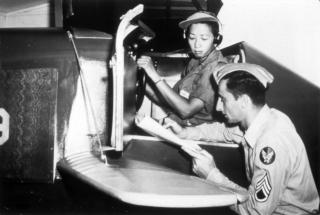
Lee applied to the women’s military flying program in 1942 and began training in 1943 at Avenger Field in Sweetwater, Texas (National Museum of the US Airforce). The six month training program mirrored male cadet preparation and included long days of flight instruction, instrument work, drill, navigation, meteorology, and aircraft systems. Lee learned to handle a wide range of military aircraft, gaining the versatility required for ferrying assignments (Federal Aviation Administration; Burmeister). Her job involved delivering aircraft from American factories to military bases for distribution to combat theaters. This work freed more male pilots for combat roles (Ryerson). During training, Lee reportedly fell from an aircraft when her instructor unexpectedly performed a loop. She reacted quickly and deployed her parachute, saving her life (Simons, 2017).
Lee continued to encounter racism. One widely cited incident described a Kansas farmer chasing her with a pitchfork after mistaking her for Japanese, illustrating how wartime anti-Asian sentiment threatened even a U.S. service pilot (National WWII Museum). Anti-Asian prejudice intensified during World War II, fueled by suspicion, propaganda, and racialized portrayals of Asian groups. Lee constantly navigated her intersecting identities as a Chinese American woman serving her country.
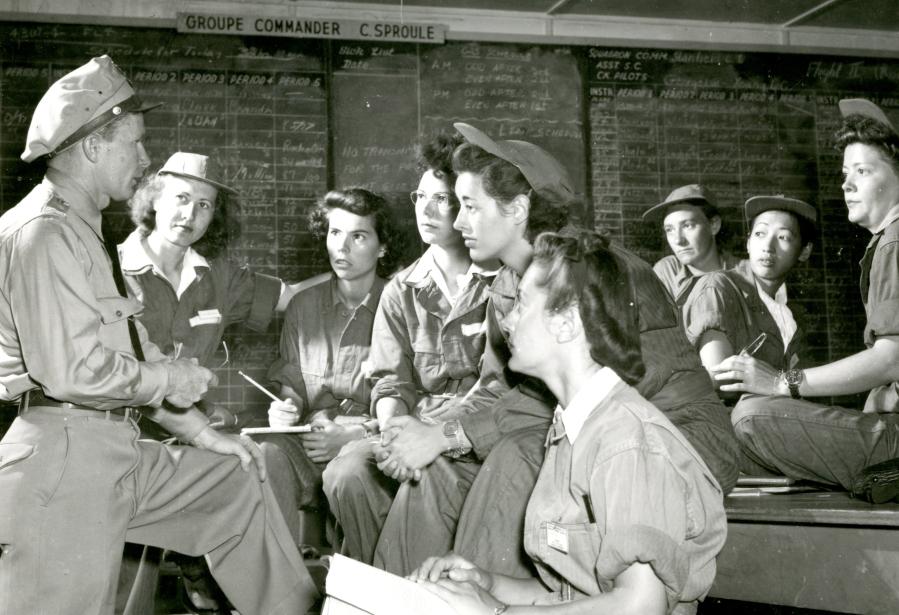
Figure 3. Lee in a briefing for ferrying-pilot trainees at Avenger Field.
Despite such challenges, Lee was known for her humor, fearlessness, and pride in being both visibly Chinese American and fully part of the pilot cohort. She famously named each plane before takeoff and wrote its name in Cantonese in lipstick on the tail (Lockwood, 2013). In an environment where women were still treated as novelties, or sometimes threats, camaraderie formed through shared demands. Aviation required competence, and competence fostered belonging (Federal Aviation Administration).
Ferrying Aircraft: Romulus and the Work of Moving War Machines
After graduating, Lee served at Romulus Army Air Base in Michigan with the Air Transport Command’s ferrying operations (Burmeister). Ferrying required transporting new aircraft from factories to bases, positioning planes for training or deployment. In 1944, she enrolled in Pursuit School in Brownsville, Texas, becoming one of thirty women qualified to fly high-powered, single-engine fighter aircraft such as the P47 Thunderbolt, P51 Mustang, and P63 Kingcobra (Burmeister; Federal Aviation Administration).
The Final Flight: Great Falls and a Deadly Collision
On November 10, 1944, Lee received orders to pick up a P63 at the Bell Aircraft factory in Niagara Falls, New York, and deliver it west as part of a larger ferry pipeline (Federal Aviation Administration). After multiple weather delays, she attempted the mission on November 23, 1944.
Another group of P63s, flown by both WASPs and male Army Air Forces pilots, approached the same airfield. One pilot, Jeff Russell, had flown without a working radio for several days and relied on others to alert the control tower. With numerous identical aircraft circling, the tower lost track of which P63 lacked radio contact. As Lee made a low, slow approach, an aircraft above her attempted to land. The tower issued frantic commands to “pull up!” Lee heard the instruction; Russell did not. When Lee climbed, both aircraft collided and burst into flames at the runway’s end (National WWII Museum). Ground personnel rescued Russell, but Lee remained trapped in the burning wreckage. She died from her injuries on November 25, 1944, becoming the last WASP to die in service (Hamilton, 2025).
Because the WASPs served as civilians, the government did not provide military funeral benefits. Fellow WASPs often raised money to bring home the bodies of their colleagues. Despite dying in the performance of military duties, Lee did not receive a military funeral, and her family was denied benefits normally extended to service members’ families. Anti-Asian racism also shaped local burial decisions in Portland, underscoring how military service did not guarantee social acceptance (Burmeister; Ryerson).
Congress later addressed these inequities through Public Law 95-202 in 1979, granting the WASPs formal military recognition and retroactively conferring military status on Lee and her peers (Issitt, 2024). Nearly seventy years after Lee’s death, Congress awarded the WASPs the Congressional Gold Medal, one of the nation’s highest civilian honors (Ryerson).
 Primary Source Analysis Strategies

Analyzing Books and Other Printed Texts
-
This law document showed how the U.S. government later retroactively recognized WASP service as active duty for veterans’ benefits, correcting wartime classification.
Primary Source Inquiry
-
What does the law’s language suggest about what “counts” as military service, and who gets to decide?
- How might earlier recognition have changed the material lives of WASPs and their families, especially those who died, like Lee?
Analyzing Photographs and Prints
-
Lee and other WASPs in a briefing for ferrying-pilot trainees at Avenger Field. Courtesy of Texas Woman's University.
Primary Source Inquiry
-
What people, objects, words and tools do you see (especially the chalkboard and notebooks), and what kinds of information do they tell you?
-
What do you think is happening in this moment, and what specific visual evidence (posture, note‑taking, instructor position, room setup) supports your interpretation?
- What do you still want to know to understand this scene better (e.g., what the listed assignments meant, how trainees were evaluated, what responsibilities ferry pilots carried), and what additional sources could answer those questions (flight logs, training manuals, base schedules)?
Analyzing Photographs and Prints
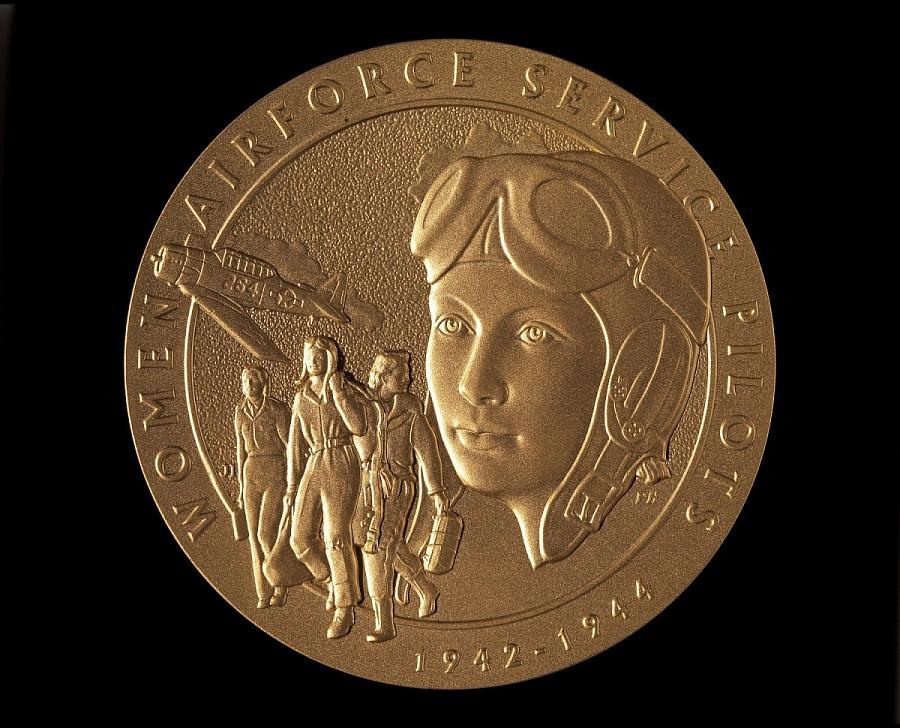
Congressional Gold Medal, Women Airforce service pilots
-
The Congressional Gold Medal awarded to the WASPs. Courtesy of the National Air and Space Museum.
Primary Source Inquiry
-
What does the iconography on the medal, the aircraft, uniforms, and figures, suggest about how the nation chose to remember and reframe WASP service long after World War II ended?
-
How does the material form of a medal invite us to consider questions of legitimacy, honor, and institutional recognition, especially for a group that served without official military status during the war?
-
What might this medal reveal about changing public attitudes toward women’s military labor, and how does its design work to convey the seriousness, danger, and professionalism of WASP contributions?
-
How does the act of creating and awarding such a commemorative object function as a corrective historical gesture, and what might it suggest about whose stories were previously marginalized or excluded from official narratives of the war?
Burmeister, Heather. “Hazel Ying Lee (1912–1944).” The Oregon Encyclopedia. Accessed January 29, 2026. https://www.oregonencyclopedia.org/articles/lee_hazel_ying/
Hamilton, Emily. “Her name means ‘hero’: How Portland pilot Hazel Ying Lee fought for America — only to be forgotten.” OPB (Oregon Public Broadcasting), March 28, 2025. https://www.opb.org/article/2025/03/28/hazel-ying-lee-wasp-hero/
Ryerson, J. “Hazel Ying Lee.” Accessed January 29, 2026. https://www.nps.gov/articles/hazel-ying-lee.htm
National WWII Museum. “Women Airforce Service Pilot Hazel Ying Lee.” May 24, 2021. https://www.nationalww2museum.org/war/articles/women-airforce-service-pilot-hazel-ying-lee
National Women’s History Museum. “Women Airforce Service Pilots (WASPs) of WWII.” April 23, 2019. https://www.womenshistory.org/exhibits/women-airforce-service-pilots-wasps-wwii
Smithsonian National Air and Space Museum. “Hazel Ying Lee” (Multimedia Gallery entry). Accessed January 29, 2026. https://www.airandspace.si.edu/multimedia-gallery/hazelyingleeoneofthefirsttwochineseamericansinthewomenairforceservicepilotsjpg
U.S. Congress. Public Law 95-202 (GI Bill Improvement Act of 1977). November 23, 1977. PDF. https://www.congress.gov/95/statute/STATUTE-91/STATUTE-91-Pg1433.pdf
U.S. Federal Aviation Administration. “Hazel Ying Lee: The First Female Chinese-American Pilot.” PDF. Accessed January 29, 2026. https://www.faa.gov/sites/faa.gov/files/about/history/pioneers/Hazel_Ying_Lee.pdf
U.S. Air Force. “Hazel Ying Lee in 1932.” Photo (VIRIN 070313-F-9999J-026). https://www.af.mil/News/Photos/igphoto/2000507493/
U.S. Air Force. “Hazel Ying Lee reviews her performance after a session in a Link trainer” (1944). Hosted by Wikimedia Commons (public domain). https://commons.wikimedia.org/wiki/File:Image-Hazel_Ying_Lee.jpg
MLA — “Hazel Ying Lee.” National Women’s History Museum, 2026. Date accessed.
Chicago — “Hazel Ying Lee.” National Women’s History Museum. 2026. https://www.womenshistory.org/education-resources/biographies/hazel-ying-lee.
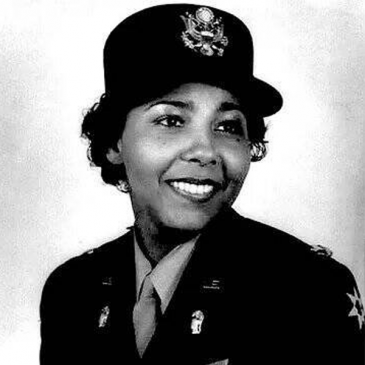
Charity Adams Earley
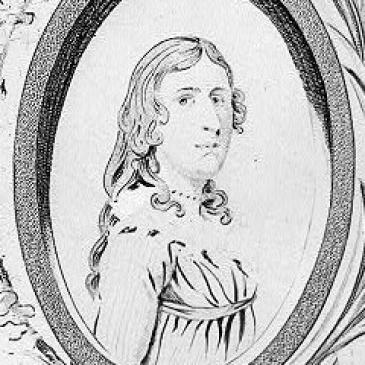
Deborah Sampson
Amelia Earhart