Claire McCardell
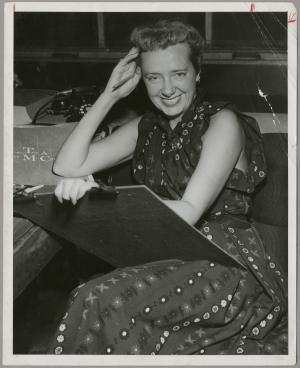
Claire McCardell was an American designer who transformed women’s fashion, creating accessible and comfortable designs for the everyday woman.
Constantly innovating, Claire McCardell created countless new designs that incorporated
sportswear elements for ease of movement.
Instead of copying French fashion, as was common during her life, she created the first distinctive “American” look, ushering in a new era of women’s fashion.
“I do not like glitter. I like comfort in the rain, in the sun, comfort for active sports, comfort for sitting still and looking pretty. Clothes should be useful.”
"Claire McCardell, Designer, Is Dead." The New York Times, 23 March 1958.
Early Life
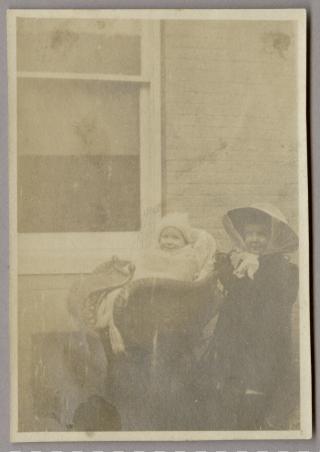
Figure 1. Claire McCardell with younger brother, ca. 1908.
Claire McCardell was born on May 24, 1905, in Frederick, Maryland. Claire was the oldest of four
children in the family, and the only daughter. Her mother, Eleanor, was an elegant woman who valued fashion and taught Claire to do the same. Twice a year, the family seamstress, Miss Annie Koogle, would visit to make new dresses for Eleanor. Claire was fascinated by the process of clothes-making and would follow her around to learn as much as she could. Her father, Adrian McCardell, was a local bank president and Maryland state senator. The McCardells regularly attended the local church, and when Claire was a teenager, she became known for the bold outfits she would wear to the Sunday services. Claire was determined to move to New York City, the center of American clothing manufacturing, to pursue a career in fashion. At the age of 16, she begged her father to let her move to New York, but he insisted that she attend the nearby Hood College and enroll in their home economics program instead. After she turned 18, and nearly flunking out of her home economics course, she finally convinced her father, and enrolled in the Parsons School of Design in New York.
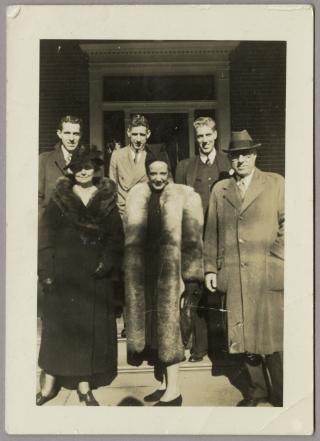
Figure 2. Claire McCardell with her family, ca. 1940.
Entering the Fashion World
While a student at Parsons, in 1927, McCardell went to Paris to study abroad at the Place des Vosges. Paris in the 1920s was the source of all things fashion, and McCardell took to the industry there like a fish to water. She worked part-time creating fashion sketches and searched Parisian flea markets for couture clothing, which she would later deconstruct to better understand how it was made. After she graduated from Parsons, her career in the New York fashion scene was slow to start. She first painted rosebuds on lampshades, and then briefly modeled for B. Altman’s, a popular department store. She did anything she could to stay in the industry, operating sewing machines, sketching at a dress shop, and designing for a knitwear company.
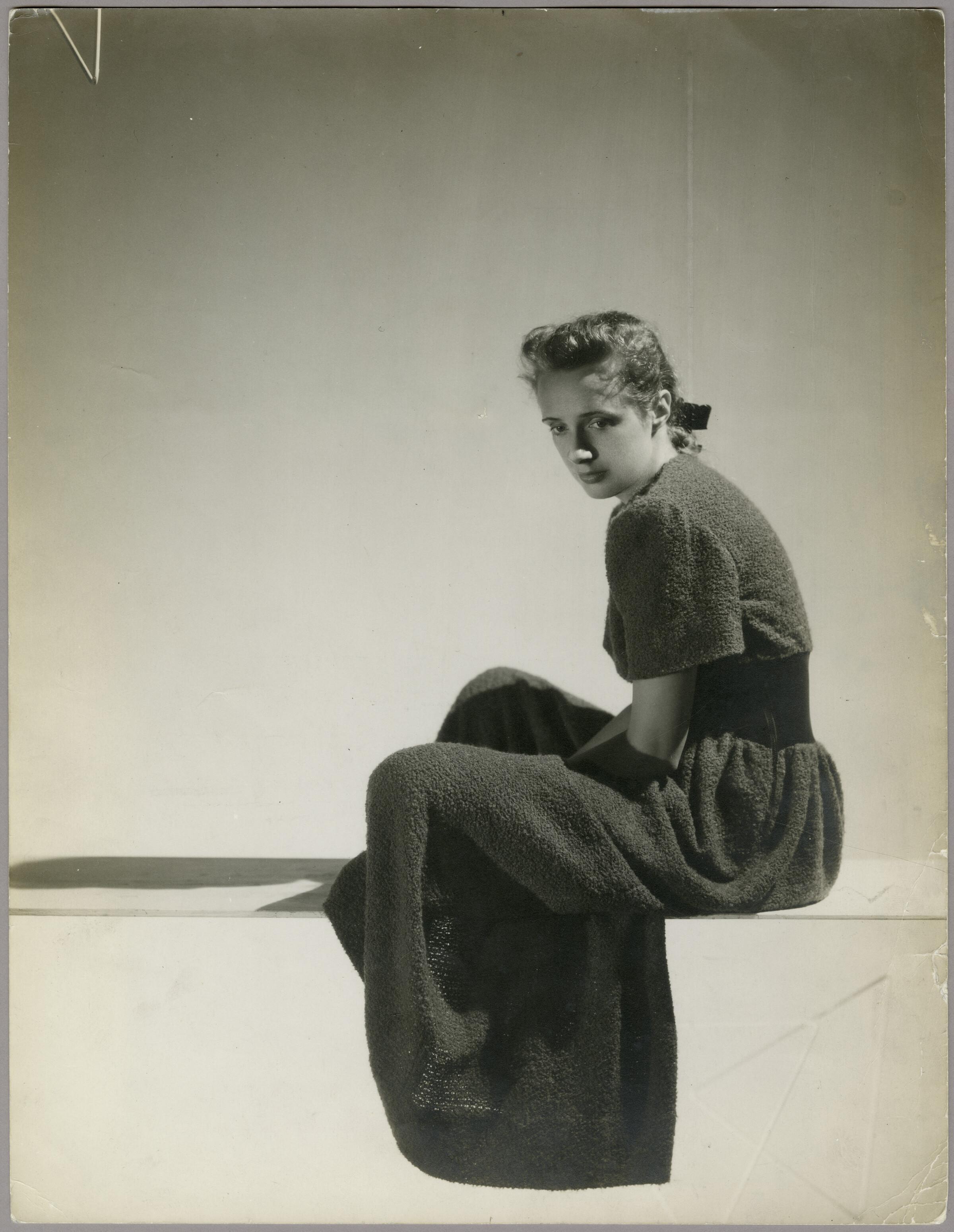
Figure 3. Claire McCardell modeling a dress of her own design, ca. 1925-35.
In 1930, she got her big break that would launch her career: she began working as an assistant designer for Robert Turk. She worked with him for two years, until his business disbanded and he moved to work at Townley Frocks. McCardell moved with him. McCardell’s ideas were not immediately accepted in this environment, where manufacturers in the U.S. mostly copied and re-sold the designs that were already popular in Paris. McCardell wanted to take a different approach, and experiment with a unique style that was all her own.
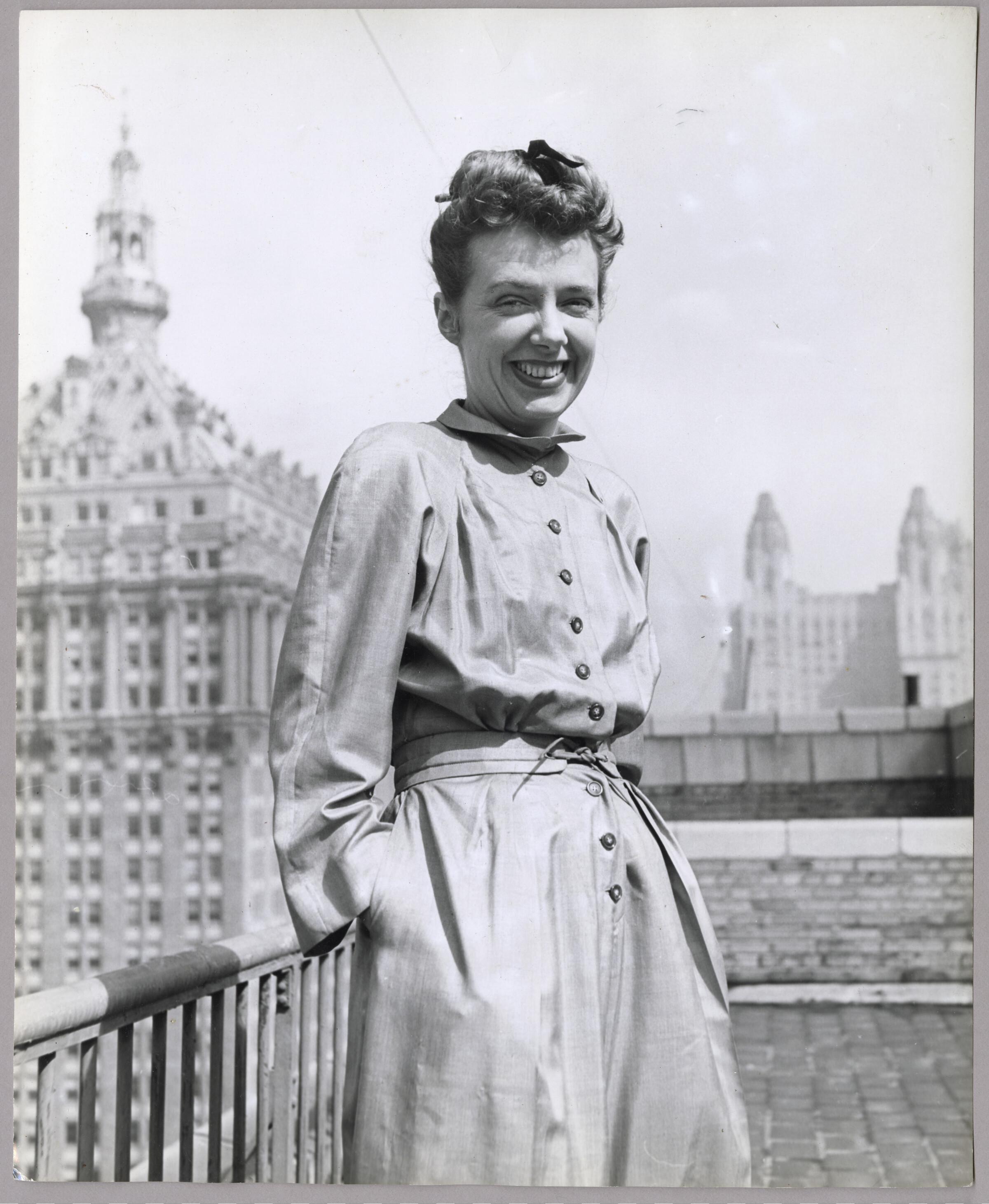
Figure 4. Claire McCardell during early fashion career in New York, ca. 1935-40.
She worked to create innovative designs, hoping for them to be front-and-center on the fashion marketplace sometime in her career. In 1938, she created the “Monastic Dress,” a loose bias-cut dress tied at the waist by a cord. While wearing it to work, a buyer from Manhattan’s Best and Company saw her and ordered 100 of the dresses on the spot. It sold out, and reproductions flooded the marketplace. McCardell had proven that her designs were just new enough to work for the American public.
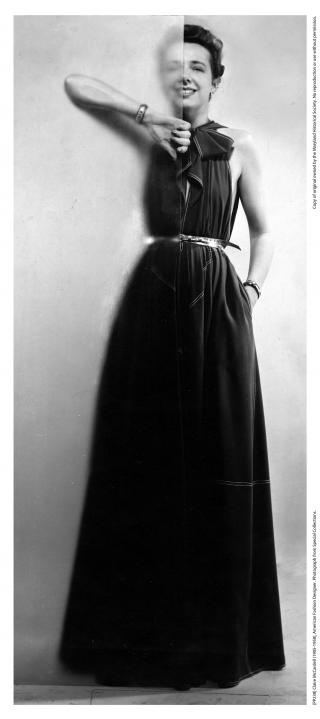
Figure 5. Claire McCardell modeling “futuristic dress,” cut out of triangles. 1945.
Becoming a World-Renowned Designer
Despite the success of the Monastic Dress, Townley Frocks did not yet believe in McCardell’s bankability as a designer. She worked briefly at Hattie Carnegie in 1939, wishing to be taken more
seriously, but there too they thought her designs were too simple to appeal to the fashionable of the time. She moved back to Townley in 1940, where she worked for the rest of her life. Back where she had started, she still finally felt free to express her own unique ideas about fashion and design. Despite her connection to Paris and the positive experience she had there, she wanted to break away from the designs coming out of France. She felt that the style such as the “New Look” pushed by designers such as Christian Dior restricted women too much, pushing them back into the status of decorative figures in a household that they occupied in the Edwardian era of her youth. She wanted to create a distinctly “American Look” for fashion, that would speak to the modern woman of her time. Due to the restrictions on travel to Europe during World War II, McCardell got her wish and was able to experiment with fashion on a large scale. Fabric rationing also contributed to McCardell’s success because she was willing to use fabrics that many designers considered too simple, such as denim, calico, and jersey.
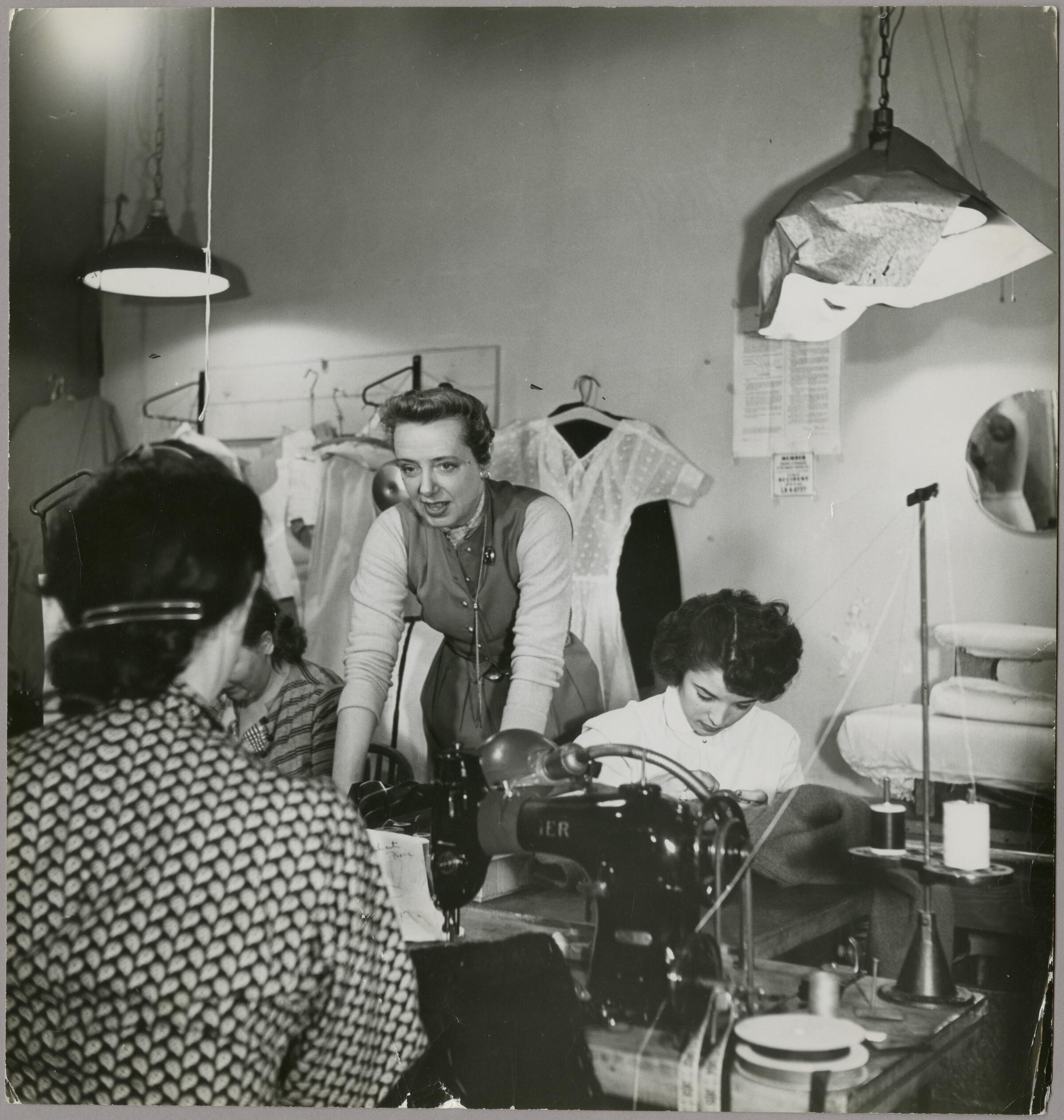
Figure 6. Claire McCardell talking with dressmakers, ca. 1950.
McCardell was inspired to design by her own needs from clothes. Her clothing was people-centric and did not imagine women as beautiful mannequins for dresses but rather living beings needing functional clothing, while still feeling their best. She prioritized comfort and function over all else. She wanted not only her clothes, but fashion itself to be accessible to the average woman and usable for her everyday life. In 1956, she published the book What Shall I Wear? What, Where, When, and How Much of Fashion, which gave practical advice on fashion to women.
“I do not like glitter. I like comfort in the rain, in the sun, comfort for active sports, comfort for sitting still and looking pretty. Clothes should be useful.”
"Claire McCardell, Designer, Is Dead." The New York Times, 23 March 1958.
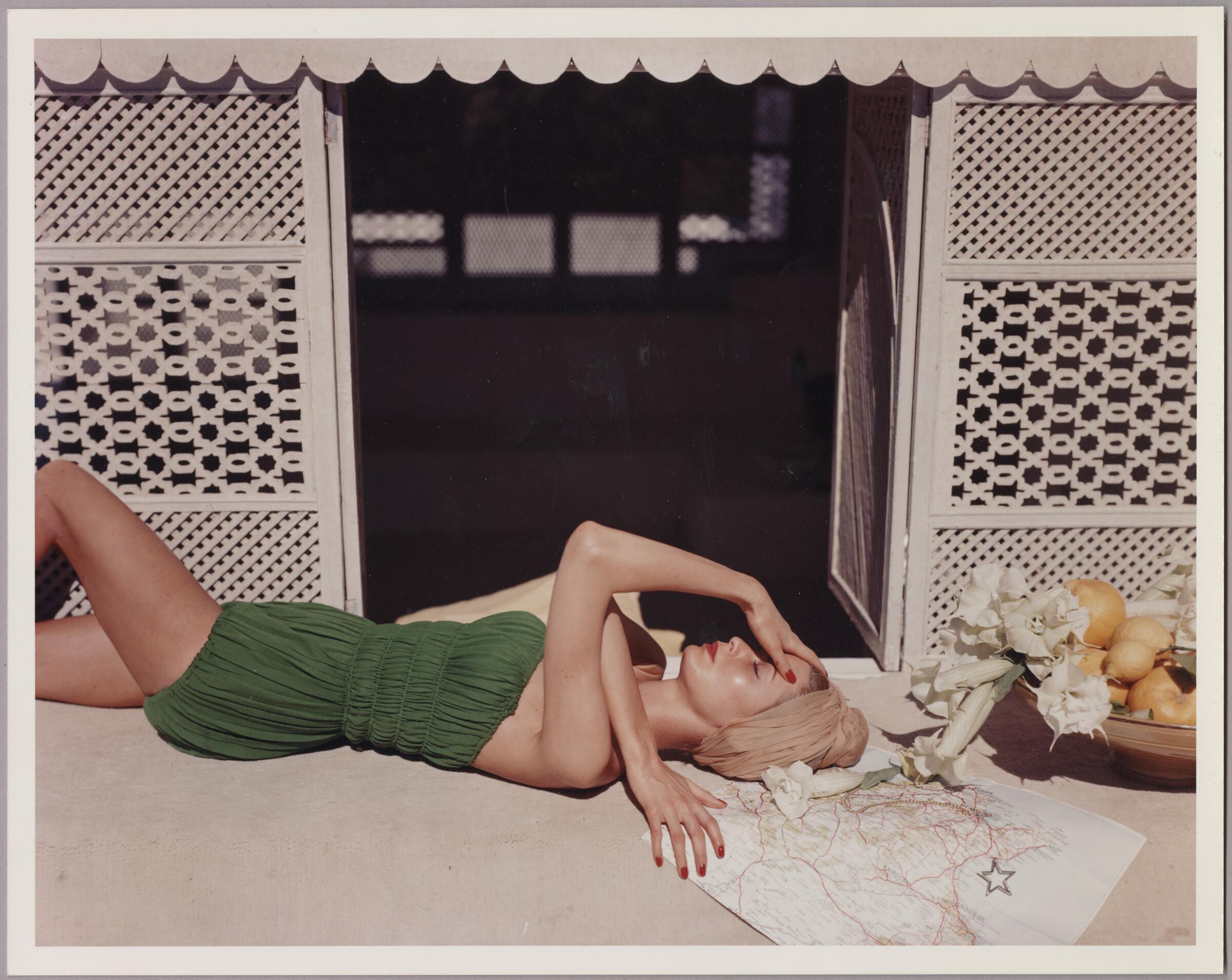
Figure 7. Model wearing green bathing suit designed by Claire McCardell. 1950.
Many of McCardell’s designs which emerged from a desire to liberate women from impractical fashion still remain popular in the 21st century. First, she is often credited with popularizing sportswear for everyday use. She was often inspired by athlete’s and dancer’s gear for the ease of movement they afforded, so in 1942 she invented ballet flats to help her models be more comfortable on the runway. She was an avid skier and was inspired by her ski costumes to create a jersey-knit hooded shirt that would be practical for winter wear.

Figure 8. Claire McCardell Skiing, ca. 1950.
She created the “popover” dress in collaboration with Harper’s Bazaar as a functional yet elegant dress for housewives to wear while doing their housework. She created the first capsule wardrobe of mix-and-match pieces before a trip to Europe because she wanted to carry less luggage while still looking elegant. This was one of the most important experiments with “separates” in design history, which is now commonplace in American design.
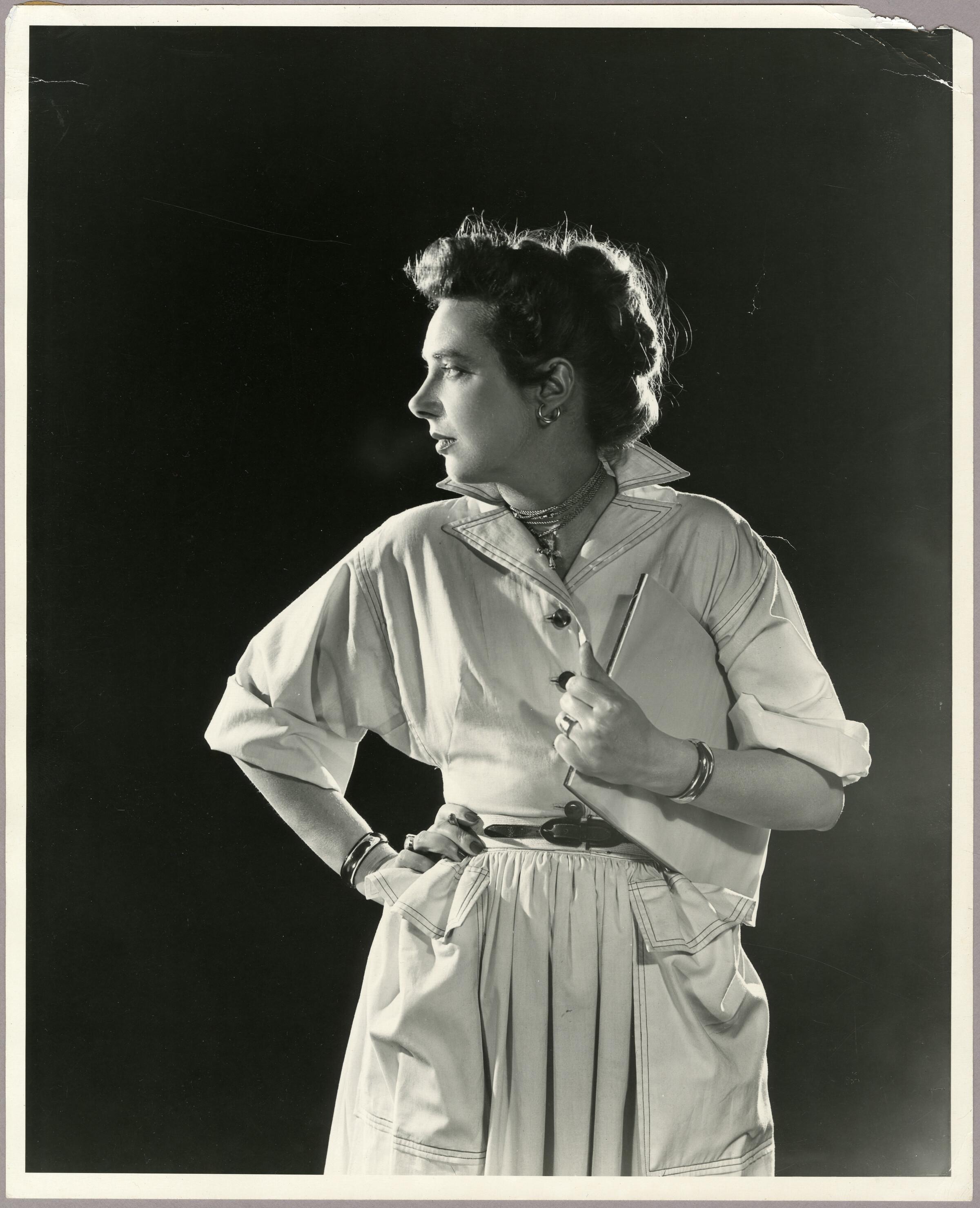
Figure 9. McCardell modeling dress similar to “popover” design, ca. 1945.
Legacy on Fashion
Just as McCardell had reached the height of her career, her life was tragically cut short with terminal colon cancer. After receiving her diagnosis a few months before her death, she worked tirelessly to complete her final collection from her hospital bed. On the day that the collection debuted, she disobeyed doctor’s orders and went to introduce the show herself at New York City’s Pierre Hotel. The showroom was packed to the brim, the audience knowing that it would be her last. She died on March 22, 1958, at the age of 52.
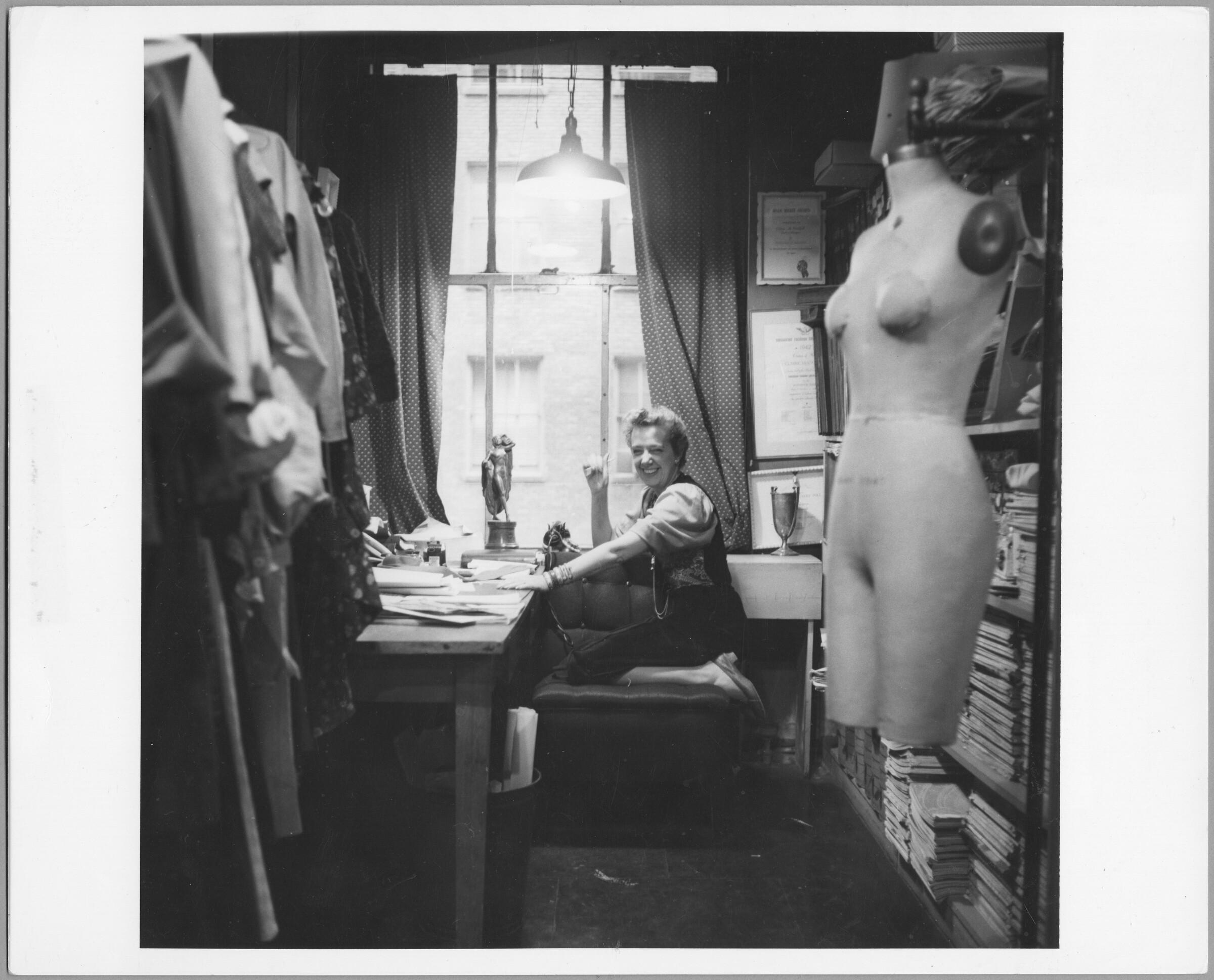
Figure 10. Claire McCardell at office desk, ca. 1950s.
McCardell’s innovations within American fashion, or “McCardellisms” as she referred to them, were so wide-reaching and successful that she was able to negotiate having her name placed on her labels, an honor that very few designers achieved in this time. She was designing for the average woman, but she treated her work with the same dignity and gravity as if she was working at a high fashion house. She invented wrap skirts, ballet flats, the capsule wardrobe, strapless swimsuits, patch pockets on dresses, and has even been credited with formalizing and popularizing women’s sportswear. She received many awards through her life, including the 1946 Best Sportswear Designer Award, the 1948 Neiman-Marcus Award, and the 1950 Women’s National Press Award. In 1954, McCardell established the Claire McCardell Gold Thimble Award, given to an outstanding student at Parsons School. Her design innovations continue to have a place in modern fashion, as did her paradigm-shifting approach to creating clothes that were comfortable and stylish, ushering in a new era in women’s clothing.
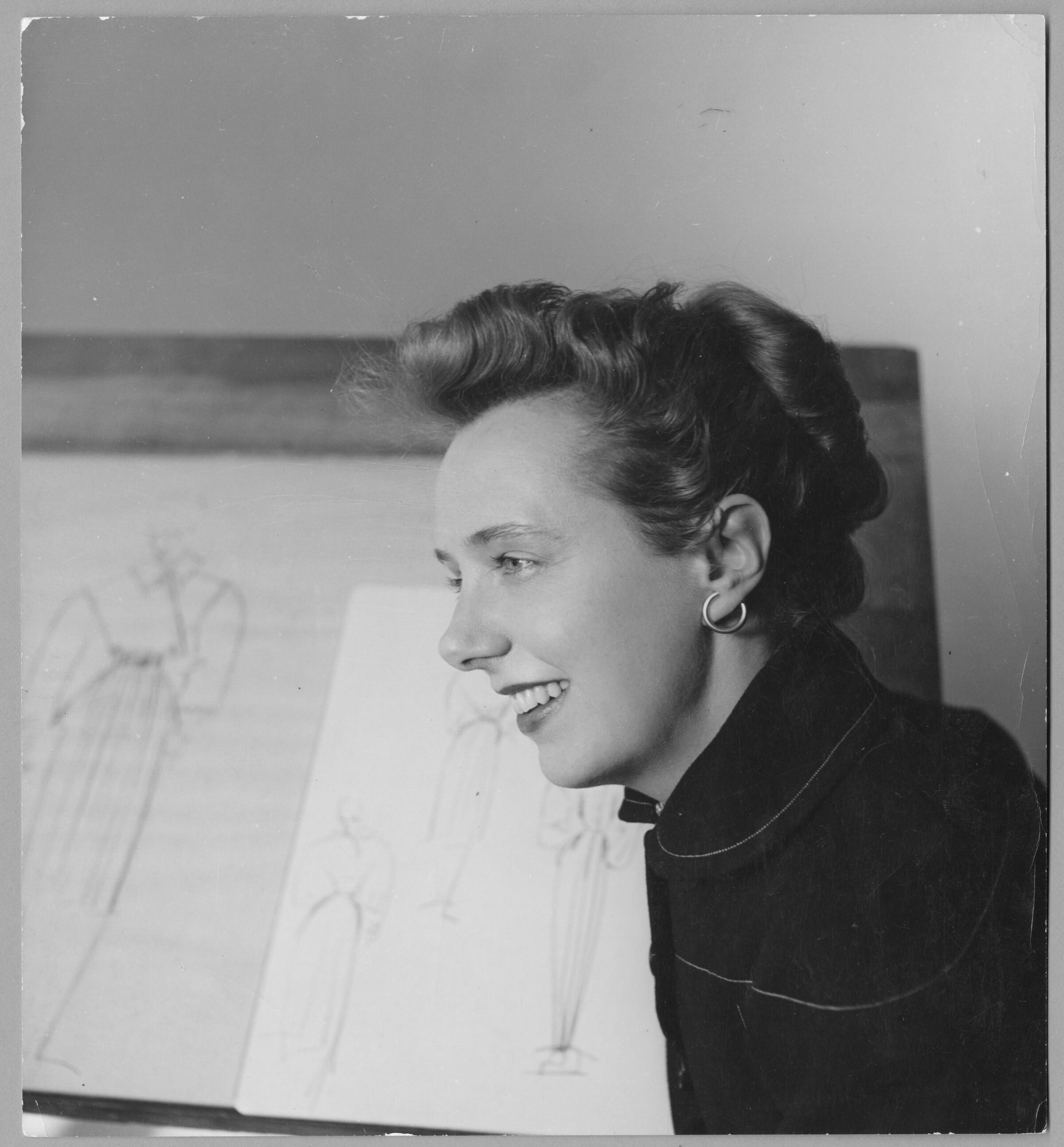
Figure 11. Claire McCardell in front of drawing board, ca. 1958.
 Primary Source Analysis Strategies

Primary Source Analysis Strategies
Figure 5. Claire McCardell modeling “futuristic dress,” cut out of triangles. 1945.
Comparing Dior “New Look” and McCardell’s “American Look”
- Look at this dress from the Metropolitan Museum of New York’s collection and compare it with the above image of Claire McCardell wearing one of her designs.
- What adjectives would you use to describe the Dior “New Look,” as exemplified by the dress at the Met Museum? What values would you associate with it, especially for women? Why?
- What adjectives would you use to describe McCardell’s “futuristic” dress? What values would you associate with it, especially for women?
- Why would McCardell create something so different from what was fashionable in France at this time? What does it mean to create an “American” look in fashion?
Time Magazine Article Analysis. "The American Look." 2 May 1955, 85-90.
- While reading this article from Time Magazine, write down the adjectives used to describe Claire McCardell’s designs. How does this article characterize McCardell’s work?
- What would you describe as the central thesis of this article? What are three points that the article uses to prove that thesis?
- Why is it important to have an “American” model of style at this time period? What historical context contributed to the rise of an “American Look” in the 1950s?
Blodgett, Betsy. “Deconstructing Claire McCardell.” Seamwork.com. May 31, 2017. https://www.seamwork.com/craft-projects/deconstructing-claire-mccardell?srsltid=AfmBOorpGQPmU9qK-_ScrxF5UEEhoGRaCureEOEfgXfn3xLCh4ou3dpQ
“Claire McCardell: An American Fashion Innovator.” The New York Historical. September 5, 2022.
https://nyhistory.org/es-us/blogs/claire-mccardell-an-american-innovator
Huggins, Amy. “Claire McCardell (1905-1958).” Archives of Maryland. 2006.
https://msa.maryland.gov/megafile/msa/speccol/sc3500/sc3520/013500/013581/html/13581bio.html
Hyland, Véronique. “Claire McCardell Predicted our Current Fashion Moment.” Elle Magazine. June 16, 2025. https://www.elle.com/fashion/a64795649/claire-mccardell-biography-elizabeth-evitts-dickinson-interview/
Limbong, Andrew. “Designer Claire McCardell revolutionized women’s fashion. Why isn’t she better known?” NPR. June 21, 2025. https://www.npr.org/2025/06/21/nx-s1-5418489/designer-claire-mccardell-revolutionized-womens-fashion-why-isnt-she-better-known
Strassel, Annemarie. “Designing Women: Feminist Methodologies in American Fashion.” Women’s
Studies Quarterly 41, no. 1/2 (2012): 35–59. http://www.jstor.org/stable/23611770
Wilds, Maggie. “Claire McCardell.” Vintagefashionguild.org. Accessed March 25, 2026.
https://vintagefashionguild.org/designer/claire-mccardell/
Wynn, Jake. “Claire McCardell – Famous Footsteps in Frederick.” Visitfrederick.org. February 22, 2026. https://www.visitfrederick.org/blog/stories/post/famous-footsteps-claire-mccardell/
MLA – National Women’s History Museum “Claire McCardell” National Women’s History Museum, 2026. Date accessed.
Chicago – National Women's History Museum. “Claire McCardell.” National Women’s History Museum. 2026 www.womenshistory.org/education-resources/biographies/first-lastname.
Elizabeth Keckley