Fannie Lou Hamer
Fannie Lou Hamer emerged as one of the most influential grassroots leaders of the U.S. Civil Rights Movement, becoming nationally known for her leadership in voting rights. organizing and the Mississippi Democratic Freedom Party as well as her powerful testimony against racial violence and disenfranchisement.
She lived and worked in the Jim Crow South, where entrenched systems of racial segregation, economic exploitation, and political exclusion shaped both her daily life and the strategies of the broader Black freedom struggle.
Through organizations such as the Student Nonviolent Coordinating Committee and the Mississippi Freedom Democratic Party, she transformed personal experiences of oppression into collective action rooted in moral clarity, courage, and community empowerment.
“Nobody’s free until everybody’s free.”
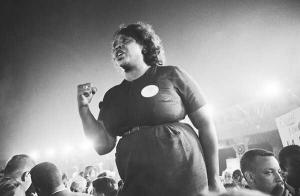
Fannie Lou Hamer during her speech at the founding meeting of the National Women's
Political Caucus in Washington, D.C., on July 10, 1971.
Early Life and Family Background
Fannie Lou Hamer was born on October 6, 1917, in Montgomery County, Mississippi. She was the youngest of twenty children born to Jim and Ella Townsend, formerly enslaved sharecroppers (Biography) . Soon after her birth, the family relocated to Sunflower County, Mississippi, where they labored on cotton plantations within the exploitative sharecropping system that dominated the post-Reconstruction Southern economy (Brooks; NMAAH). After Reconstruction, white landowners consolidated economic power through sharecropping, trapping many Black families in cycles of debt and poverty. This economic system shaped daily life in regions such as Sunflower County well into the twentieth century.
Beginning at six years old, Hamer worked long hours picking cotton to support her family. By approximately age twelve, she labored full-time in the fields rather than attending school consistently (Biography). Although her formal education ended early, Hamer studied the Bible intensively, developing a command of language and moral reasoning that later shaped her political activism (NMAAH). At sixteen, Hamer contracted polio, which limited her ability to work in the fields. Because she could read and write, plantation owners assigned her to work as a record-keeper, allowing her to observe firsthand how landowners manipulated wages, debts, and labor (Koinonia Farm).
Hamer’s upbringing reflected a broader system of racial and economic oppression. White landowners controlled employment, housing, and credit, while segregation laws enforced political exclusion through intimidation and violence. Hamer experienced hunger, exhaustion, and injustice as ordinary features of daily life. These conditions formed her political consciousness and grounded her later activism in lived experience with poverty, labor exploitation, and racial terror.
Marriage and Early Adulthood
In 1944, Hamer married Perry “Pap” Hamer, and the couple continued working as sharecroppers on the Marlow plantation in Sunflower County (PBS). Hamer worked both as a field laborer and as the plantation timekeeper, a role that exposed the systematic wage theft and credit manipulation used by white landowners to maintain Black economic dependence. Through this work, she developed an increasingly critical understanding of structural exploitation and racialized power.
Hamer experienced two miscarriages, likely related to childhood polio, which had left her with a
permanent limp, and polycystic ovarian syndrome (PCOS) . In 1961, doctors hospitalized her for severe abdominal pain and discovered a uterine tumor. During surgery, a white physician performed a hysterectomy without her informed consent, an act commonly described as a “Mississippi appendectomy” (Fannie Lou Hammer; NEH). This term referred to the widespread forced sterilization of poor Black women throughout the twentieth-century South, a practice rooted in eugenics and sustained by intersecting racial, gendered, and class-based power structures (Lasky, 2023). This medical violence deepened Hamer’s understanding of how racial oppression operated through healthcare as well as economic and political systems.
Entry into the Civil Rights Movement
On August 27, 1962, Hamer attended her first civil rights meeting at William Chapel Missionary Baptist Church after her friend Mary Tucker invited her (Fannie Lou Hammer). Although the Nineteenth Amendment granted women the legal right to vote in 1920, Black women in the South continued to face poll taxes, literacy tests, and all-white primaries that effectively denied them political participation (Kennedy Human Rights Center). At the meeting, James Bevel of the Southern Christian Leadership Conference and James Forman of the Student Nonviolent Coordinating Committee (SNCC) explained voting rights to the audience. Hamer later recalled, “I had never heard, until 1962, that Black people could register and vote” (NEH).
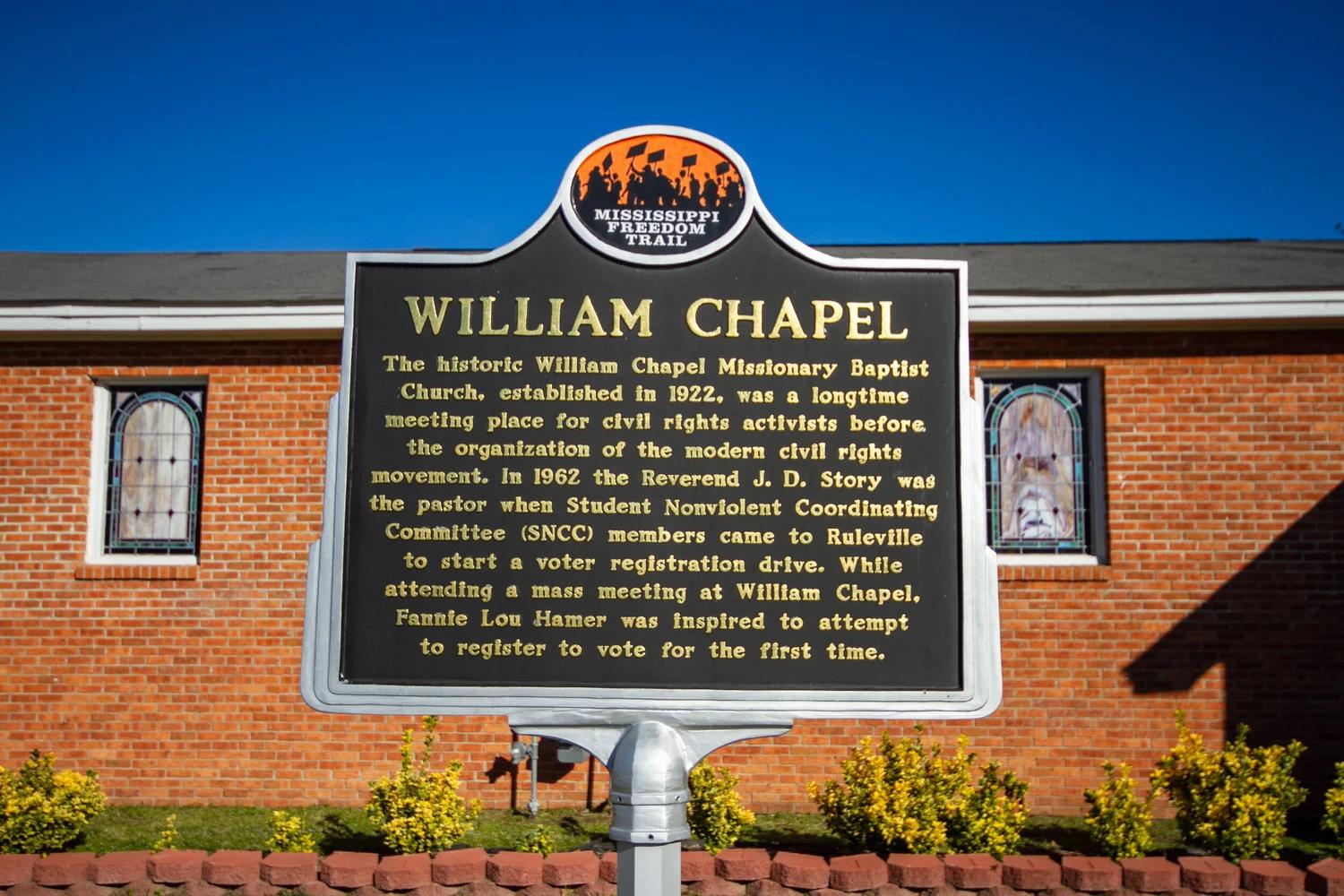
On August 31, 1962, Hamer joined eighteen others traveling to the Sunflower County Courthouse in Indianola to attempt to register to vote. Officials required her and one other applicant to complete a literacy test that included complex questions on the Mississippi Constitution and state laws (NEH). After failing the test, Hamer remarked, “I knowed as much about a facto law as a horse knows about Christmas Day” (NEH). She nevertheless vowed to return.
Mississippi enforced voter suppression through intimidation and public exposure. Newspapers published the names and addresses of Black voter registrants, enabling the Ku Klux Klan and other white supremacist groups to target them for violence (NEH).
Retaliation followed immediately. Police stopped the returning bus and fined the group for their bus being the wrong color (NEH). By the time she returned to the plantation, the White landowners threatened Hamer with eviction unless she withdrew her registration attempt. She refused, stating, “I didn’t go down there to register for you…I went down to register for myself” (NEH).
After losing her home and employment, Hamer devoted herself fully to voter registration work. She traveled across Mississippi encouraging Black citizens to exercise their constitutional rights and used hymns and spirituals to build solidarity in mass meetings (Biography; Koinionia Farm). Reflecting on her dismissal, she later said, “They kicked me off the plantation, they set me free…Now I can work for my people” (Biography).
Violence escalated as Hamer gained prominence. White supremacists fired sixteen shots into the home where she stayed on September 10, 1962 (NMAAH). Unshaken, she later stated “The only thing they could do was kill me, and it kinda seemed like they’d been trying to do that a little bit at a time since I could remember” (NMAAH). In January 1963, she finally passed the literacy test and became one of the few registered Black voters in Ruleville, Mississippi (Fannie Lou Hamer).
Repression, Violence, and Political Candidacy
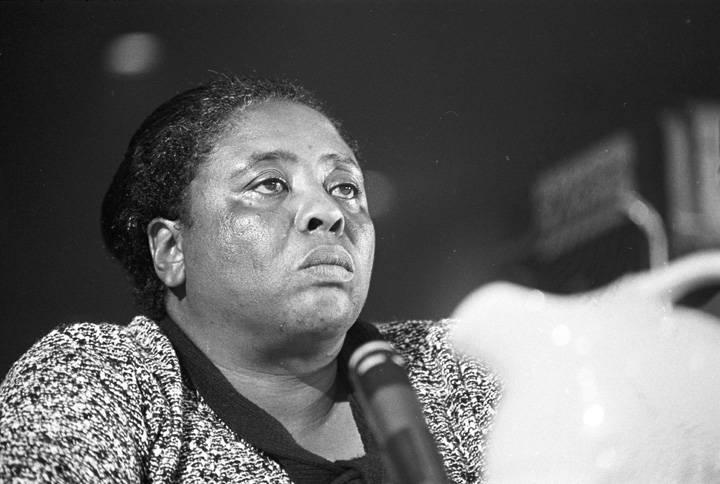
On June 9, 1963, police arrested Hamer and fellow activists in Winona, Mississippi, for sitting at a “whites only” lunch counter (NMAAH). Officers brutally beat her for days while imprisoned, leaving permanent injuries to her eyes, legs, and kidneys (PBS). Hamer later testified against the officers in federal court, though all were acquitted. The violence strengthened rather than deterred her commitment to civil rights activism.
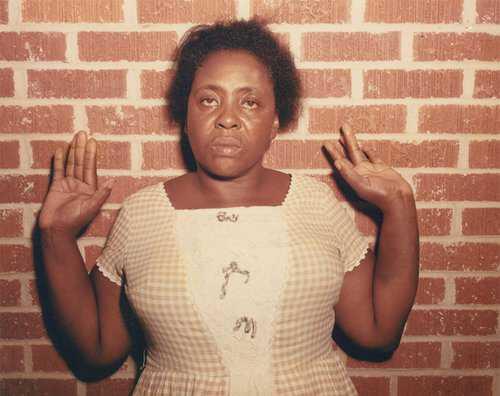
Figure 2. Hamer after being beaten in jail in 1963. Image courtesy of PBS.
In the spring of 1964, Hamer became the first Black woman to run for Congress and the first Black candidate in her district since the nineteenth century (Fannie Lou Hamer; PBS). Though she did not win, she continued to challenge political exclusion through electoral politics. She explained her motivation as a strategy to force accountability across regions, stating that change in the South would leave northern politicians “no excuse and nowhere to hide” (Smithsonian).
Mississippi Freedom Democratic Party and National Visibility
In 1964, Hamer co-founded the Mississippi Freedom Democratic Party (MFDP) to challenge Mississippi’s white primary and segregated Democratic delegation at the national convention (SNCC). The MFDP sought to represent disenfranchised Black Mississippians excluded from the state’s political system. Hamer emerged as the party’s most compelling spokesperson, known for her biblical cadence and moral clarity (PBS).
At the Democratic National Convention, the MFDP sought recognition as Mississippi’s legitimate delegation. President Lyndon B. Johnson worked aggressively to block the challenge to protect Southern Democratic Party support (PBS). Hamer’s riveting testimony before the Credentials Committee described her eviction, brutal beating, and denial of political rights, exposing segregation’s moral hypocrisy before a national audience.
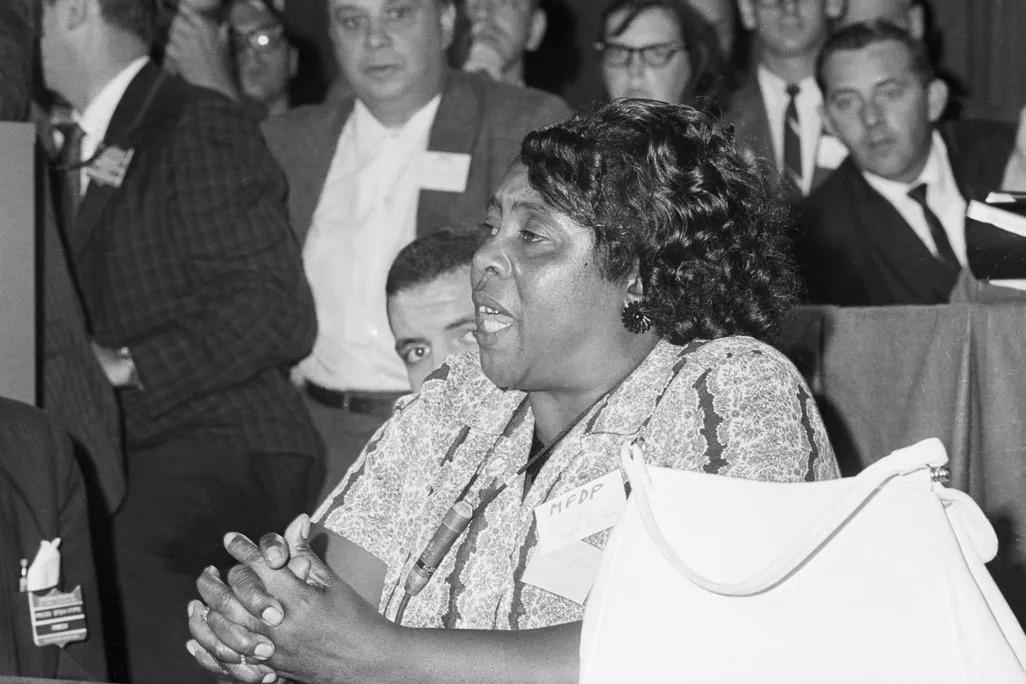
Johnson attempted to minimize the impact by calling an impromptu White House press conference, but national broadcasts later aired Hamer’s testimony widely (PBS). Her speech generated significant public response asking questions like: “Is this America, the land of the free and the home of the brave, where our lives be threatened daily, because we want to live as decent human beings?”, yet political pressure from Johnson and Hubert Humphrey led the committee to reject the MFDP challenge. Party leaders offered a symbolic compromise of two at-large seats, excluding Hamer. The MFDP rejected the offer. As Hamer declared, they had not come “all this way for no two seats” (PBS).
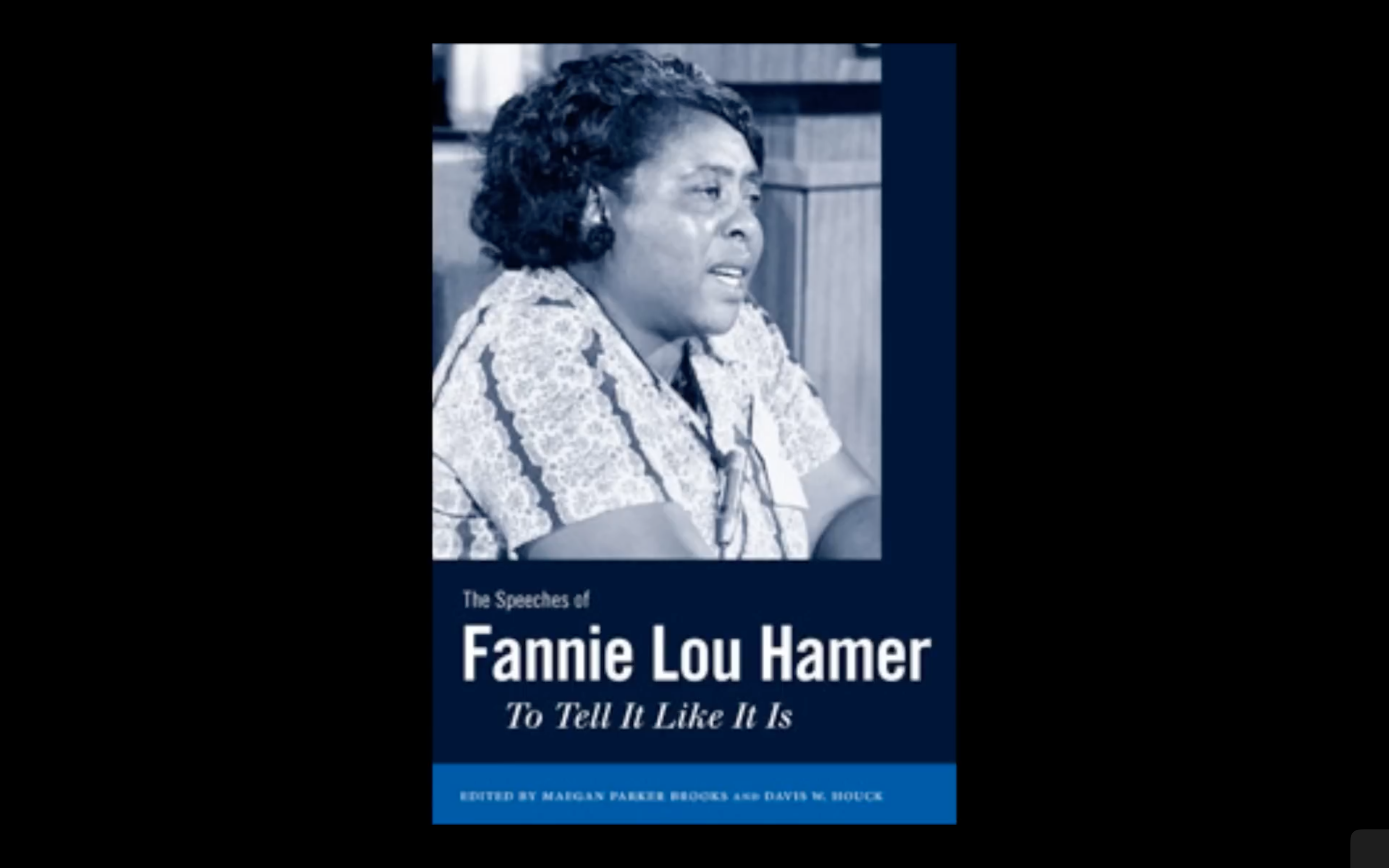
Figure 4. Hamer’s testimony. Courtesy of Fannie Lou Hamer.
The attention surrounding Hamer’s testimony, combined with nationwide Black-led protests, intensified pressure on the federal government to confront voter suppression (Women’s History). The resulting reforms targeted discriminatory state practices and expanded federal oversight of election laws. In the years following these efforts, the number of Black elected officials (particularly in Mississippi) increased significantly (Smithsonian).
Grassroots Organizing and Economic Justice
Four months later, on December 20, 1964, Hamer delivered her now famous speech, “I’m Sick and Tired of Being Sick and Tired” at a rally held at the Williams Institutional CME Church alongside Malcolm X. In the address, Hamer described the realities of racial discrimination, voter suppression, and political violence that Black Mississippians faced, grounding her argument in her own lived experiences. The speech called for moral urgency and justice, condemned the nation’s failure to uphold its democratic ideals, and demanded equal rights and dignity for Black citizens.
After 1964, Hamer expanded her activism at both local and national levels, continuing to challenge exclusionary political structures while centering the leadership of poor and working-class Black Mississippians. On January 4, 1965, Hamer traveled to Washington, D.C., alongside Annie Devine and Victoria Gray to challenge the legitimacy of Mississippi’s congressional delegation on behalf of the Mississippi Freedom Democratic Party (MFDP) (Fannie Lou Hamer). The delegation argued that Mississippi’s elected officials could not legitimately represent the state because systematic and unconstitutional voter suppression denied Black citizens access to the ballot.
Hamer also pursued voting rights through legal action. On April 23, 1965, she served as the lead plaintiff in Hamer v. Campbell, a lawsuit that sought to suspend elections in Sunflower County until Black residents received a fair opportunity to register to vote. In addition to legal advocacy, Hamer continued participating in mass protest. In June 1966, she marched alongside Martin Luther King Jr., Andrew Young, and other civil rights leaders during the “March Against Fear.” Throughout the march, Hamer sang, spoke, and helped sustain demonstrators amid persistent threats of violence.
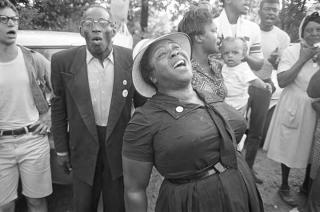
Recognizing that political rights remained inseparable from economic security, Hamer increasingly focused her activism on poverty and hunger in the Mississippi Delta. Her commitment deepened in 1967 after the death of her eldest adopted daughter, Dorothy Jean, whose death resulted from complications related to anemia, malnutrition, and inadequate medical care. In response, Hamer and her husband, Pap Hamer, adopted Dorothy Jean’s two young daughters. This personal loss strengthened Hamer’s resolve to confront the structural conditions that endangered Black families in the region (Fannie Lou Hamer).
That same year, Hamer testified before a U.S. Senate subcommittee as a representative of Mississippi Action for Community Education (MACE), joining leaders such as Unita Blackwell and Amzie Moore (Fannie Lou Hamer). Speaking directly before Senator Robert F. Kennedy, Hamer exposed the severity of hunger, poverty, and neglect in the Mississippi Delta. Her testimony contributed to growing national awareness of food insecurity and helped prompt broader federal attention to hunger in the United States.
Political Leadership and Community Building
In 1968, with support from the National Council of Negro Women, Hamer launched the “Pig Bank” program in Sunflower County. The initiative provided livestock to malnourished families in order to promote long-term food sustainability and economic independence (Fannie Lou Hamer; SNCC). Limited funding and insufficient federal support eventually forced the program to close.
On August 20, 1968, Hamer was formally seated as a delegate from Mississippi at the Democratic National Convention in Chicago. Delegates acknowledged her presence with a standing ovation, marking a partial but meaningful recognition of her sustained struggle for voting rights (Fannie Lou Hamer). Between 1968 and 1972, Hamer received multiple honorary doctorates and national awards, including recognition as the “First Lady of Civil Rights,” underscoring her influence as a grassroots political leader.
In 1969, Hamer translated her vision of economic justice into material action by purchasing land for the Freedom Farm Cooperative using funds she raised through national speaking tours (Fannie Lou Hamer). What began as forty acres eventually expanded to nearly seven hundred acres, providing food, housing, and employment while becoming one of Sunflower County’s largest employers (Fannie Lou Hamer). Freedom Farm embodied Hamer’s belief that meaningful freedom required not only political rights, but also land ownership, food security, and dignity.
Later Years and Legacy
Hamer continued challenging political barriers through public office campaigns and national organizing. She served again as a national convention delegate and helped establish the National Women’s Political Caucus in 1971, where she delivered her prominent address “Until I am free, You Are Not Either” (Biography). Despite declining health throughout the 1970s, Hamer remained active in organizing, public speaking, and mentoring younger activists until her death from breast cancer on March 14, 1977.
Hamer’s legacy extended well beyond her lifetime through institutions, public memory, and political language that continued to carry her name. Schools, libraries, museums, and educational programs across the United States preserved and taught her life and work, affirming her significance not only as a historical figure but as an enduring voice in democratic struggle (Fannie Lou Hamer). Federal legislation, national museums, and public memorials formally recognized her contributions, securing her place in the history of American democracy and civil rights. Hamer’s words and example continued to resonate in contemporary movements for racial justice and voting rights, where activists invoked her insistence on dignity, accountability, and grassroots power. The sustained efforts to study, teach, and honor her life demonstrated the enduring relevance of her vision of participatory democracy.
 Primary Source Analysis Strategies

Primary Source Analysis Strategies
Style: Analyzing Sound Recordings
- Hamer testifies before the Credentials Committee
- Caption: Testimony before the Credentials Committee, Democratic National Convention, August 22, 1964
- Primary source inquiry:
- How do Hamer’s tone, pacing, and vocal delivery contribute to the authority and urgency of her testimony when compared to a written transcript?
- What power dynamics emerge during Hamer’s testimony, particularly in the relationship between grassroots activists and national political leaders?
- How does this audio recording function as both political evidence and historical documentation of voter suppression, state violence, and resistance?
Style: Analyzing Primary Resources
- “I’m Sick and Tired of Being Sick and Tired”
- Caption: The transcript to Hamer’s December 20, 1964, speech.
- Primary source inquiry:
- How does Hamer use personal testimony and lived experience to illustrate the broader realities of racial discrimination, voter suppression, and political violence in Mississippi?
- In what ways does Hamer frame the gap between American democratic ideals and the daily treatment of Black citizens, and how does this framing appeal to both moral conscience and political responsibility?
- How does the setting of a church rally and Hamer’s use of religious language and repetition shape the persuasive power and emotional force of the speech?
Style: Analyzing Newspaper
- She Scared L.B.J.
- Caption: An article in the New York Times written by Nicolaus Mills. Published February 7, 1993.
- Primary source inquiry:
- How does the author situate Hamer’s 1964 testimony within the broader narrative of civil rights history and Democratic Party politics?
- What language does the article use to describe Hamer’s impact, and how does it frame her relationship to political power and authority?
- How does this retrospective newspaper account shape public memory of Hamer differently than contemporary sources from the 1960s might have?
Biography.com Editors. “Fannie Lou Hamer.” Biography.com. A&E Television Networks. https://www.biography.com/activists/fannie-lou-hamer.
Farmer, Ashley D. “Tracking Activists: The FBI’s Surveillance of Black Women Activists Then and Now.” The American Historian, Organization of American Historians. https://www.oah.org/tah/history-for-black-lives/tracking-activists-the-fbis-surveillance-of-black-women-activists-then-and-now/.
Gilder Lehrman Institute of American History. “Heart and Soul: Fannie Lou Hamer, an Extraordinary African American Leader.” https://www.gilderlehrman.org/history-resources/essays/heart-and-soul-fannie-lou-hamer-extraordinary-african-american-leader.
Kennedy Human Rights. “Fannie Lou Hamer: An Activist for Civil Rights and Women’s Rights.” https://kennedyhumanrights.org/our-voices/fannie-lou-hamer-an-activist-for-civil-rights-and-womens-rights/.
Kinfolk History. “Fannie Lou Hamer Biography.” https://kinfolkhistory.com/biography/Fannie%20Lou%20Hamer%20Biography/120.
King Institute, Stanford University. “Hamer, Fannie Lou.” https://kinginstitute.stanford.edu/hamer-fannie-lou.
Koinonia Farm. “Peacemakers Series: Fannie Lou Hamer.” https://koinoniafarm.org/blog/peacemakers-series-fannie-lou-hamer/.
Lasky, Jenna. “Mississippi Appendectomy.” EBSCO Research Starters: Women’s Studies and Feminism, 2023. https://www.ebsco.com/research-starters/women-s-studies-and-feminism/mississippi-appendectomy.
Mississippi Today. Wright, Aallyah. “Civil Rights Hero Fannie Lou Hamer’s Legacy Lives On.” October 4, 2017. https://mississippitoday.org/2017/10/04/civil-rights-hero-fannie-lou-hamer-legacy-lives-on/.
National Endowment for the Humanities. “Sweat and Blood: Fannie Lou Hamer.” https://www.neh.gov/article/sweat-and-blood-fannie-lou-hamer.
National Museum of African American History and Culture. “How Fannie Lou Hamer Challenged the Nation.” Smithsonian Institution. https://nmaahc.si.edu/explore/stories/how-fannie-lou-hamer-challenged-nation.
Peppler, Jim. “Fannie Lou Hamer Singing to a Group of People during the ‘March Against Fear’ through Mississippi, Begun by James Meredith.” Photograph, June 1966. Alabama Department of Archives and History. Accessed April 20, 2026. http://digital.archives.alabama.gov/cdm/ref/collection/peppler/id/9171.
PBS. “Fannie Lou Hamer’s Testimony.” American Experience. https://www.pbs.org/wgbh/americanexperience/features/freedomsummer-hamer-testimony/.
PBS. “Fannie Lou Hamer.” American Experience. https://www.pbs.org/wgbh/americanexperience/features/freedomsummer-hamer/.
Smithsonian Magazine. “Fannie Lou Hamer’s Dauntless Fight for Black Americans’ Right to Vote.” https://www.smithsonianmag.com/history/fannie-lou-hamers-dauntless-fight-for-black-americans-right-vote-180975610/.
SNCC Digital Gateway. “Fannie Lou Hamer.” https://snccdigital.org/people/fannie-lou-hamer/.
SNCC Digital Gateway. “Mississippi Freedom Democratic Party (MFDP).” https://snccdigital.org/inside-sncc/alliances-relationships/mfdp/.
SNCC Digital Gateway. “Fannie Lou Hamer Founds Freedom Farm Cooperative.” https://snccdigital.org/events/fannie-lou-hamer-founds-freedom-farm-cooperative/.
Voices of Democracy. “Fannie Lou Hamer, ‘We’re On Our Way’ (1964): Speech Text.” University of Maryland. https://voicesofdemocracy.umd.edu/hamer-were-on-our-way-speech-text/.
Women’s History Initiative, Smithsonian Institution. “Fannie Lou Hamer and the Fight for Voting Rights.” https://womenshistory.si.edu/blog/fannie-lou-hamer-and-fight-voting-rights.
Zinn Education Project. “Fannie Lou Hamer Born.” https://www.zinnedproject.org/news/tdih/fannie-lou-hamer-born.
MLA – Robledo-Allen Yamamoto, Asami. “Fannie Lou Hamer.” National Women’s History Museum, 2026. Date accessed.
Chicago – Robledo-Allen Yamamoto, Asami. “Fannie Lou Hamer.” National Women’s History Museum. 2026 www.womenshistory.org/education-resources/biographies/XXXX
Until I Am Free: Fannie Lou Hamer’s Enduring Message to America by Keisha N. Blain
Walk with Me: A Biography of Fannie Lou Hamer by Kate Clifford Larson
Voices of Freedom: Fannie Lou Hamer, Spirit of the Civil Rights Movement by Carole Boston Weatherford
Find Your Voice: The Online Resource for Fannie Lou Hamer Studies
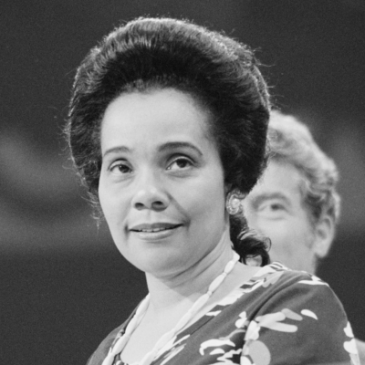
Coretta Scott King
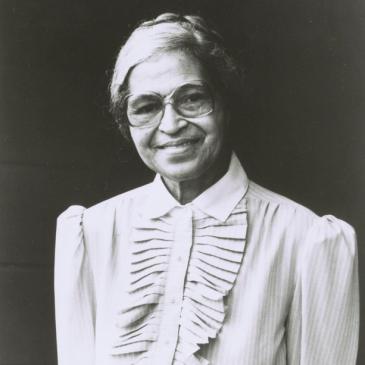
Rosa Parks
Ida B. Wells-Barnett
Sojourner Truth