
Analyzing the Meaning of Freedom
Grade Level
10th • 11th • 12th
Subject Area
English, Poetry, Language Arts
Standards Addressed
Freedom, Civil rights, Liberation, Poetry Analysis, Feminism
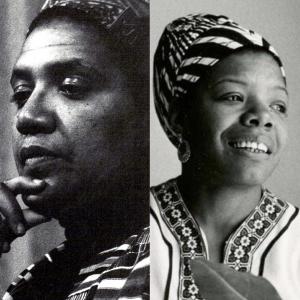
This lesson plan, created as a part of the 2025 For Educators By Educators cohort, students analyze the poetry of both Audre Lorde and Maya Angelou, using selected examples of their work, and determine the meaning of “freedom” as written by both women. Students will use the knowledge they learn about both poets’ lives and the time period they lived to their analysis to understand how history and personal experience shaped the poems of both Lorde and Angelou.
Guiding Questions
- How do both of these poems portray the concept of freedom, and how can one concept be expressed in multiple ways?
- How does the time period and the background of both women impact their writing and portrayal of freedom in their poetry?
- How can poetry be used in modern contexts to express concepts such as freedom?
- How are both poems intertwined? What are the similarities and intersections of each poem?
1-2 Class Periods (90 minutes)
- Students will be able to analyze the poetry of both Audre Lorde and Maya Angelou, using selected examples of their work, and determine the meaning of “freedom” as written by both women.
- Students will be able to bring in the knowledge of both poets’ lives and the time period they lived during their analysis, understanding how history and personal experience shaped the poems of both Lorde and Angelou.
Vocabulary and Key Terms
- Litany
- Liberation
- Civil rights
- Advocacy
- Freedom
- Stanza
- Metaphor
- Blank verse
Biographical Articles
Primary Sources
Audre Lorde
- Poem: “A Litany for Survival” (1978)
- Audio Clip of Poem Reading
Maya Angelou
- Poem: “Caged Bird” (1983)
- Audio Clip of Poem Reading
Lesson Introduction/Hook
Warm-up
Ask students to write everything that comes to mind when they think of the word “poetry”.
- Give them one minute to free think and write anything that comes to mind.
- Emphasize that there are no wrong answers—this is solely to get them warmed up and thinking.
After all students are done, have a class discussion where students are invited to share out their answers and build off each others’ ideas. If students are hesitant to voice their answers, prompt them with questions such as:
- “How do you think poetry can be used to convey ideas and emotions?”
- “ What kind of themes and ideas do you think are expressed in poetry?”
Reflection & Connection
Ask them to think about how they may express themselves with poetry, because they will have the opportunity to later in the lesson. You may also ask who any poets they may have prior knowledge of are and if they know any poems already.
Direct Instruction
- Post “Caged Bird” by Maya Angelou on the board. Read the poem aloud for an initial read-through. Tell the students about annotation and inform them of what a successful annotation of a poem should be, emphasizing that their annotations should include how “freedom” is portrayed in the poem. After this, annotate the first stanza while voicing all annotations to the students so they may see the practice and thought process behind the annotation.
- Ask for students to help annotate the rest of the poem with their own suggestions and thoughts. Assist students by helping them shape these ideas into proper annotations, then write them on the posted poem. Again, this should be done with an emphasis on the concept of “freedom” and what it means to Angelou.
- Do a recap of the annotations given, bringing them altogether and asking students if they have any questions.
- Have the class read the NWHM’s biography of Maya Angelou individually. Then, reconvene as a class and discuss how Angelou’s life might have impacted “Caged Bird”. Help the students out here with probing questions if they are struggling: How might have race, gender, sexual assault, childhood, etc., influenced her poetry?
- Be aware that these are mature topics and themes. Please give your class a warning about the content of the lesson before reading the poem and discussing it. Use your best judgement of your students to determine if this content is appropriate for your class.
- Ask students if these concepts that Angelou writes of her “freedom” from are still relevant to today’s world. Ask students to think to themselves of how they may portray these topics in a modern setting as applied to their own life as they reread the poem.
Guided Practice
Group Annotation
Students will now annotate their own copies of “Caged Bird”. They will annotate these copies with an emphasis on freedom, but will do so with the knowledge of Angelou’s life. They should do this in groups/ partners. Move around the room and check in with each group as they discuss to hear ideas, aid discussion, and answer questions. Talk with each group, ensuring they incorporate annotations and ideas about Angelou’s experience with sexual violence, racism, sexism, poverty, divorce, etc.
Discussion
After each group has done their own annotations, ask all groups to share out as a class to collaborate and discuss their ideas. Guide the discussion, but rely on students and their ideas. Ask pointed questions about the portrayal of “freedom” in “Caged Bird” and how knowing about Angelou’s life impacts the reading of the poem for this concept. Encourage students to share openly and build on each others’ ideas freely.
Independent Practice
- Students will repeat the above activities on their own for the poem “A Litany for Survival” by Audre Lorde. They will annotate their own copies of the poem with an emphasis on freedom and what it meant to Lorde, read her biography, and then annotate the poem again with reference and respect to her life.
- Students should then reflect on how the poem’s meaning changed for them after reading about Lorde’s life. Have them discuss this with a partner or group.
- Again, ask students if these concepts that Lorde writes of her “freedom” from are still relevant to today’s world. Ask students to think to themselves of how they may portray these topics in a modern setting as applied to their own life as they reread the poem.
Closure/Exit Ticket
Before students leave class and begin their own poem, ask them to stand on opposite sides of the room: one side if they liked Lorde’s poem better, the other if they liked Angelou’s poem better. Ask a couple students from each side to share why they enjoyed their chosen poem more.
Formative Assessment
The instructor should be looking at the student annotations as the lesson progresses. They should hear the annotations and ideas of students during direct instruction and guided practice, as well as moving around the room to check in with students and ensure they are understanding the lesson. As students work individually, the teacher should also circle the room and check in with students, providing both positive feedback and helpful suggestions.
Summative Assessment
Description
Ask students to write their own poem on what freedom means to them. They should use both Angelou and Lorde’s works as examples, and think about how both authors portrayed freedom. They may be given guided questions to help them get started:
- What are they “free” from?
- Are they writing about something they are currently free from, or in the process of being free from?
- Do they want to write about freedom from a societal concept or a personal issue?
Requirements
Determine how long/ how many lines the poems should be and if you have any other requirements. It is suggested that the poems should be at least 8-10 lines, but this can be altered depending on your class.
Reflection
Ask students to write a reflection after their poem is turned in. This reflection should include what the poem is about, what they showed being “free” from, how they decided what to write about, and how their own lives impacted the writing of the poem. They may also reference Lorde and/ or Angelou’s work as part of this process.
Differentiation / Accommodations
- Students who have anxiety about speaking aloud in class may choose not to, or to give their ideas to another student in their group or the instructor to voice.
- Groups may be chosen by students or determined by the teacher depending on the individual class.
- These poems contain sensitive subject matter such as racism, sexism, homophobia, and sexual violence/ assault. Content warnings should be given to students, and students may choose to voice any concerns with their teacher about their sensitivity to these subjects. Students may need extra time to finish the assignment or extra support when dealing with the content; teachers should use their best discretion and knowledge of their students to determine if the content of this lesson is appropriate for their class.
- For those who need it, the poems may be all read aloud and lines may be repeated as needed. The Audre Lorde poem may be read aloud to individual students and/or the whole class.
- There are audio recordings online that students may listen to at their own pace linked in the “materials” section.
Extension Activities / Enrichment
Peer Review
If students are comfortable with others reading their poems, they may be switched with a classmate’s poem and annotated in the style of Lorde and Angelou’s.
Exploration & Presentation
Students may find their own work that encapsulates what freedom means to them and present on it. This may be strictly other works of poetry, or opened to all forms of media such as books, movies, TV, art, music, etc.
Reflection and Teacher Notes
Teachers should reflect on the process and see what worked for them and their class.
- Did students need an extra example?
- How did students fare with annotations?
- Is there less or more time needed?
- Did the groups work well, or should your class be limited to partners/ individuals?