Mary Cassatt
Mary Cassatt was an Impressionist artist known for her depictions of women’s domestic lives in the 19th century and her technical innovations to her artistic practice.
She was an advocate for Women’s Suffrage, sponsoring exhibitions which funded the cause and including imagery that represented the movement in her artworks.
Cassatt’s work redefined portrayals of women in the 19th century by demonstrating their autonomy as subjects and illuminating their inner worlds.
“If I have not been absolutely feminine, then I have failed.”
Mary Cassatt, 1892 (MoMA)
Early Life and Training
Mary Cassatt was a painter who boldly rebelled against social expectations for women and artists in the 19th century. Born into an upper-class family in Allegheny, Pennsylvania in 1844, she lived most of her adult live in France and traveled around the world as a professional artist. She made her name as an Impressionist and was one of the most highly regarded artists by her contemporaries of her time. Particularly known for her intimate portrayals of women, her artworks redefined portrayals of modern female life by depicting women as active, intellectual, and authentic subjects in late 19th-century Paris.
Cassatt, as part of the wealthy elite of Pennsylvania, she was supposed to grow up and take her place in the upper-class world, inheriting its privileges and enduring its restrictions. Her father was a stockbroker, her mother came from a banking family, and one of her brothers became president of the Pennsylvania Railroad.
As a woman, she could learn to paint as either an amusement or as some level of refinement that might be desirable for a businessman’s wife. She was not meant to sell her work, much less call herself a professional artist. At fifteen, she began studying at the Pennsylvania Academy of Fine Arts in Philadelphia. She was frustrated by the attitudes of male students and found the teachers patronizing and too slow paced. She was not allowed to draw from live models like the other male students and instead drew from inanimate objects. Her father did not support her ambitions due to her lack of conformity to gender roles of the time and refused to give her money for her supplies, so she supported herself by selling her work.
When Cassatt was training in the late 19th century, there were very few professional American artists and a limited structure for formal artistic schooling compared to Europe, especially France and Italy. There were no museums at which Cassatt could study the “Great Masters,” who were artists of the 16th-century who were considered the golden standard of artistic practice. Because of these limitations, Cassatt resolved to leave the United States and went with her mother to Paris in 1866 to study with teachers from the Ecole des Beaux Arts.
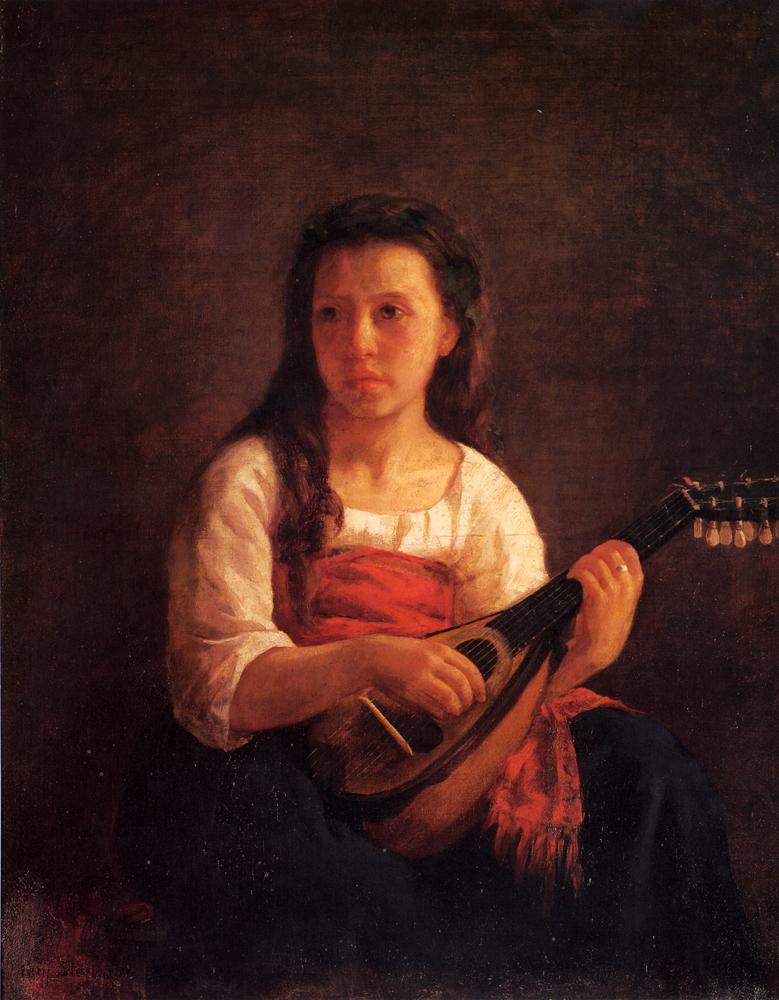
Figure 1. Mary Cassatt, A Mandolin Player (1868). Private Collection.
In Paris, Cassatt was thrown into an exhilarating artistic scene. While women were not allowed to officially enroll at the Ecole des Beaux Arts, she took courses privately with Charles Chaplin and Thomas Couture. She finally had the opportunity to draw from life, and to copy masterworks at the Louvre. In 1868, one of her paintings, A Mandolin Player, was accepted into the Paris Salon, which was the official art exhibition of the Académie des Beaux-Arts and the most prestigious art show in Europe (Met Museum). Cassatt and Elizabeth Jane Gardner were the first American women to be accepted.
In 1870, the outbreak of the Franco-Prussian War forced Cassatt to return to the States, much to her dissatisfaction. “I cannot tell you what I suffer for the want of seeing a good picture,” she wrote to a friend upon her return (MoMA). Still not supported by her family, she traveled to Chicago to try to sell some of her work. Unluckily, the Great Chicago Fire destroyed many of her pieces. Her luck changed, however, when the archbishop of Pittsburg commissioned her to paint copies of works by Correggio. This opportunity allowed her to travel to Parma, Italy in 1871. (Met Museum). In 1874, she found her way back to Paris, a permanent move which upset her father greatly. He reportedly told her he would rather see her dead than living as a bohemian in Paris.
Meeting the Impressionists: Little Girl in Blue Armchair
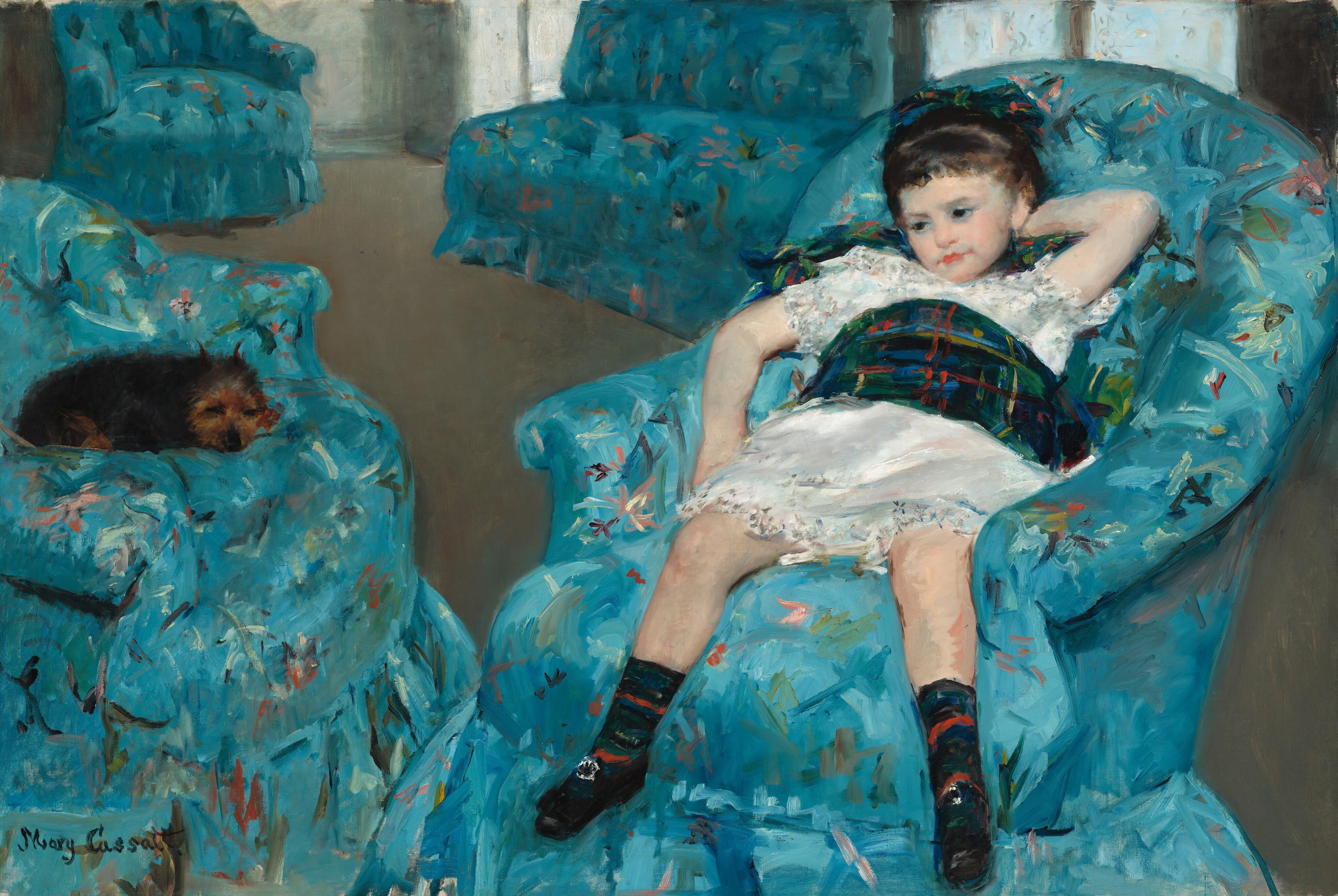
Figure 2. Mary Cassatt, Little Girl in a Blue Armchair (1878). Oil on canvas.
Cassatt was back to the Paris art scene, but she began to tire of the tastes of the Salon and was frustrated with how little they included female artists. Still without funds for her artistic pursuits, she could not pay models and instead painted her sister Lydia, who lived with her in Paris until the end of her life. She would continue to paint friends and their children, eventually paying some members of her domestic staff to pose as upper class women for painted scenes (Famsf).
Cassatt first became exposed to Impressionism through Edgar Degas, whose pastels she discovered in an art gallery on the Paris streets. She later recalled, “I used to go and flatten my nose against that window and absorb all I could of his art... I saw art then as I wanted to see it” (WAM). In 1878, she began a lifelong friendship with Edgar Degas. He would teach her new artistic techniques, such as engraving, and she would help him to sell works in the U.S. Cassatt also posed frequently for Degas.
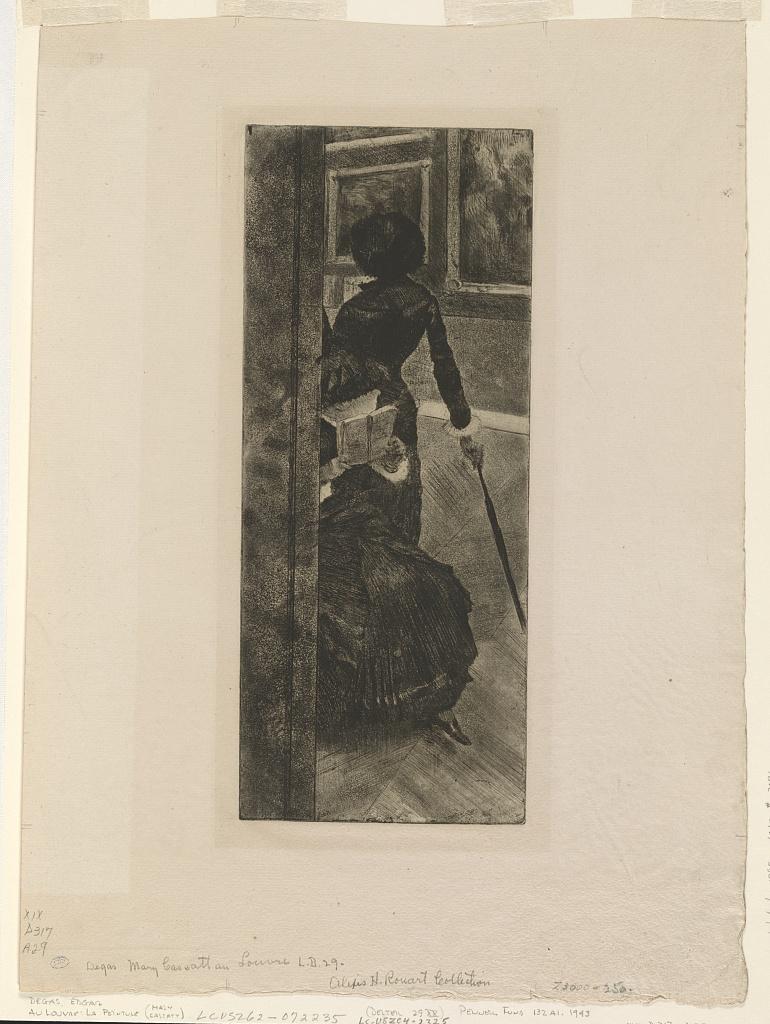
Figure 3. Edgar Degas, Mary Cassatt at the Louvre (ca. 1879). Etching, aquatint, and drypoint on
paper.
In 1879, Degas invited her to participate in an Impressionist exhibition, displaying 11 of her works. This was their most successful and profitable exhibition as a group thus far. Little Girl in a Blue Armchair (1877–1878) was shown at this exhibition. With its loose brushwork and her young model’s sassy attitude, it was originally rejected from the Exposition Universelle in Paris (Famsf). Her association with the Impressionists changed her style completely. She stopped creating costume genre depictions, which were fashionable at the time in the Academy circles, and started creating scenes from contemporary urban life.
Little Girl in a Blue Armchair is one of Cassatt’s most iconic works, renowned for its dynamic style and the captivating realism of the young girl’s expression. The girl, who is the daughter of one of Cassatt’s friends, sits on the chair with a defiant kind of exhaustion. She seems to have flung herself down in this chair which is too large for her. She is still in a kind of motion as if she just flopped down. Her hair and clothes remind us of the adult world that has dressed her, one which she rejects in her casual disdain and movement. It is an exceptionally modern painting in the way it was created, and it depicts modern life as Cassatt lived it. Cassatt intentionally created a spontaneous and rapid-looking final product. Yet, certain details are treated with tremendous attention, such as the girl’s knee and the little dog, a beloved pet given to Cassatt by Degas. The dog himself is content in a way that the little girl is not. The dog is not encumbered by the expectations of respectability of this class to which Cassatt, and this little girl, belonged. It is a painting of a disobedient girl by a woman who often broke the rules (Smarthistory).
Parisian Society: In the Loge
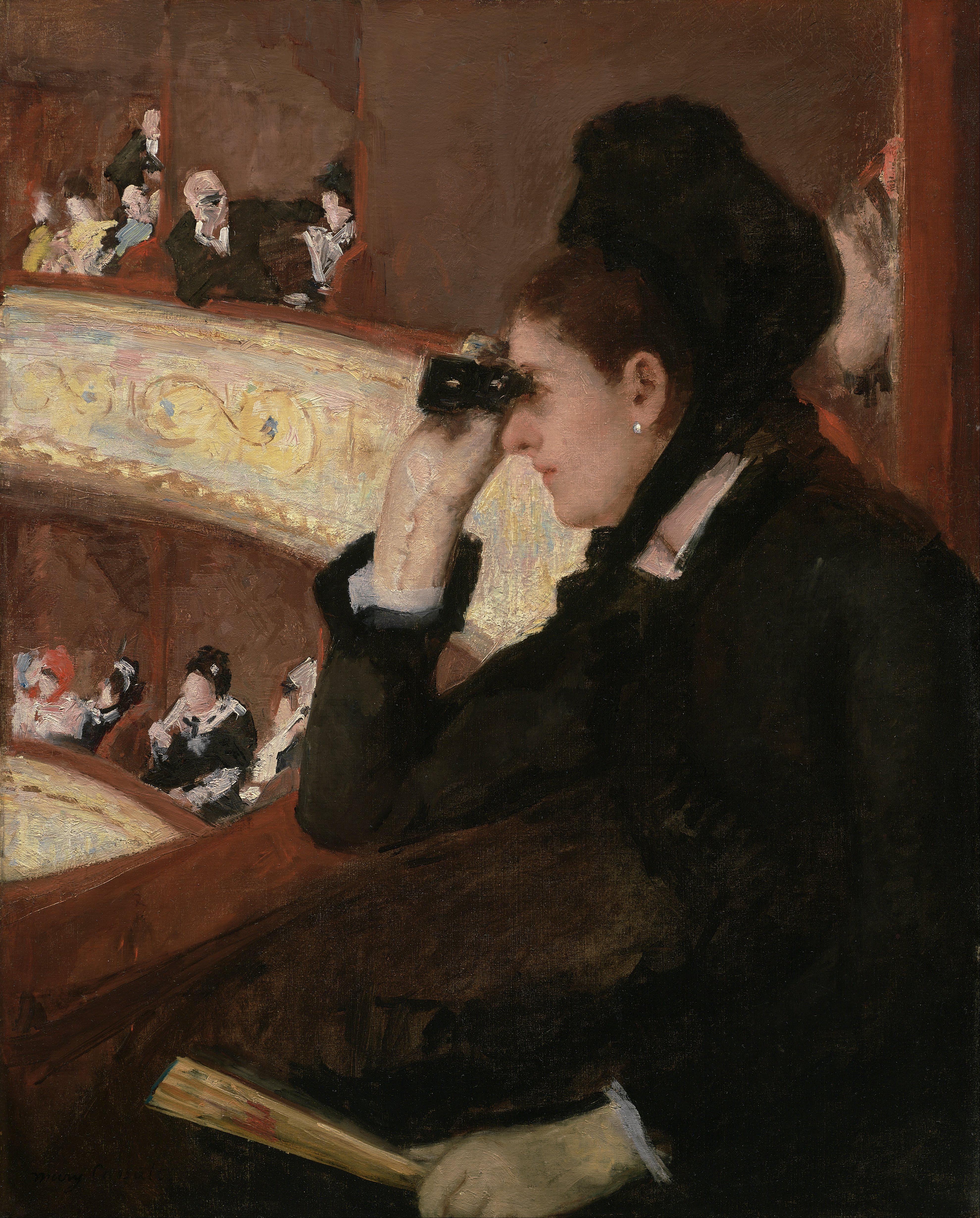
Figure 4. Mary Cassatt, In the Loge (1878). Oil on canvas.
Cassatt often painted at the opera because it was one of the few places where she as a woman in this period could partake in the act of looking and being seen, which was central to the artistic practice of the Impressionists. Monet, Renoir, and artists like them would paint at dance halls, cafes, bars, and social spaces of the city. As a woman, especially as one of her class, she could not be free in those spaces in the same way as her male contemporaries. The opera was her solution to capture urban life outside of the home (WAM). The opera was a social space in which one could spectate not only the show, but also the people around them. This is the subject matter of In the Loge, an 1878 painting in which Cassatt depicts a woman actively engaged in spectatorship.
Cassatt painted several other works in this setting, as did many of her contemporaries. Her work is unique, however, in the woman protagonist’s agency in In the Loge. The lights have come up on the audience, likely in intermission, and the subject uses the opportunity to look through her opera glasses at some detail not known to the viewer, perhaps another member of the audience. She sits in the opera box leaning over the edge, with her elbow on the barrier. In fact, unbeknownst to her, she resembles the man in the background actively looking across the opera house at her. She is caught between two gazes, that of the male figure and that of the painting’s viewers (Smarthistory).
A Woman Printmaker: In the Omnibus
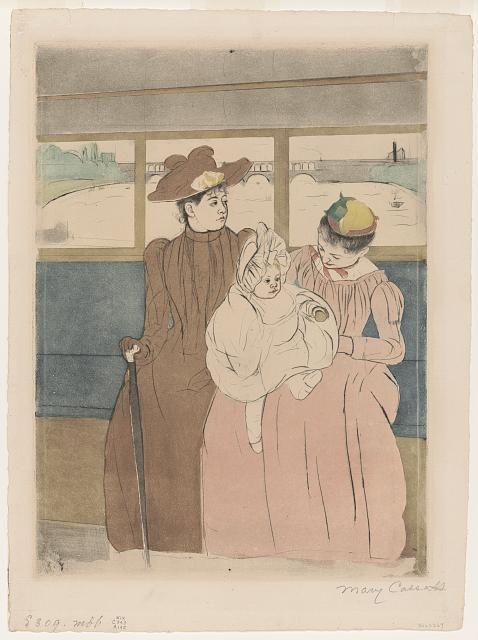
Figure 5. Mary Cassatt, In the Omnibus (1891). Color drypoint and aquatint on laid paper.
In April of 1890, the École des Beaux-Arts in Paris held an exhibition of Japanese woodblock prints. These evocative images of the Ukiyo-e, or “pictures of a floating world,” genre contained scenes of upper-middle class life, including scenes of women in domestic worlds and of natural beauty in Japan. This exhibition was remarkably well received and cultivated a growing interest in Japanese culture within Europe since Japan had reopened to Western trade in 1853 (Smarthistory). Mary Cassatt herself saw the exhibition and was hooked. In a letter to fellow painter Berthe Morisot, she wrote,
“You who want to make color prints wouldn’t dream of anything more beautiful. I dream of doing it myself and can’t think of anything else but color on copper…P.S. You must see the Japanese—come as soon as you can.”
Cassatt in 1890 letter to Berthe Morisot (MoMA).
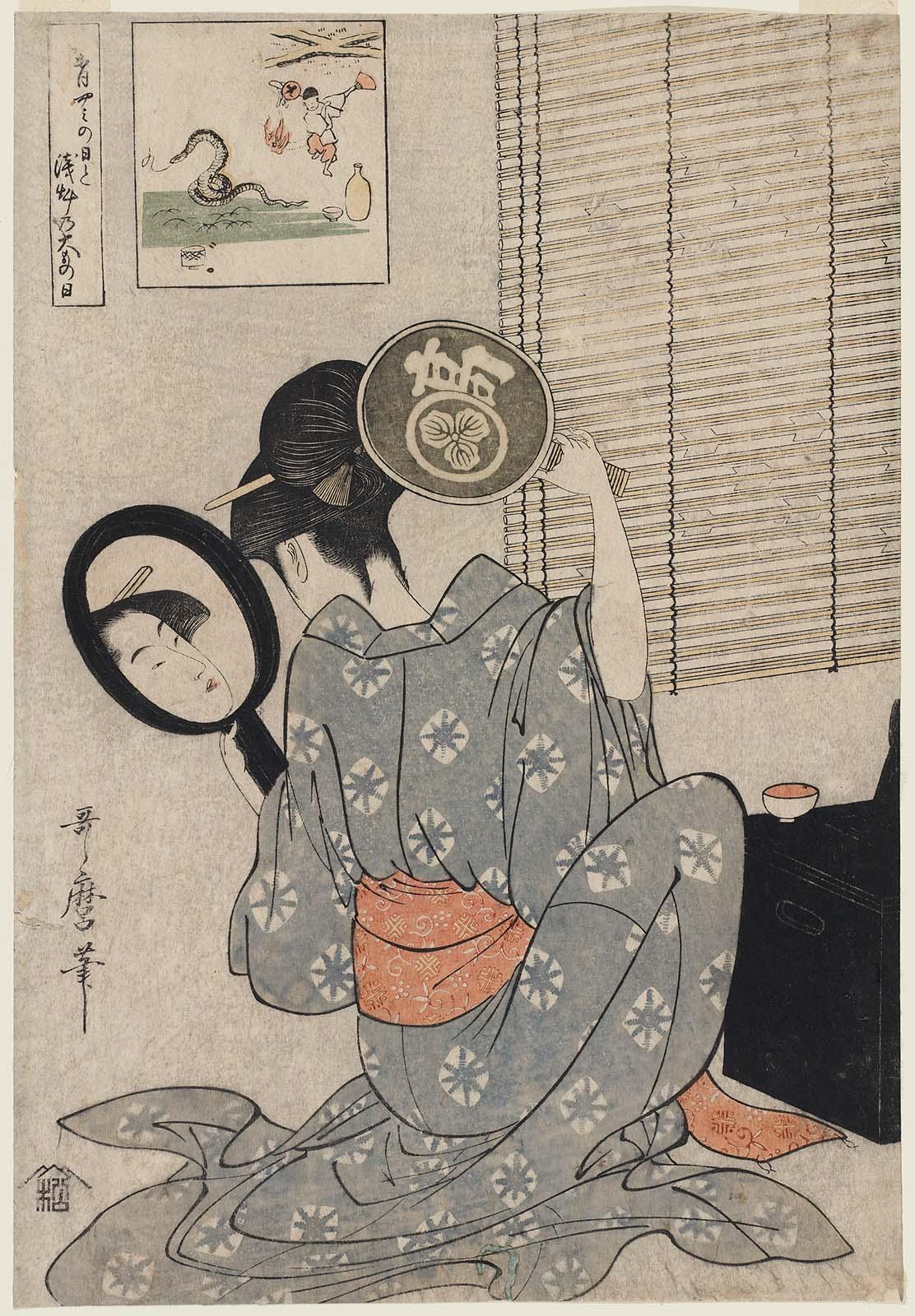
In the Omnibus depicts a fashionable Parisian mother taking the tram with her child and a woman who is presumably her child’s nurse. In this print, Cassatt utilizes many of the characteristics of Ukiyo-e prints such as strong, visible lines, a flattening of space, and dynamic color-blocking. The nurse seems youthful as she engages with the baby in a cloud of frilly white frocks and bonnets. The mother, in contrast, looks wearily around, both unconscious of the Parisian atmosphere which passes them by in the background. In some of her original designs for this print, Cassatt included a man, presumably the child’s father, seated with the two women. By his omission, this scene centers the dynamics between two women and the world that they inhabit, both in different ways due to their class differences and perhaps their point of view on the world (WAM).
This series of 10 prints is an extraordinary technical achievement which was unprecedented in the history of art. Cassatt wanted to emulate the effect of pastels in these prints, so she decided not to use woodblock printing but instead intaglio, created by carving designs onto a copper plate with a metal needle (Famsf). Cassatt was motivated to make prints partially in an effort to make her art more widely available to larger audiences. Prints were easier to reproduce, transport, and display as compared to paintings, and therefore more people could have them in their homes.
“I believe [nothing] will inspire a taste for art more than the possibility of having it in the home. I should like to feel that amateurs in America could have an example of my work, a print or an etching, for a few dollars. That is what they do in France. It is not left to the rich alone to buy art; the people—even the poor—have taste and buy according to their means, and here they can always find something they can afford.”
Mary Cassatt (Smarthistory)
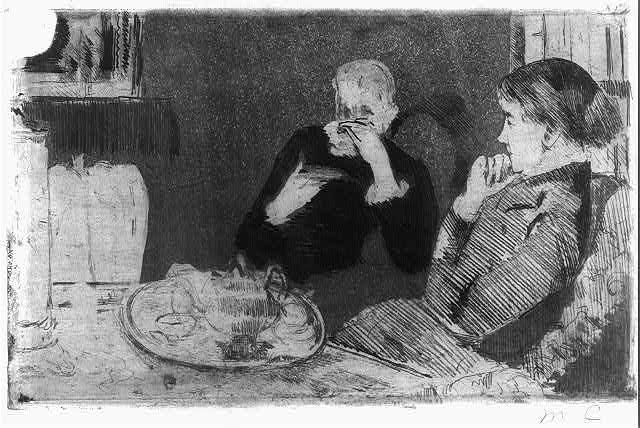
Printmaking continued to be integral to Cassatt’s artistic practice throughout her life. In 1899, she took the unusual step of buying a printing press for her own home studio, using it to create impressions of her own designs. She would create over 220 print designs in her lifetime. Her move towards printmaking signaled her artistic style developing more towards linear designs and a less hurried approach to figures. Additionally, the iterative quality of printmaking, which requires plate after plate to be coated in paint and printed on repeated sheets in a precise pattern, reflects her subject matter of women’s routines well: bathing, childrearing, and domestic labor are iterative as well (Famsf).
Votes for Women: Woman with a Sunflower
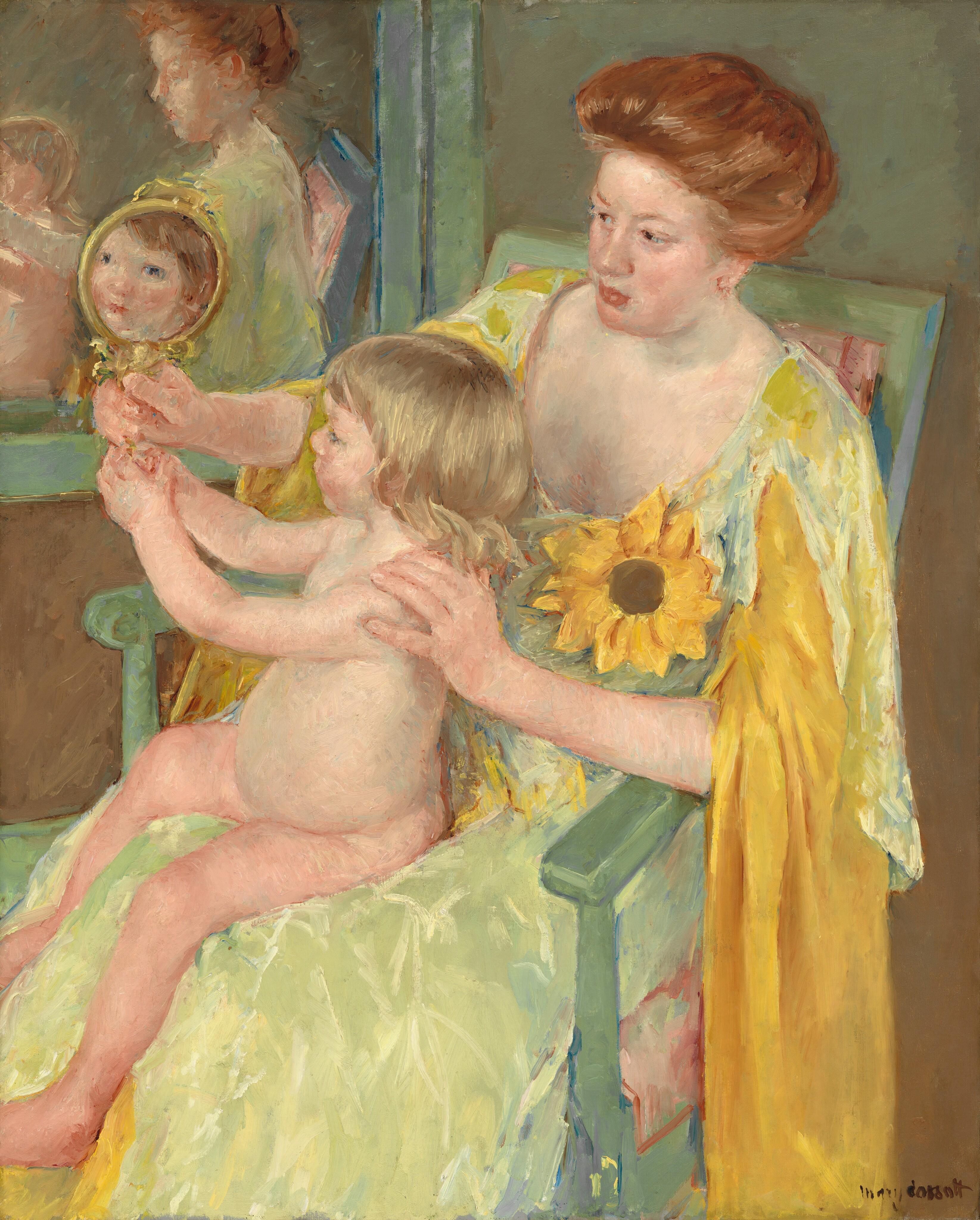
Figure 8. Mary Cassatt, Woman with a Sunflower (c. 1905). Oil on canvas.
Cassatt is most well-known for her varied and sensitive portrayals of mothers and children. While mother-and-child imagery is common in the history of art, Cassatt’s depictions centered the labor of caretaking. By doing so, she highlights the rich inner lives of women by showing the depth of their engagement and agency within their home lives (Famsf). Although other artists at the time often repeated images, contemporaries criticized Cassatt for her repeated returns to the mother-and-child image. Degas is famous for his dancers, Monet for his waterlilies and haystacks. In these male artists’ work, repetition was grounds for deep exploration of a subject’s composition, color, movement, and light. For Cassatt, mothers and children provided the same artistic opportunity, drawing from the world she knew and could easily access (Famsf).
Woman with a Sunflower depicts a woman seated with a child, presumably her daughter, on her lap as she holds up a mirror for the girl to look in her own reflection. The woman is elegantly dressed, with her auburn hair tied in the fashionable updo of the era and her green and yellow dress shimmering under the movement of the child in her lap. She has a bold sunflower pinned to her chest, which referenced a predominant symbol of the American Women’s Suffrage movement at the time. The girl looks inquisitively into the mirror, which frames her face in a circle, at the same time enclosing her as well as offering her the chance to gaze back at the audience. A mirror behind the pair frames them both, as if they sit in a painted scene on their very own wall (National Gallery of Art).
Woman with a Sunflower reflects many of the artistic developments and political perspectives of Cassatt during the end of her career. Cassatt was a prominent supporter of the American Suffrage movement and often used her artwork to support the cause, both in imagery and financially. In 1892, she created a mural on the subject of “modern woman” for the woman’s pavilion of the World’s Columbian Exhibition in Chicago. In a monumental mural which no longer survives, scaling over 13 feet high and 48 feet wide, Cassatt depicted larger-than-life woman gathering fruit from the tree of knowledge while participating in scientific, artistic, and cultural pursuits. In the prints which Cassatt created after this mural project, her style turns towards the monumental, almost sculptural figures that command a greater presence on the page and on the canvas than those Cassatt had painted before (Famsf).
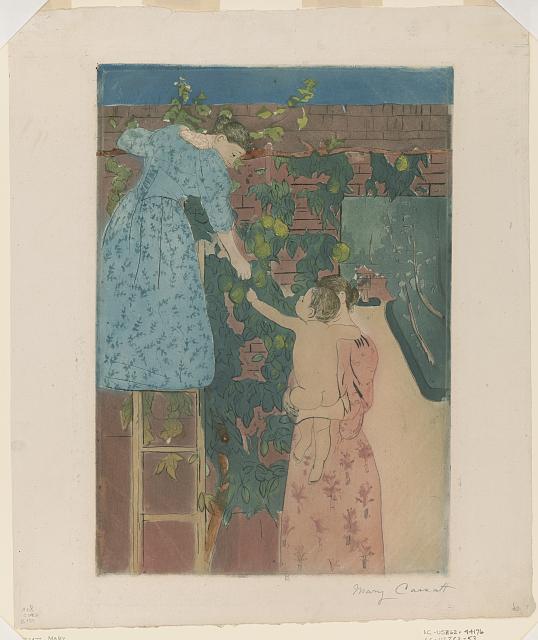
Figure 9. Mary Cassatt, Gathering Fruit (ca. 1895). Drypoint on paper.
“If I have not been absolutely feminine, then I have failed,”
- Mary Cassatt in 1892, while at work on a mural for the World’s Columbian Fair (MoMA)
Later Life and Art Advisorship
After 1900, Cassatt began to suffer from health complications which left her almost blind. She gave up printmaking in 1901 and painting in 1914 (Met Museum). While heartbroken to have to stop painting, she continued to work towards woman’s suffrage as well as the proliferation of Impressionist art in the United States. She served as an art advisor to many major collectors, and the pieces of Impressionist work that she encouraged her friends to buy now form the centerpiece of modern museums such as the MoMA and the National Gallery of Art. In 1915, Mary Cassatt collaborated with Louisine Havemeyer, a friend whom she often advised to purchase Impressionist artwork, to create an exhibition for the benefit of the National Woman’s Party. She donated eighteen paintings, as well as several of her contemporaries, including Degas (Famsf).
Mary Cassatt died on June 14, 1926, at eighty-two years old. Her family, many of which resided with her until their deaths in France, are all buried with her. While she rejected the term “woman artist” during her lifetime for fear of being treated differently than her male counterparts, she remains today one of the icons of female artistic life. Her formal inventions and her revolutionary approach to artmaking itself secured her legacy as one of the most important artists of the modern era. She created hundreds of prints, over 280 pastels, and 320 paintings in the course of her illustrious career (Famsf). Her work provided a view into the private world of women, freed of the male perspective and rich in their expressions of interiority and care.
 Primary Source Analysis Strategies

Primary Source Analysis Strategies
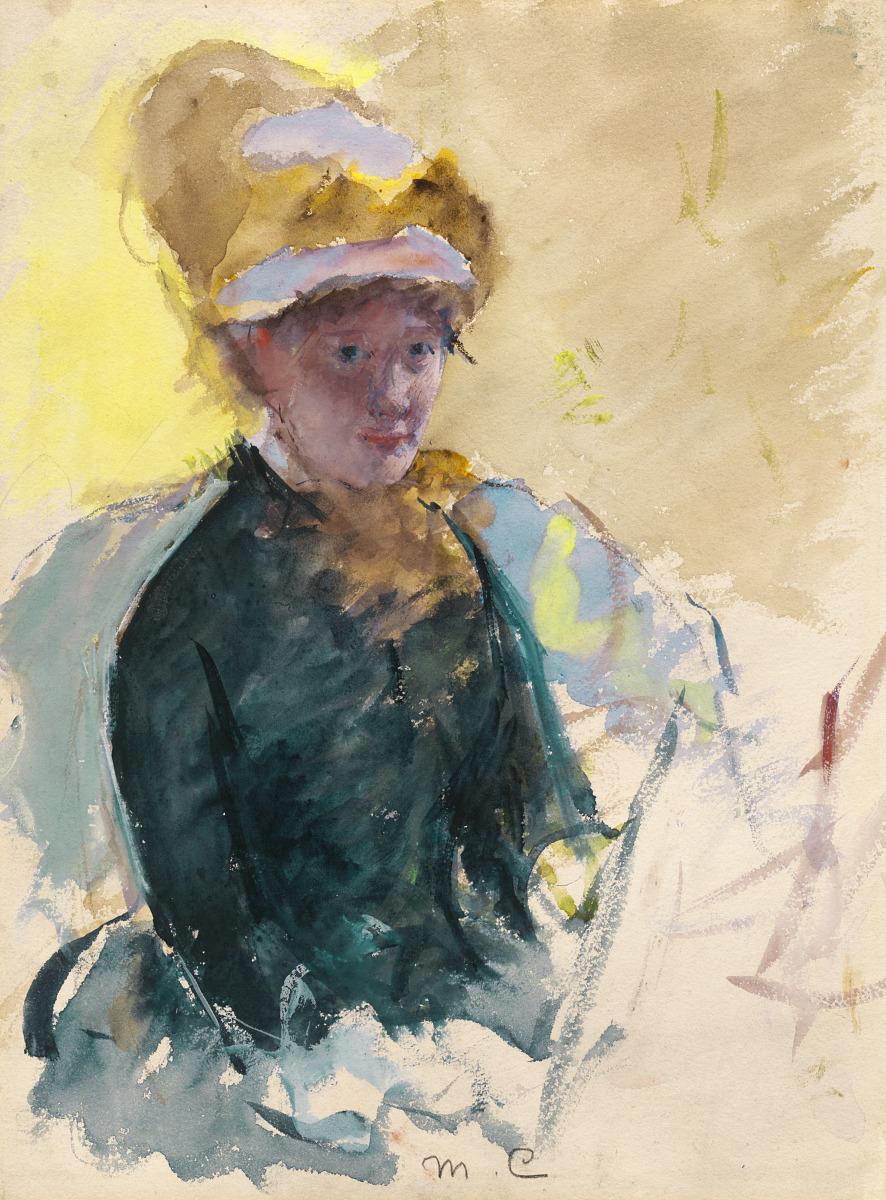
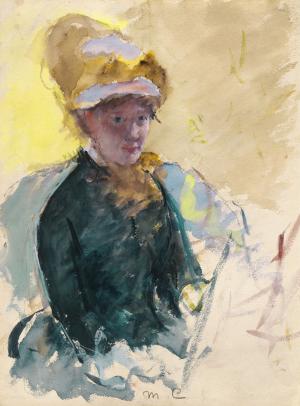
Figure 10. Mary Cassatt, Self-portrait (c. 1880). Gouache and watercolor over graphite on paper.
- Looking at this portrait, what do you notice about the way it is painted? How would you describe the artistic style and the colors?
- Cassatt made this painting when she was an emerging artist in the Impressionist movement. How has Cassatt depicted herself?
- Why make a self-portrait? Why do you think Cassatt created this self-portrait?
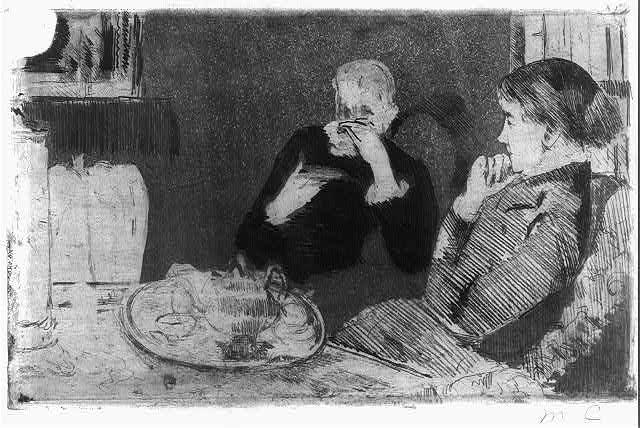
- Looking at this print, what do you notice about the style? What is similar and what is different than the artwork you saw before?
- Cassatt depicts her own sister and mother in this print. How is she depicting her family? What are they doing, what do you notice about the space they are in?
- Why would Cassatt depict family members in a domestic space?
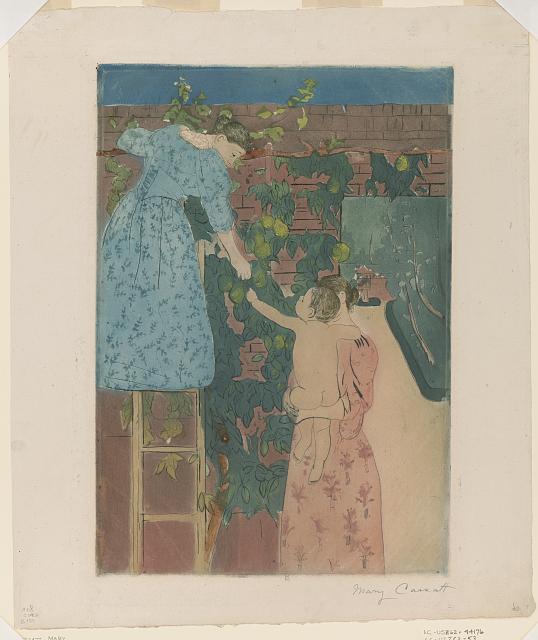
Figure 9. Mary Cassatt, Gathering Fruit (ca. 1895). Drypoint on paper.
- Looking at this hand-colored print, what do you notice about the style as compared to the previous works? Can you see Cassatt’s artistic style changing? What is similar to the previous works? Different?
- What do you notice about the figures? What are they doing, and how are they dressed?
- This print is an example of allegory, meaning that the figures symbolize a larger idea. What idea do you think the women and child represent?
Iker, Annemarie. “Mary Cassatt.” Museum of Modern Art. Accessed February 13, 2026.
https://www.moma.org/artists/1016-mary-cassatt
Georgopulos, Nikki and Emily Benny. “A conversation on Mary Cassatt.” Fine Arts Museum
of San Francisco. October 5, 2024. https://www.youtube.com/watch?v=7AKZewCxldE
Jones, Kimberly A. “Mary Cassatt: An American Among the French Impressionists.”Wichita
Art Museum. December 11, 2019. https://www.youtube.com/watch?v=wrSjajOgJ0U
Khalid, Farisa. “Mary Cassatt, The Coiffure.” Smarthistory. Augst 9, 2015.
https://smarthistory.org/cassatt-the-coiffure/
“Mary Cassatt.” National Museum of Women in the Arts. Accessed February 13, 2026.
https://nmwa.org/art/artists/mary-cassatt/
Smith, Antonia. “5 Things to Know about Impressionist Mary Cassatt.” Fine Arts Museums
of San Francisco. September 19, 2024. https://www.famsf.org/stories/5-things-to-know-
impressionist-mary-cassatt
“Woman with a Sunflower.” NGA. Accessed February 13, 2026. https://www.nga.gov/artworks/46573-woman-sunflower
Weinberg, H. Barbara. “Mary Stevenson Cassatt (1844–1926).” In Heilbrunn Timeline of Art
History. New York: The Metropolitan Museum of Art, October 2004.
http://www.metmuseum.org/toah/hd/cast/hd_cast.htm
Zucker, Steven and Beth Harris. “Cassatt, In the Loge.” Smarthistory. April 2, 2012.
https://www.youtube.com/watch?v=HVuyK_vIMfc
Zucker, Steven and Beth Harris. “Mary Cassatt, Little Girl in a Blue Armchair.”
Smarthistory. August 12, 2025. https://www.youtube.com/watch?v=q6uqyuN3LVU
MLA – “Mary Cassatt.” National Women’s History Museum, 2026. Date accessed.
Chicago – “Mary Cassatt.” National Women’s History Museum. 2026. Link.
Edmonia Lewis
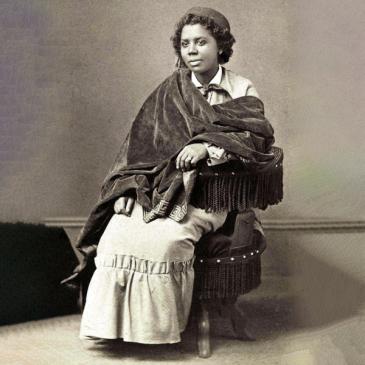
Alma Woodsey Thomas