
Susan Schnall
Summary
-
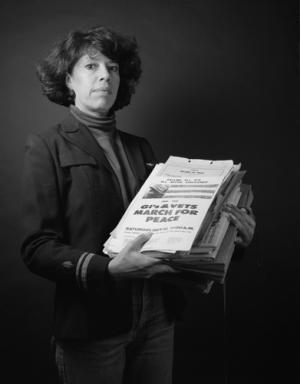
Susan Schnall served as a Navy Nurse in the height of American involvement in the Vietnam War, and her experiences treating patients who suffered from wartime injuries drove her to stand against the war.
-
Due to her involvement in a GI and Veteran anti-war demonstration in 1968, especially for speaking against the war while in uniform, Schnall was court-martialed and charged with conduct unbecoming of an officer.
- She continues to advocate for peace as president of the Veterans for Peace and by continuing to speak against war around the world.
Quote
“I learned that simply healing the soldiers from the war was not enough—that my being a part of the military machine enabled the war to continue.” - Susan Schnall, Life Framed by War, 2025
Early Life
“War, for me, is very personal. World War II is a war I’ve lived my whole life. It was a war in which my father felt he had to do his share and give something to this world. He did, and I never knew him except through pictures and letters and the memories of others. It was a war that destroyed my mother and her hopes and dreams for the future.”
- Susan Schnall, “Life Framed by War,” 2025
Susan Schnall was born on March 9, 1943, in Quantico, Virginia to Harold and Anne LeVine. She knew from personal experience the toll of wartime loss, losing her father, a first lieutenant in the Marine Corps in the Battle of Guam when she was 14 months old.
Military Service
Schnall pursued a degree in Nursing from Stanford University and graduated in 1967 and wore a black armband to signify her objection to the Vietnam War. She was drawn to nursing out of a passion for healing and joined the Navy Nurse Corps to help reunite those wounded with their loved ones. She first served at the Oak Knoll Navy Hospital in Oakland, California. At the height of American involvement in the Vietnam War, Schnall witnessed surgery wards crowded with men in their teens and early twenties that had received horrific injuries. From these experiences, she became motivated towards anti-war action and demonstration.

Figure 1. Susan Schnall speaks at an anti-war march in San Francisco, October 1968. Harvey Richards, Harvey Richards Media Archive.
Protest and Court Martial
Schnall began working with the GI March for Peace organization in 1968, especially to help publicize their anti-war march in San Francisco with an estimates of protesters numbering in the thousands. Schnall faced difficulty in spreading the word to active-duty personnel at the local military bases. Her friend, a pilot, helped her to rent a plane and drop flyers advertising the October 12 GI Peace March over five military bases. She later defended this strategy, saying that it mirrored U.S. Military tactics in Vietnam: “If the United States could drop flyers for the war in a country 8,000 miles away, then why couldn’t we drop flyers against the war in the United States?”
Leading up to the demonstration, Schnall and other protesters had been warned by their superiors in the military that if they marched in their uniforms, they could face repercussions. Schnall steadfastly marched and spoke publicly against the war in her uniform, calling the war “a dirty, filthy war” motivated by a senseless desire to control other nations and which caused immense harm to those in Vietnam and those in military service. She demanded to those in power “end the war now, bring our boys home – bring our boys home alive.”
Two days later she was charged with violating the Uniform Code of Military Justice, the justice system of the U.S. Military. On November 14th, 1968, Schnall had a formal hearing at the Treasure Island Naval base where charges were clarified as disobeying orders to not wear her uniform and for conduct unbecoming an officer. In addition, she was charged with leaflet bombing “with design to promote disloyalty and disaffection among members of the armed forces of the United States.” If she were convicted on all of these charges, she faced a maximum of four years in military prison.
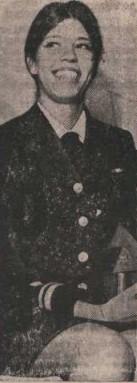
Figure 2. "Anti-War Nurse in Court". San Francisco Chronicle. 1968-11-15.
At her court-martial on January 31,1969, military officials demonstrated evidence of Schnall’s political views opposing the Vietnam War and activities as an anti-war advocate, which she never denied. Schnall defended herself against the charge of violating orders on the basis that the order unjustly restricted her rights to participate in a political demonstration regardless of military status. She argued to the court that she felt “GIs should know they had the right to express their freedom of speech under the Constitution by coming out against the war in Vietnam.” The military court declared her guilty and sentenced her to six months of hard labor, forfeiture of pay, and dismissal from the Navy. Due to an old Navy policy that women sentenced to less than a year in prison cannot be confined, she served her sentence as a nurse at Oakland Naval Hospital.
Activism and Veterans for Peace
She is currently the president of National Veterans for Peace, a member of Vietnam Agent Orange Relief and Responsibility Campaign and of Vietnam Veterans against War, and in 2006 she was awarded the medal of peace and friendship by the Vietnam Union of Friendship Organization. She spent most of her career in medicine, managing departments of public hospitals in New York City and teaching healthcare management at New York University. She continues to speak publicly about her experiences and encourages others, especially veterans, to stand up for peace. As she has argued in her research and writings, she was and continues to be part of a long line of GIs and veterans who demonstrate against war throughout their lives. She hopes to help those with similar experiences to her to make a difference, inspired by words her father wrote in his last letter: “I feel as though I have done my share and helped to give something to this world.”
 Works Cited

Ellis, Kate and Stephen Smith. “Soldiers for Peace.” APM Reports. Accessed September 16, 2025. https://features.apmreports.org/soldiers-for-peace
Schnall, Susan. Interview with Attorney Marjorie Cohn. Law and Disorder Radio. Podcast audio. 2021. https://peaceandplanetnews.org/susan-schnall-law-disorder
Schnall, Susan. Interview with Veterans for Peace regarding 50th Anniversary of Court Martial. Vietnam Full Disclosure. January 24, 2019. https://www.vietnamfulldisclosure.org/50th-anniversary-of-susan-schnalls-january-31-1969-court-martial-for-resisting-the-american-war-in-vietnam
Schnall, Susan. “Life Framed by War.” The Washington Spectator. April 29, 2025. https://washingtonspectator.org/life-framed-by-war
Schnall, Susan. “Through the Years, GI and Veteran Resistance.” Peace and Planet News. 2021. https://peaceandplanetnews.org/schnall-gi-resistance
“Susan Schnall.” UMassAmherst. Accessed September 16, 2025. https://www.umass.edu/ellsberg/speaker/susan-schnall
“Susan Schnall Court-Martialled,” The Bond, vol. 3, no. 2, February 1969.
Primary Source Analysis
Step 1: Observe
Look closely at the article and image. Write down what you see without interpreting yet.
-
What words or phrases stand out to you in the headline or text?
-
What do you notice about how Lt. Susan Schnall is described?
-
What emotions or tone do you sense from the language or layout of the article?
-
What clues suggest when and where this event took place?
Step 2: Reflect
Now think about what this source means.
-
What was happening in the United States when this article was published?
-
Why do you think the newspaper chose to call her a “Peace Nurse”?
-
What risks was Schnall taking by dropping leaflets and marching in uniform?
-
How might different people at the time (soldiers, antiwar activists, military leaders) have reacted to this story?
Step 3: Wonder
Ask questions that go beyond what you already know.
-
What does this article reveal about freedom of speech and protest during wartime?
-
How do gender and profession (a woman, a nurse, and a service member) influence how Susan Schnall’s actions were viewed?
-
What do you want to learn more about her trial, her motivations, or her life afterward?
Extension / Discussion Ideas
-
Compare this case to other forms of protest during the Vietnam War (e.g., Muhammad Ali, student demonstrations, the Pentagon Papers).
-
Debate: Should members of the military have the same right to protest as civilians?
-
Research where Lt. Susan Schnall is today and how her story is remembered.
Classroom Resources
Additional Resources
Related Biographies and Profiles
Carry the Torch
How to Cite this Page
MLA – McKelvie, Lydia. “Susan Schnall.” National Women’s History Museum, 2025. Date accessed.
Chicago – McKelvie, Lydia. “Susan Schnall.” National Women’s History Museum. 2025. https://www.womenshistory.org/education-resources/biographies/susan-schnall.