Lt. Col. Annie Ruth Graham
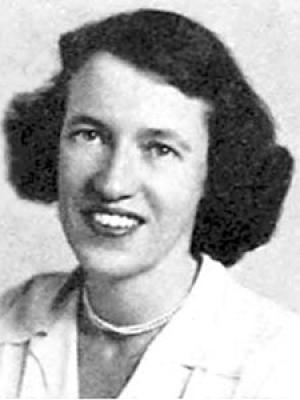
Lt. Col. Annie Graham was the highest-ranking army nurse serving in the Vietnam War to die in the line of duty.
After twenty years of service across three wars, Graham received eight Medals of Honor, including the posthumous Legion of Merit, and is among the eight women commemorated on the Vietnam Veterans Memorial.
Graham directed large-scale nursing operations around the world and volunteered her time to care for civilians as well as soldiers.
“This Christmas finds me a long, long way from North Carolina.”
Graham in a letter home from service in Vietnam, 1967.
Early Life
Annie Ruth Graham was born on November 7, 1916, to J.D and Tiny Graham in rural North Carolina as one of six children. She graduated from the Watts Hospital School of Nursing in 1940, where she worked for 2 years before volunteering for the Army Nurse Corps during World War II.
Service in World War II
Graham first worked in Fort Bragg, North Carolina, but was quickly assigned to the field in Europe in 1942. 78,000 American women served as nurses in World War II. She worked in both the 57th Station Hospital and the 71st Evacuation Hospital in Pleiku, Vietnam. In April 1944, Graham was promoted to First Lieutenant.
Service in Korean War
After her service in World War II, she became part of the U.S. Army Reserve and returned home to Efland, North Carolina, to start a career as a public health nurse. She also returned to her studies at the University of North Carolina at Chapel Hill School of Public Health and soon earned her Bachelor of Science in Public Health Nursing in 1949. However, her time in her home state was short-lived as she was called back into active duty when the United States entered the Korean War in 1950.
Graham spent her service in the Korean War caring for the wounded soldiers at the U.S. Army hospital at Camp Yokohama Osaka in Japan. Her hospital saw over 5,800 casualties from the war between 1950 and 1953. While serving, Graham received a promotion to the rank of Major. At the end of the war, she received further accolades, including the Army of Occupation Medal, the Korean Service Medal, and the United Nations Service Medal.
Service in the Vietnam War
During the escalation of the Vietnam War, more and more nurses were required to handle the increasing casualties. Approximately 11,000 women were stationed in Vietnam in the war. Ninety percent were nurses, sent to heal soldiers and civilians but also frequently in harm's way themselves. Army nurses working in the middle of action experienced hazardous working conditions and the trauma of witnessing gruesome deaths that they could not prevent. The numbers show the stark realities of the scale of their work: over 350,000 soldiers were wounded in the war and over 58,000 died.
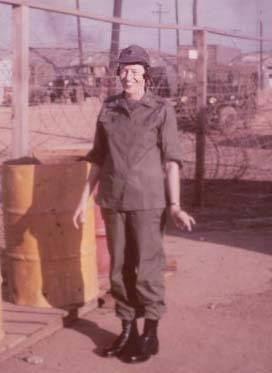
Figure 1. Lt. Col. Annie Ruth Graham in uniform during the Vietnam War, National Veterans Memorial and Museum.
After the Korean War, Graham spent thirteen years working in US Army Hospitals around the United States and the world. She received a promotion in rank to Lieutenant Colonel while working again at Fort Bragg. In November 1967, Graham took an assignment as Chief Nurse at the 91st Evacuation Hospital in Tuy, Hoa Vietnam. In her first month of work in Vietnam, she sent a letter home to her family describing her new environment, which she approached with continued optimism and determination:
“This Christmas finds me a long, long way from North Carolina. I arrived in Saigon on 18 November and almost immediately departed for Tuy Hoa (pronounced Too-ey Wah) where our hospital (400 bed) is located directly on the beach of the South China Sea which is perfectly beautiful but quite treacherous … Getting used to my new outfit (tropical fatigues, jungle boots, and “baseball cap”) is not as “exciting” as in World War II but I'm quite sure I'll manage to survive it all! Our nursing staff consists of 59 nurses (12 male) who of our enlisted personnel seem very well trained and apparently have been doing an excellent job. The tour of duty here is 12 months so I plan to be home for Christmas next year. I hope you have had a good year and that your Christmas is filled with joy and the New Year with more happiness than you could possibly wish for. Hope, too, that everyone will pray for peace. Love, Ruth”
Outside of her work caring for soldiers, Graham dedicated her off-duty time to care for civilian land mine victims. She consistently distinguished herself with her outstanding service and meticulous management of a large-scale medical operation. In her final position, Graham coordinated an entire nursing service for an over four-hundred-bed inpatient and outpatient medical complex. She had plans to retire following over two decades of service, much of it spent far away from her large family in North Carolina to whom she was very close.
On August 8, 1968, Graham suffered a stroke and was evacuated to the U.S. Air Force Hospital in Tachikawa, Japan. She died on August 14, 1968, at the age of 51.
Legacy
Graham is remembered as one of eight women now memorialized on the Vietnam Veterans Memorial, also known as “The Wall,” in Washington, D.C. Graham was decorated eight times while serving in the Army Nurse Corps across three wars. She was the highest-ranking woman who died in the Vietnam war, and the only who served in multiple wars. She is buried with full military honors in Arlington National Cemetery and was posthumously awarded a Legion of Merit due to her exceptionally meritorious conduct while serving in Vietnam.
_(1).jpg)
Figure 2. Lt. Col. Annie Ruth Graham’s name on “The Wall” memorial created by Maya Lin.
 Primary Source Analysis Strategies

Textual Analysis
Annie Ruth Graham's final Christmas Letter to friends and family, 1967:
|
Greetings!
This Christmas finds me a long, long way from North Carolina. I arrived in Saigon on 18 November and almost immediately departed for Tuy Hoa (pronounced Too-ey Wah) where our hospital (400 bed) is located directly on the beach of the South China Sea which is perfectly beautiful but quite treacherous. All buildings here are tropical type and the hospital is cantonment style. It is monsoon season now so we have torrential rains at times. The climate is quite humid but the nights are really rather pleasant. Getting used to my new outfit (tropical fatigues, jungle boots, and "baseball cap") is not as "exciting" as in World War II but I'm quite sure I'll manage to survive it all! Our nursing staff consists of 59 nurses (12 male) who of our enlisted personnel seem very well trained and apparently have been doing an excellent job.
The tour of duty here is 12 months so I plan to be home for Christmas next year. I hope you have had a good year and that your Christmas is filled with joy and the New Year with more happiness than you could possibly wish for. Hope, too, that everyone will pray for peace. Love, Ruth |
Observe
-
What details in this letter tell you where and when it was written?
-
What descriptions does Ruth include about her surroundings, the weather, or her work?
-
What words or phrases stand out that help you understand her tone or emotions?
Reflect
-
How does Ruth balance her experiences of war with her desire to send warmth and hope?
-
What do you learn about her character from how she describes her duties and environment?
-
How might letters like this have helped families and friends stay connected during wartime?
Wonder
-
What might have motivated Ruth to continue serving in the military through multiple wars?
-
How might her perspective as a nurse differ from that of a soldier or correspondent?
-
What do you think she hoped people would understand about life and service in Vietnam from this letter?
“Annie Ruth Graham.” The Virtual Wall: Vietnam Veterans Memorial. Accessed September 18, 2025. https://www.virtualwall.org/dg/GrahamAR01a.htm
Dorsey, Justun. “Lieutenant Colonel Annie Ruth Graham: A Trailblazer Across Three Wars.” National Veterans Memorial Fund. March 4, 2025. https://nationalvmm.org/a-trailblazer-across-three-wars
Jones, Rosemary. "FORGOTTEN NO MORE MEMORIAL HONORS FEMALE VIETNAM VETS: [FIFTH EDITION]." Morning Call, Nov 11, 1993.
Pollitt, Phoebe. “Annie Ruth Graham: Vietnam War Nurse.” Appstate.edu. Accessed September 18, 2025. https://nursinghistory.appstate.edu/biographies/annie-ruth-graham
Spelts, Doreen. “Nurses Who Served: And Did Not Return.” The American Journal of Nursing 86, no. 9 (1986): 1037–39.
Uenuma, Francine. “Eight Women’s Names Are Among the Thousands on the Vietnam Memorial Wall. Here’s What to Know About Them.” Time Magazine, May 27, 2021.
“Women in Vietnam.” Vietnam Veterans Memorial Fund. Accessed September 28, 2025. https://www.vvmf.org/topics/Women-in-Vietnam
MLA — McKelvie, Lydia. “Lt. Col. Annie Ruth Graham.” National Women’s History Museum, 2025. Date accessed.
Chicago — McKelvie, Lydia. “Lt. Col. Annie Ruth Graham.” National Women’s History Museum. 2025. https://www.womenshistory.org/education-resources/biographies/ Lt.-Col.-Annie-Ruth-Graham.