Glenna Goodacre
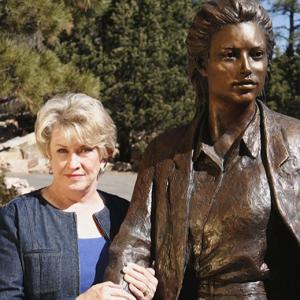
Glenna Goodacre was a renowned sculptor who received national recognition with her public sculpture projects, such as the Vietnam Women’s Memorial, the Irish Memorial, and the Sacagawea coin design.
Goodacre persevered through criticism and depicted often maligned subject matter in contemporary sculpture, including women in history.
Goodacre continued to create art until the end of her life and hoped to imbue her works with personal significance for her audiences.
“There will always be a place for commemorative sculpture because it is three-dimensional, people can walk up, identify, congregate, photograph, touch, be in the historical moment. Certainly, there are wonderful historic paintings, but you can’t put a painting in the park.”
Goodacre, The New York Times, 2020
Early Life and Education
Glenna Maxey Goodacre, was born on August 28, 1939, in Lubbock, Texas to Homer Glen Maxey and Melba Mae Maxey. Her parents worked blue-collar jobs, including building and construction, throughout most of her childhood. She studied art and zoology at Colorado College with the intention of becoming a medical illustrator. Throughout her college experience, Goodacre’s instructors discouraged her studies. One college sculpting professor gave her a poor grade in their class. His advice: she should not pursue sculpting. Goodacre would create over 600 large-scale sculptures over the course of her career.
Early Career
Goodacre graduated in 1961 and married Canadian hockey player, William Goodacre. She began her career as an artist in her small hometown, painting and casting small pieces in bronze. She raised two children before she decided to commit fully to sculpture as a career.
“I have always been totally absorbed with the figure and the head, the representation of emotion with body language and facial expression. I’m a figurative sculptor and I work in a realistic manner.”
Goodacre from Copper in the Arts interview, 2011
To entrench herself in the art of metal sculpture, Goodacre moved near a foundry in Boulder, Colorado, with her husband where she began her transition away from professional painting as her primary artistic medium. Goodacre was one of few women in the late 20th century creating large memorial or commemorative sculptures. When she first started selling her work, she would sign her name “G. Goodacre” out of fear that her pieces would not sell if buyers knew she was a female artist. She often fought for recognition in her field due to the subject matter of her works, which almost always included depictions of women and children, subjects that her male contemporaries did not consider important. Goodacre was drawn to memorials and considered them community-centered artforms. By highlighting women as subject matters, Goodacre’s work brings their narratives into public community spaces.
“My greatest accomplishment to me was that I achieved my goal of being considered a professional artist... For a long time, fighting to get into various associations was a real battle. Maybe because I was a woman, maybe because I did a lot of children and women [as subjects], and the men didn’t want to have me included in their societies.”
Goodacre, interview with National Cowboy & Western Heritage Museum, 2006
Vietnam Women’s Memorial
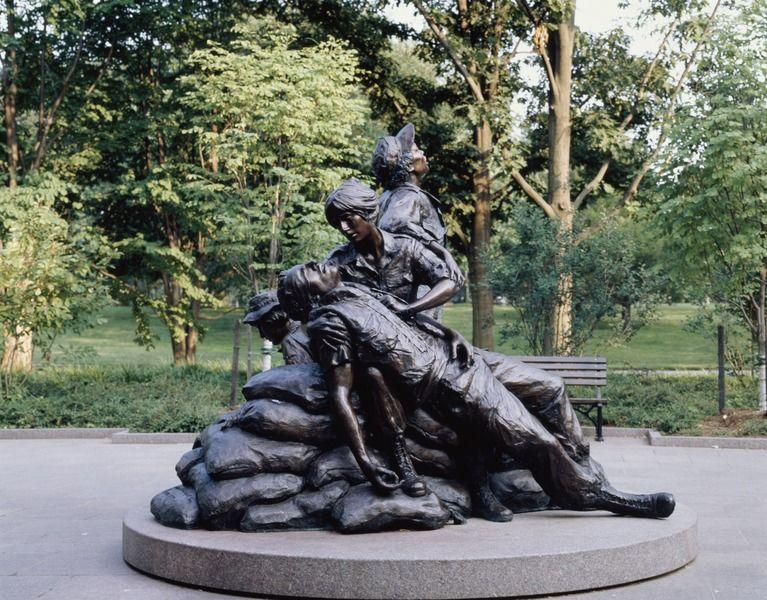
Figure 1. Goodacre, Vietnam Women’s Memorial, 1993.
Goodacre’s most notable work is the bronze sculpture she created to honor the women who served in Vietnam. The Vietnam Women’s Memorial, located in a grove of trees on the National Mall, was unveiled on Veterans Day in 1993 to accompany Maya Lin’s design for the Vietnam Veteran’s Memorial. Goodacre was particularly proud of her Vietnam Women’s Memorial, both for the national recognition it provided her and for the personal significance it held for many female veterans of the Vietnam War. She would often quote this piece as being her favorite work she ever made: “I have a permanent bronze in Washington, on the Washington Mall, that’s just huge to me personally, and it means so much to so many people” (National Cowboy & Western Heritage Museum).
Her design was chosen from a call for submissions that was answered by over 300 artists. It depicts three women in uniform helping a wounded male soldier. Over 10,000 women served as nurses in the Vietnam War, and Goodacre meant for the memorial to reflect this underrecognized contribution. Goodacre’s design was modeled after Michelangelo’s Pietà, with the intimate interaction between the nurse holding the soldier that connotes healing and selfless love. She intended for viewers to interact with it at all angles, as a kind of theatre in the round. The tribute is centered on emotions over action, on the subject’s fear and fatigue which is overcome through dedication and compassion. However, some reviewers argued that the sculpture detracted from the simplicity of Maya Lin’s memorial. Goodacre was unconcerned with the critics stating, “I really don’t care what they say. I’m happy with what I do and feel fortunate that it sells” (The New York Times, 2020).
Sacagawea Coin Design
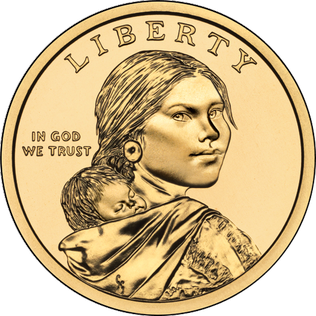
Figure 2. Goodacre, Sacagawea Coin, 1999.
In 1999, Goodacre read that the U.S. Mint had chosen Sacagawea as a subject matter to front the U.S. dollar coin that would replace the Susan B. Anthony dollar. Excited for the opportunity to highlight women and children, she immediately began creating. One of the major obstacles for Goodacre was the lack of portraits of Sacagawea from her lifetime. Even so, she was inspired by Shoshone legends which described her large dark eyes and other features. She used Shoshone student Randy’L He-dow Teton as her model and researched period accurate beaded dresses to replicate on the coin. She won with a design that shows Sacagawea looking straight at the viewer with agency and vitality. She also depicts Sacagawea carrying her infant son, to reflect the real story of her pregnancy and birth during the course of her journey on the Lewis and Clark Expedition as their interpreter and guide. Of the 33 people in the “permanent party,” Sacagawea was the sole female.
“I wanted people to be moved by her youth, strength and intensity, to create what truly means something emotionally to people.”
Goodacre, interview with Copper in the Arts, 2011
Her design was unique in comparison to a majority of U.S. currency. It is the first U.S. coin to depict a mother and child. Goodacre became the first artist who signed her name on the coin’s design, leaving her initials on the baby John Baptiste’s blanket. It is also the first U.S. coin design with a three-quarters profile.
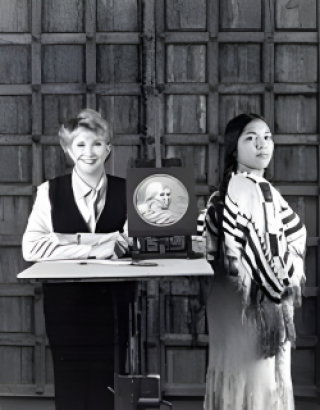
Figure 3. Glenna Goodacre with her model, Randy L’ Teton, and her original Sacagawea Coin design.
Irish Memorial
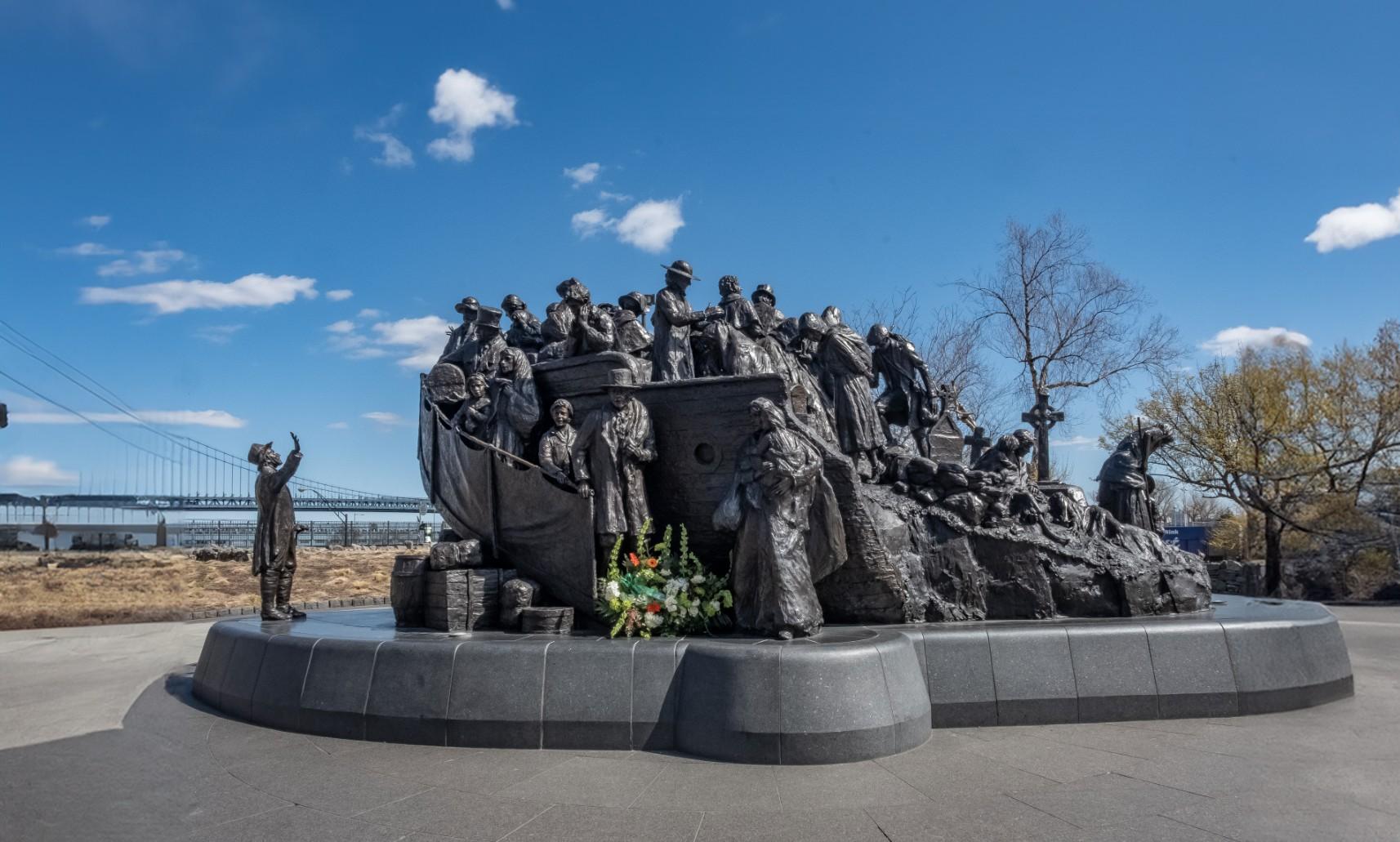
Figure 4. Goodacre, Irish Memorial, 2003.
In 2003, Goodacre created the Irish Memorial An Gorta Mor (The Great Hunger) in Philadelphia. The sculpture is her most ambitious work, spanning over thirty feet and weighing in at 14 tons. It includes 35 life-size figures to represent the millions who died during the 19th century potato famine in Ireland along with the millions that immigrated to the United States. The sculpture is installed at Penn’s Landing on the Delaware River, in the spot where many Irish immigrants saw the United States for the first time. On the east end, she shows the dark moments of starvation and fear that drove the Irish immigrants to leave, and on the west side she shows their hopeful arrival as they start life anew.
“There will always be a place for commemorative sculpture because it is three-dimensional, people can walk up, identify, congregate, photograph, touch, be in the historical moment. Certainly, there are wonderful historic paintings, but you can’t put a painting in the park.”
Goodacre, The New York Times, 2020.
Later Life and Legacy
In 2007, Goodacre suffered a brain injury. However, she maintained a positive attitude throughout her career, “I am a very positive person, so most of my work tends to be upbeat, if not downright happy. I don’t do morosely philosophical pieces like some artists. It’s just not in me” (New York Times, 2020).
She continued to create art and finished many sculptures she started prior to her injury. In particular, she worked hard to finish a sculpture of three ballerinas inspired by her granddaughters before her death.
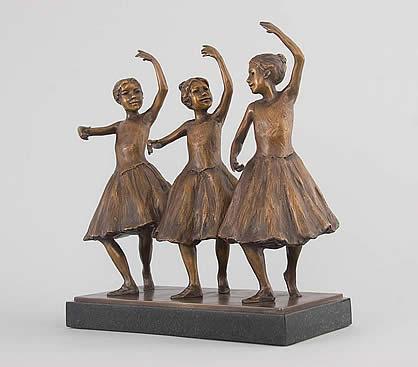
Figure 5. Goodacre, Three Ballerinas.
Goodacre died at her home in Santa Fe, New Mexico in 2020 at the age of eighty. She has been exhibited in collections in more than forty countries and across the United States. Goodacre was a fellow of the National Sculpture Society and the National Academy of Design. She received honorary doctorates from Colorado College and Texas Tech University. In 2003, she was awarded the Gold Medal for Career Achievement from the Portrait Society of America and the Texas Medal of Arts. She was inducted into the Cowgirl Hall of Fame that same year for American Western influence within her work.
 Primary Source Analysis Strategies

Figure 1. Goodacre, Vietnam Women’s Memorial, 1993
Thinking routine: Thinking with Images
When you think of a memorial, what do you picture? Who is usually represented in a monument or memorial?
Figure 2. Goodacre, Sacagawea Coin, 1999
Thinking routine: See, Think, Wonder
Examine this coin design. What do you see? Who is represented on this coin, and why do you think they are represented in the way that they are? What do you think about what you see? What does it make you wonder, about the woman and child depicted, about the artist, and about the coin itself?
Figure 4. Goodacre, Irish Memorial, 2003
Thinking routine: Slow Complexity Capture
Find: Find a figure, a group of figures, an expression, or an object in this sculpture that captures your eye. In a word or phrase, say what it is.
Capture: Take some time to look carefully at your chosen portion of the sculpture. What is represented in that portion of the sculpture? Who does it represent, and why are they represented in the way that they are?
Explain: After you have visually captured your portion of the sculpture, write a paragraph (or tell a friend) about how it is complex.
Wonder: What new ideas and questions do you have about your portion of the sculpture? What do you know about the time period that is represented in this work? What are you curious about, after seeing this work?
Anthony, Daniel. “Glenna Goodacre, America’s Sculptor.” Glenna Goodacre. Accessed December 11, 2025. https://glennagoodacre.com/about-the-artist
“Glenna Goodacre.” Nedra Matteucci Galleries. Accessed December 11, 2025.
https://www.matteucci.com/glenna-goodacre
Goodacre, Glenna. “Glenna Goodacre shares accomplishments as a sculptor.” A Keith Brodkin Contemporary Western Artists Oral History Project. July 26, 2006.
https://www.youtube.com/watch?v=Nq5JPcE57VY
Large, Arlen. “The Personnel Plan: A Small and Fast Corps.” Discover Lewis and Clark. https://lewis-clark.org/members/the-personnel-plan/#:~:text=Yet%20when%20that%20expedition%20left,double%20the%20force%20originally%20planned
Seelye, Katharine Q. “Glenna Goodacre, Created Vietnam Women’s Memorial, Dies at 80.” The New York Times. April 16, 2020.
https://www.nytimes.com/2020/04/16/arts/glenna-goodacre-created-vietnam-womens-memorial-dies-at-80.html
“Women Veterans bravely served during Vietnam War.” Department of Veteran Affairs. https://news.va.gov/86001/women-veterans-bravely-served-vietnam-war/
MLA — “Glenna Goodacre.” National Women’s History Museum, 2025. Date accessed.
Chicago — “Glenna Goodacre.” National Women’s History Museum. 2025. https://www.womenshistory.org/education-resources/biographies/glenna-goodacre.
Maya Lin
Jane Fonda