
Maya Lin
Summary
-
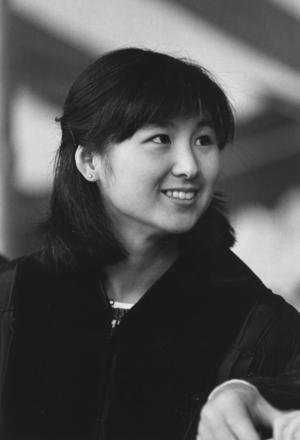
Maya Lin, renowned artist and architect, began her career creating the Vietnam War Memorial at twenty-one years old – winning a national search competition with her innovative and striking minimal design.
-
Influenced by her upbringing in Ohio, near the Serpent Mounds, and holding a deep dedication to environmentalism, Lin’s work continues to encourage connection to nature and the revitalization of urban and non-urban spaces.
Quote
“All I’m trying to get you to do at times is to look around and look at the natural world. So, on a fundamental level, can I get you to take a moment, take a pause, and look at it again? Then, maybe, you’ll have a relationship to it.” - Maya Lin, Interview with Artforum in 2025
Early Life and Education
For Maya Lin, art and nature have been a part of her life as long as she can remember. Her parents, both professors at Ohio University, were the only Chinese immigrants in the forested college town of Athens, Ohio where she grew up. Lin’s mother, Julia Chang Lin, wrote poetry and taught literature and nurtured a curiosity for science and the written word in both her daughter, who would become a renowned artist and architect, and her son, Tan, who would become a poet. In her father’s ceramics studio, Lin found her first creative expression.
“I think I actually can’t remember a time when I wasn’t making art. In grade school we would have to wait – my brother and I – at my dad’s ceramic studio... My earliest memories are in his studio waiting for him to finish work, playing with clay.” - Interview with Artforum, 2025.
Originally interested in their zoology, Lin started her studies at Yale University in 1977. In her junior year, she switched to architecture to pursue her longstanding interest in build spaces, and to avoid the live vivisection portions of the zoology curriculum.
“I Cut the Earth:” The Vietnam War Memorial
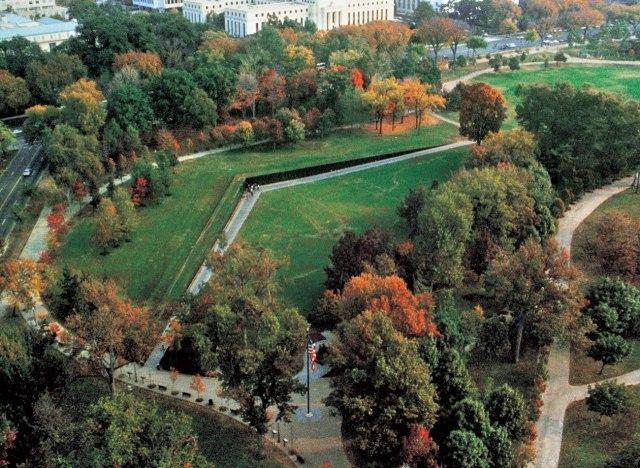
Figure 1. Aerial phot of the The Vietnam Veterans Memorial
In 1981, the Vietnam Veterans Memorial Fund, a private nonprofit organization, began their call for an architect to design a memorial for the Vietnam War next to the Lincoln Memorial. Lin, who had just completed a course at Yale on memorial architecture, submitted her design into what would become the largest design competition in American history. She competed in a blind jury against 1,420 other entrants, but her strikingly minimal proposal of a V-shaped wall of dark stone cut into the earth, carved with the names of 58,000 dead soldiers in chronological order, won unanimously. Regarding her inspiration, she said:
“If you think about the form itself, I didn’t add a heavy wall into the earth. I cut the earth, opened it up, and polished it.” - Interview with All Art TV, 2024.
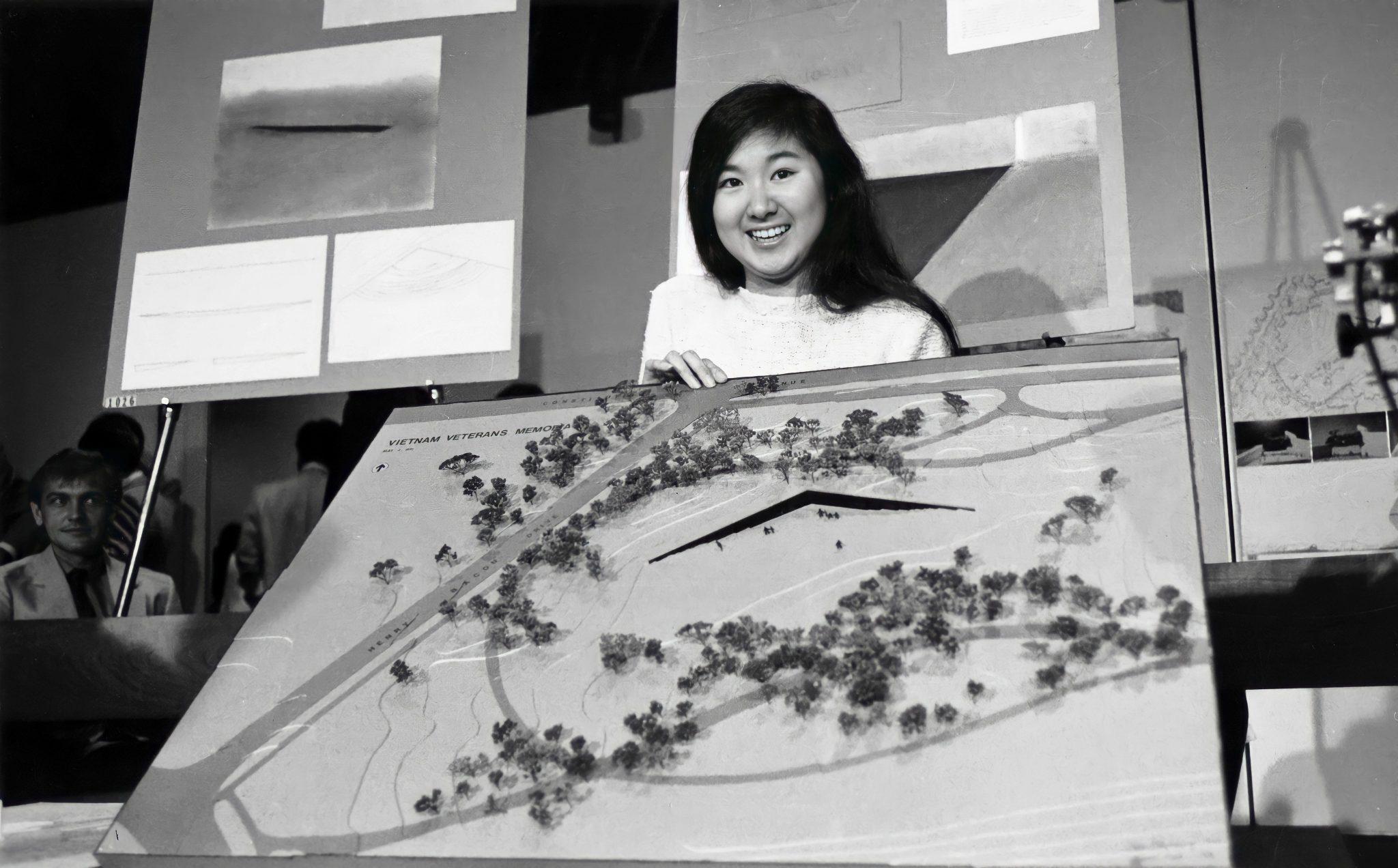
Figure 2. Maya Lin as a student with her model design of the Vietnam Veterans Memorial
At 21 years old, she was now at the center of a national controversy regarding her unusual design, dubbed “the black gash of shame” by her detractors. While many veterans of the war supported her design, others spoke out publicly and saw the monument as disrespectful to their service. Her abstracted design drew criticism regarding the lack of naturalism and clear symbolism, such as statues and flags that are typical of war monuments. Additionally, she faced racist insults and remarks at her age and lack of experience. Tom Carhart, a Vietnam War veteran himself, was one of her design’s more public critics, leading the campaign to include a figurative statue and flag in the memorial. This idea was accepted by the Commission of Fine Arts, despite Lin’s objections that a statue of soldiers would detract from her intentionally apolitical design.
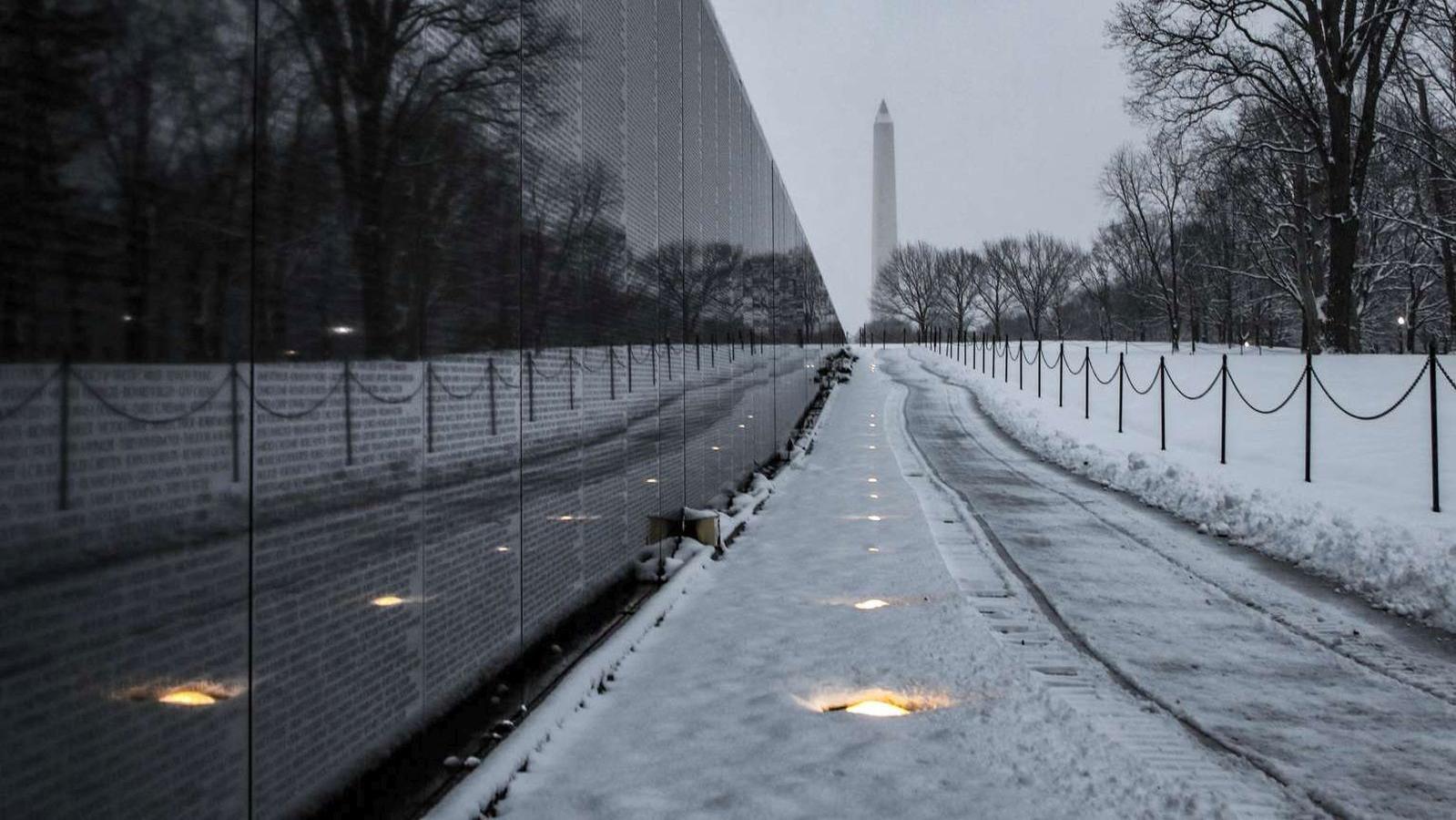
Figure 3. The Vietnam Veterans Memorial in winter.
“Like a Mighty Stream:” Civil Rights Memorial and Women’s Table
In 1989, after finishing her studies at Yale, Lin was invited to create the Civil Rights Memorial at the Southern Poverty Law Center in Montgomery, Alabama. While visiting the site, Lin was inspired by reading words from Dr. Martin Luther King, Jr.’s “I Have a Dream” speech, in which he quotes from scripture:
“We are not satisfied, and we will not be satisfied until justice rolls down like waters, and righteousness like a mighty stream.”
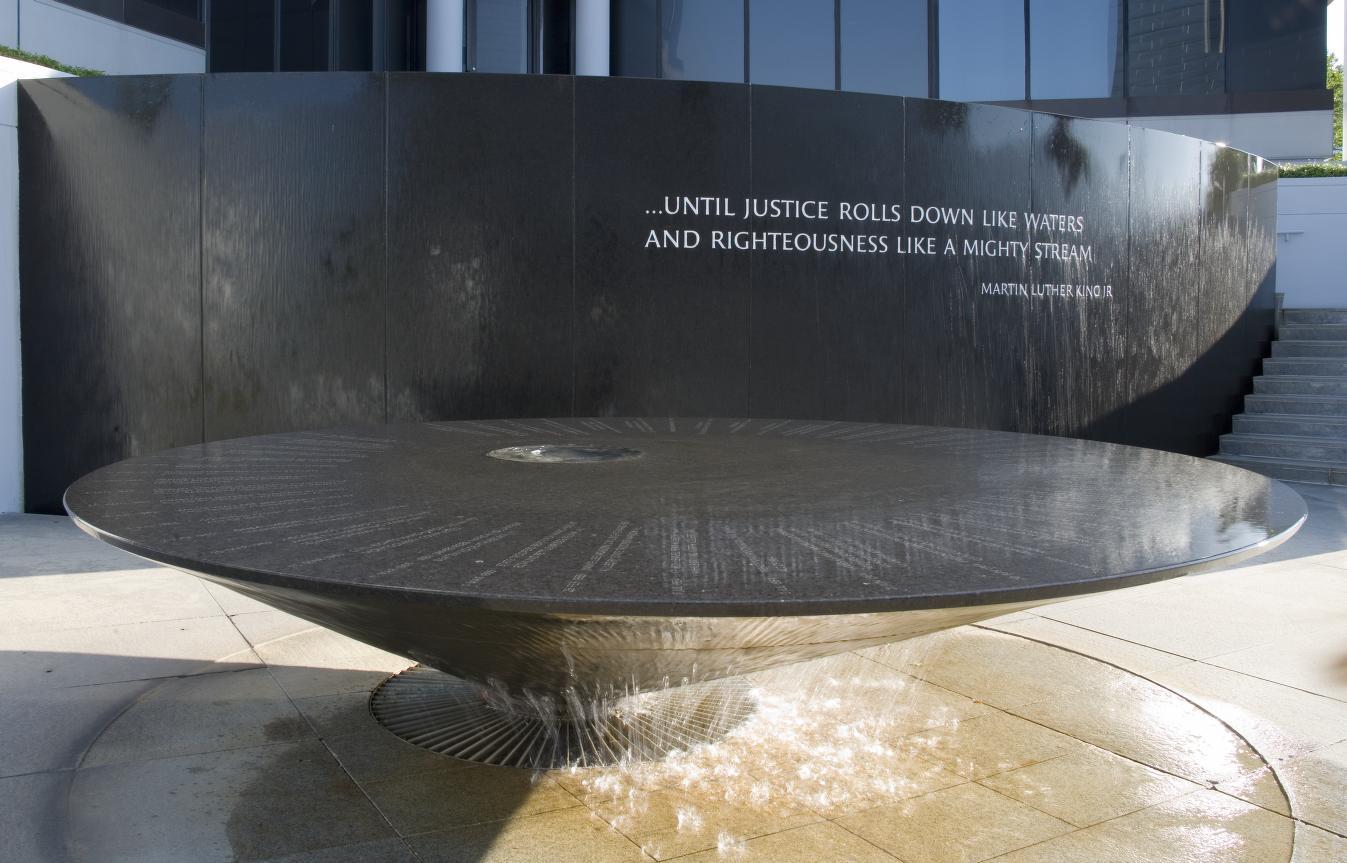
Figure 4. Civil Rights Memorial by Maya Lin in Montgomery, Alabama
From this, Lin created a design about water and words that would be etched into the surface, which continued to be a throughline in her later work. The final design consists of a curved water wall and a circular stone water table which shows a brief history of the Civil Rights Movement, beginning in 1954 with Brown v. Board of Education and ending in 1968 with Martin Luther King Jr.’s assassination. Taking inspiration from a clock face to create an immersive and cyclical experience of history, the 14-ton water work includes a carefully controlled flow that invites the viewers to touch and interact with the piece.
The Women's Table
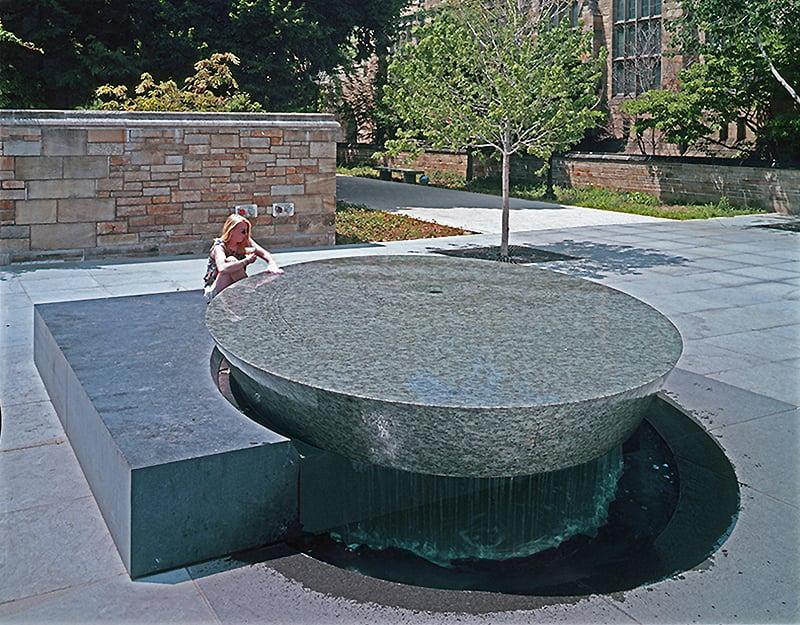
Figure 5. Women's Table by Maya Lin at Yale University
Lin was invited in 1993 by Yale University to create an artwork commemorating the twentieth anniversary of the university’s admission of women into the undergraduate school. As she researched the piece, she discovered in university records numerous women in the roles of “silent listener” at Yale courses. To Lin, these women represented a female presence within the university that stretched back centuries, long before their contributions had been recognized. Titled The Women’s Table, which calls back to her design for the Civil Rights Memorial, she created a spiral design embedded in a water work, inscribing the number of women enrolled at Yale each year. The spiral begins with the water source and grows wider as the number of women enrolled increased.
The Confluence Project and “What is Missing”
Environmentalism has been and continues to be at the core of Lin’s artistic drive. She often engages natural shapes, uses natural materials, and in recent work opens up conversations surrounding human’s relationship to nature itself. Lin’s work is often markedly modern yet often utilizes scales that are ancient or eternal in their aspirations and sensitivities. Heavily influenced by the Serpent Mounds in Ohio nearby to her childhood home, she has created several earth works, including Wave Fields at the University of Michigan in Ann Arbor and recreated at the Storm King Art Center, New Windsor, NY, that invite viewers to take notice of the natural world around them.
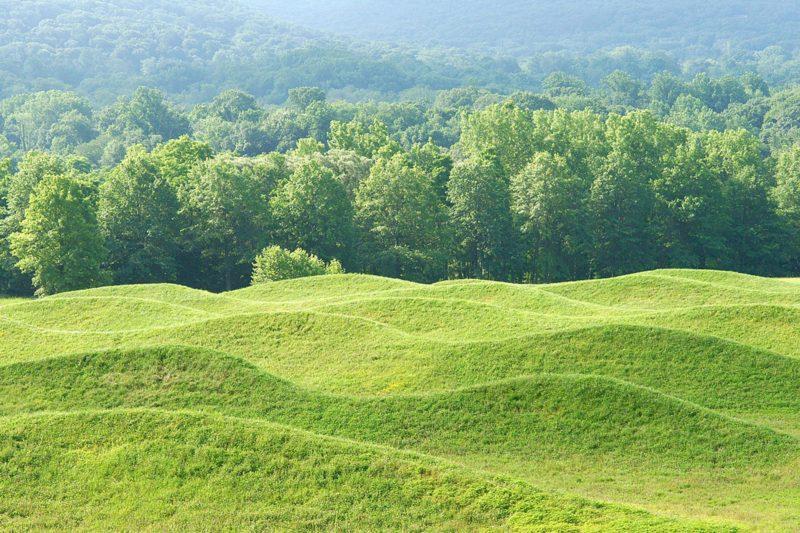
Figure 6. Storm King Wavefield by Maya Lin in Mountainville, New York
In 2001, Lin began work on the Confluence Project, a series of four large-scale installations at points of historic significance to the indigenous tribes of the Pacific Northwest. It is considered one of the largest undertakings of Lin’s career, including other artists, architects, designers, and representatives of indigenous tribes. The goal of the project was to connect visitors to the land and to restore each site to a native landscape. In Lin’s view, the project did not add artworks but rather erase damage from poor land management, abandoned parking lots, and invasive plant species.
What is Missing? is Lin’s fifth and final memorial, which re-imagines memory works not as a static or fixed monument but a collaborative and cohabitational work that changes as much as it encourages change. The project focuses on species and places that have already disappeared due to climate change or will likely go extinct soon. It invites viewers to learn about environmentalism, embrace a solutions-oriented approach to climate change, and to share their stories of environments that have been successfully restored. For example, the project considers possibilities for urban planning that better utilize space and natural resources. What is Missing? is also a non-profit that Lin personally contributes to, and a larger participatory art project that calls on the audience to participate and contribute, focused on revitalizing urban landscapes through sustainability.
“I think, for me, the environment, and our responsibility to the environment are probably some of the underpinnings of how I see the world.” - Interview with All Arts TV
Architect and Artist
“Part of me is an artist. The other part of me builds architecture... I couldn’t choose between the two, nor did I choose to blend them.” Maya Lin, 2001 interview with PBS.
Lin refuses to be defined by what “artist” or “architect,” weaving both practices throughout her life and works. Her prolific career demonstrates the depth and variety of her works. From large-scale installations to urban revitalization projects, small studio works, and memorials that redefine memory works, Lin is always creating the unexpected.
In 2009, President Barack Obama awarded Lin the National Medal of Arts. In 2016, the president further recognized her achievements with the nation’s highest civilian honor, the Presidential Medal of Freedom. This medal is reserved for individuals with presented to individuals who have made significant contributions to the national interests of the United States, to world peace, or to cultural endeavors. She is also the recipient of the 1999 Rome Prize, a century-old fellowship from the American Academy in Rome to support innovative work in the arts, and holds honorary doctorates from Yale University, Harvard University, the University of Pennsylvania, Williams College, and Smith College.
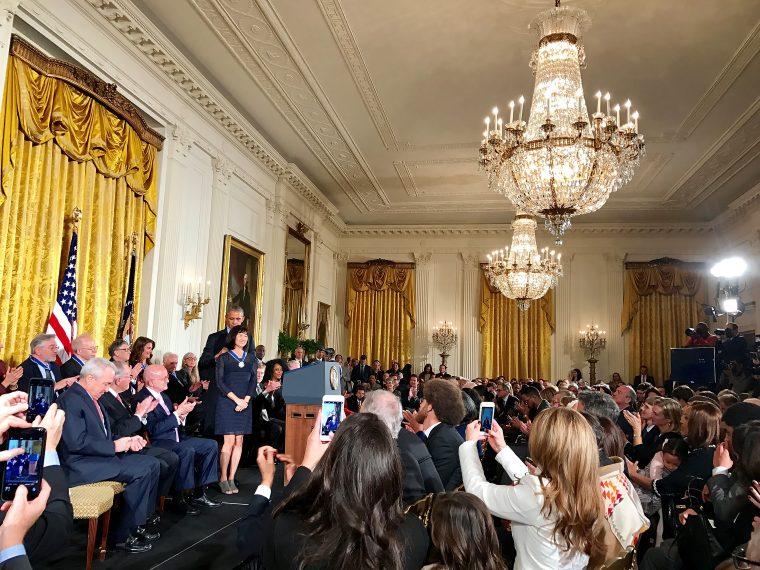
Figure 7. Maya Lin receives Presidential Medal of Freedom on November 22, 2016.
Lin and her husband Daniel Wolf, who died unexpected in 2021, had two daughters and split time between New York city and a ranch in Colorado. She continues to work towards environmental activism and art, including her recent “Ghost Forest” installation in New York’s Madison Square Park and her renovation of the Neilson Library at Smith College. Her work at Smith had particular personal significance for Lin, because a scholarship from Smith College allowed her mother to originally immigrate from China in 1949.
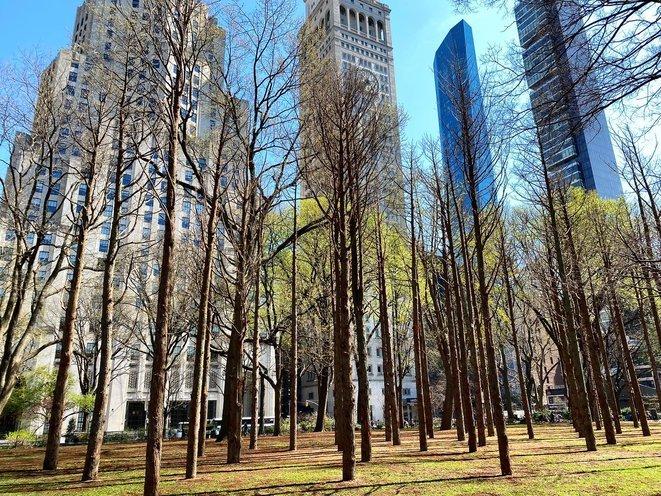
Figure 8. Ghost Forest by Maya Lin, in New York City's Madison Square
 Works Cited

Academy of Achievement. “Maya Lin — Academy of Achievement.” November 22, 2022. Accessed September 17, 2025. https://achievement.org/achiever/maya-lin/#biography
Art 21. “Maya Lin.” Art21.org. Accessed September 17, 2025. https://art21.org/artist/maya-lin
Lin, Maya. “Civil Rights Memorial.” Maya Lin Studio. Accessed September 17, 2025. https://www.mayalinstudio.com/memory-works/civil-rights-memorial
Lin, Maya. “Climate Artists: Maya Lin.” Interview with All Arts TV. October 24, 2024. https://www.youtube.com/watch?v=epJnAsKa6Rk
Lin, Maya. “Inside Maya Lin’s Art and Architecture.” Interview with PBS, 2001. https://www.youtube.com/watch?v=Nc6YDib6s6E
Lin, Maya. Interview with Artforum. July 30, 2025. https://www.artforum.com/video/maya-lin-under-the-influence-1234733440
Lin, Maya. “The Confluence Project.” Maya Lin Studio. Accessed September 17, 2025. https://www.mayalinstudio.com/memory-works/confluence
Lin, Maya. “The Women’s Table.” Maya Lin Studio. Accessed September 17, 2025. https://www.mayalinstudio.com/memory-works/womens-table
Lin, Maya. “What is Missing?” Maya Lin Studio. Accessed September 17, 2025. https://www.mayalinstudio.com/memory-works/what-is-missing
Mock, Freida Lee, director. Maya Lin: A Strong Clear Vision. American Film Foundation, 1994.
Reynolds, Matthew. Maya Lin, Public Art, and the Confluence Project. New York: Routledge, 2024.
The Editors of Encyclopaedia Britannica. "Maya Lin." Encyclopedia Britannica, October 1, 2024. https://www.britannica.com/biography/Maya-Lin.
Primary Source Analysis
Re-Thinking Memorials (grades 5-10)
Maya Lin, Vietnam Veterans Memorial (1982)
1. When you think of the word “memorial,” what do you envision? List some of the memorials you can think of and what they have in common.
2. Look at the images of the Vietnam Veterans Memorial. Lin described her design as a “cut” across the earth. Those who opposed her design called it a “black gash of shame.” Is this what you think of when you imagined a memorial? What emotions does it evoke for you?
3. Why would Lin design the memorial this way? What emotions do you think she was trying to evoke? Do you think this design reaches its goals? Why?
Women and University Spaces (grades 9-12)
Maya Lin, Woman’s Table (1993)
1. Think about a university that you might be interested in attending, or that you will be attending, or one that you are curious about. How long have women been accepted as students there? First make a guess and then find the answer. Is the real date earlier than you guessed, or later? Do you think that women could have been present at the university before that date, and if so, in what capacity? For example, at Yale University, women were admitted as undergraduate students starting in 1969. However, they were present at the university as “silent listeners” since before the 1900s.
2. Look at Maya Lin’s Women’s Table. She created this to commemorate 20 years of women as undergraduate students at Yale, her alma mater, as well as the women who were present before 1969 but not recognized. What do the numbers represent? Why do they fade into the water source? Why would she pick a fountain on the university grounds to represent this milestone for female students?
3. How might this artwork effect the space around it? What emotions does it evoke in you?
Ancient Forms (Grades 3-6)
Maya Lin, Storm King Wavefield (2009)
1. Think of a space that you enjoy being in. Is it indoors or outdoors? What do you like about it? How long, do you imagine that it has been there?
2. Look at Maya Lin’s Storm King Wavefield. If you had to guess, how long ago would you say that it was made? Does it look very old, or very new? Why?
3. Why would Lin re-make an outdoor space in this way? What does it make you feel? Why?
Carry the Torch
How to Cite this Page
MLA – McKelvie, Lydia. “Maya Lin.” National Women’s History Museum, 2025. Date accessed.
Chicago – McKelvie, Lydia. “Maya Lin.” National Women’s History Museum. 2025. https://www.womenshistory.org/education-resources/biographies/maya-lin.