Ruth Asawa
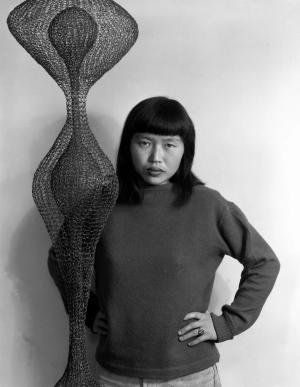
Ruth Asawa was an American modernist sculptor best known for her innovative looped-wire sculptures that redefine sculptural form and material in the mid-twentieth century.
Working primarily in San Francisco after World War II, Asawa bridged modernist art practice with community-centered public art and arts education activism.
Shaped by her experience of Japanese American incarceration during World War II, Asawa integrated art, daily life, and civic responsibility into a lifelong practice rooted in resilience and collective core.
“When you put a seed in the ground, it doesn't stop growing after eight hours. It keeps going every minute that it's in the earth. We, too, need to keep growing every moment of every day that we are on this earth.”
Ruth Asawa: “Art Is for Everybody”. Article from Edutopia, February 2, 2007.
Early Life and Family Background
Ruth Aiko Asawa was born on January 24, 1926, in Norwalk, California, to Japanese immigrant parents. After relocating to California, her parents worked as truck farmers, growing seasonal crops such as strawberries, carrots, green beans, and tomatoes (Ruth Asawa). During the 1920s, Japanese immigrants in the United States, particularly on the West Coast, faced intense racial discrimination, legal exclusion, and economic insecurity despite their significant contributions to agricultural labor. California’s Alien Land Laws of 1913 and 1920 barred “aliens ineligible for citizenship”, a designation that targeted Japanese immigrants, from owning land or leasing it long term (Equal Justice Initiative). At the same time, U.S. naturalization laws limited citizenship to white Americans and formerly enslaved peoples, which prevented Japanese immigrants from attaining citizenship and left them legally vulnerable. To maintain their farms, many families placed land in the names of their U.S.-born children or relied on informal agreements.
Anti-Japanese sentiment, fueled by nativist movements, economic competition, and racist stereotypes, further marginalized these communities and culminated in the Immigration Act of 1924, which banned immigration from Japan altogether (Equal Justice Initiative). By the time Asawa was born, Japanese immigrant families endured constant legal and social exclusion. At one point during her childhood, Asawa witnessed her father burning the family’s Japanese fencing equipment in a bonfire, a symbolic gesture meant to demonstrate loyalty to the United States over Japan (Japanese American Internment Memorial).
The onset of the Great Depression in 1929 intensified the hardships Asawa experienced during childhood. The nationwide economic collapse disproportionately affected agricultural workers as crop prices dropped and demand declined, making already unstable livelihoods increasingly precarious. Japanese American farming families faced compounded challenges as economic instability layered onto racial discrimination and exclusion from many forms of financial relief. Asawa grew up in a household shaped by long hours of physical labor, financial uncertainty, and perseverance. These early experiences informed her understanding of hardship, resilience, and inequality and later influenced both her artistic practice and her commitment to social justice.
As the fourth of seven children, Asawa worked on the family farm while attending school six days a week, including Japanese language school, where she practiced calligraphy (de Young Museum). Teachers recognized her artistic talent early in her education (Ruth Asawa). On the farm, however, neighbors and family members knew her for arguing, which often resulted in her being assigned solitary tasks. These moments of isolation gave her time to observe repetitive agricultural labor and the rhythms of natural forms, experiences that later reemerged in her sculptural practice. Asawa recalled, “I used to sit on the back of the horses’ drawn leveler with my bare feet drawing forms in the sand, which later in life became the bulk of my sculptures” (Ruth Asawa). She later explained, “Sculpture is just like farming. If you keep at it, you can get quite a lot done” (de Young Museum).
These early experiences of labor, discipline, and observation would soon be reframed under far more restrictive conditions, as World War II altered the course of Asawa’s life.
World War II Incarceration
At the time of Japan’s attack on Pearl Harbor on December 7, 1941, approximately 120,000 people of Japanese ancestry lived on the U.S. mainland, most of them along the Pacific Coast (The National WWII Museum). Nearly two-thirds of this population were U.S. citizens by birth. In the aftermath of the attack, fear and suspicion toward Japanese Americans led the Roosevelt administration to enact extreme wartime measures. Most notably, Executive Order 9066, issued in 1942, authorized the forced removal and incarceration of individuals of Japanese descent regardless of citizenship.
Following the order’s implementation, the federal government forcibly removed approximately 120,000 Japanese Americans, nearly two-thirds of whom were U.S. citizens, from their homes and confined them in incarceration camps for most of World War II. Although officials justified this policy as a national security measure, it violated many fundamental constitutional rights (The National WWII Museum). At least 1,862 Japanese Americans died while incarcerated, including 285 infants and children (Seelmeyer, 2023).
In 1942, under Executive Order 9066, the U.S. government incarcerated Asawa and her family. Federal authorities first arrested male community leaders, and in February 1942 officials detained Asawa’s father, Umakichi. Despite having lived in the United States for over forty years, he was sent to an internment camp in New Mexico and separated from his family for nearly two years (Ruth Asawa). Later that spring, officials imprisoned Asawa, her mother, and her siblings. In 1943, Asawa’s father was permitted to rejoin his wife and younger children at the Rohwer Relocation Center in Arkansas; however, by that time Asawa had already left the camp to attend college in Wisconsin and would not see her father again until after the war, in 1948 (Densho).
They were initially detained at the Santa Anita racetrack in California, where they lived in converted horse stables. After six months, the family was forcibly taken to the Rohwer Relocation Center in Arkansas, The camp housed over 10,000 Japanese Americans of mixed generations, though the majority, approximately 66 percent, were U.S. citizens and many were under the age of nineteen (NPS). At Rohwer, Asawa, her mother, and siblings lived in tar-paper barracks surrounded by barbed wire, guard towers, and constant surveillance (Ruth Asawa). Her mother brought seeds and planted them in front of the barracks, transforming the space into something more familiar while supplementing the limited food rations available to incarcerated families and nearby U.S. soldiers (Japanese American Memorial Pilgrimages).
While incarcerated at Santa Anita, Asawa gained unexpected access to art instruction. Japanese American animators who had worked at Walt Disney Studios were also incarcerated, and taught drawing classes through which Asawa devoted long hours to sketching people, animals, and everyday scenes from camp life (Ruth Asawa). She later described art as a stabilizing force that provided structure and refuge during a period marked by uncertainty and loss. While incarcerated at Rohwer, Asawa attended high school, continued developing her artistic practice, and volunteered as art editor for the school yearbook (NPS). These experiences shaped her lifelong belief that art education should remain accessible to everyone, even under the most restrictive conditions. Reflecting on this period, she later said, “I hold no hostilities for what happened; I blame no one. Sometimes good comes through adversity. I would not be who I am today had it not been for the internment, and I like who I am” (Ruth Asawa).
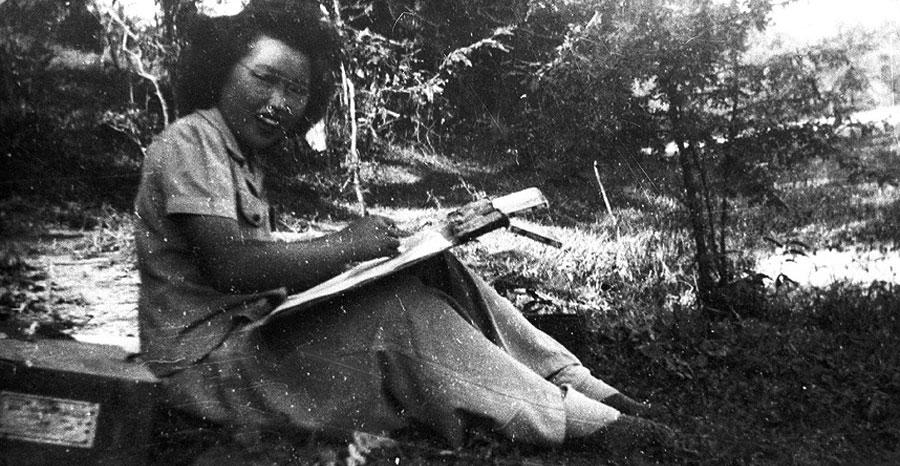
Figure 1. Asawa drawing while detained. Courtesy of Ruth Asawa.
Education and Barriers to Teaching
After sixteen months of incarceration, Asawa received a scholarship from the Japanese American Student Relocation Council, a Quaker organization that assisted displaced Japanese American students, to attend Milwaukee State Teachers College. On August 16, 1943, the War Relocation Authority issued her an identification card that allowed her to travel legally to Milwaukee (Smithsonian).
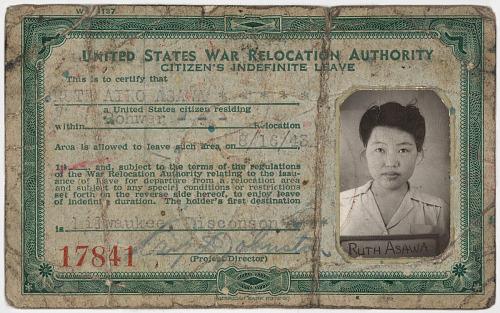
Asawa hoped to become an art teacher, but persistent racial prejudice prevented her from completing her student-teaching requirements. Schools refused to place her because of her Japanese ancestry, effectively blocking her entry into the teaching profession (de Young Museum).
Black Mountain College and Artistic Formation
Rather than abandoning her education, Asawa redirected her path in 1946 and enrolled at Black Mountain College in North Carolina. The avant-garde institution embraced democratic principles, structured education collectively, and placed artistic practice at the center of the curriculum (Ruth Asawa). Despite operating in the segregated South, the college welcomed women and people of color, making it a rare progressive space in higher education at the time (NPS).
At Black Mountain College, Asawa studied with influential figures including Josef Albers, Buckminster Fuller, and Max Dehn (David Zwirner). The school emphasized learning through doing, interdisciplinary collaboration, and experimentation with humble materials. Asawa thrived in this environment, producing work that blurred boundaries between drawing, sculpture, craft, and design.
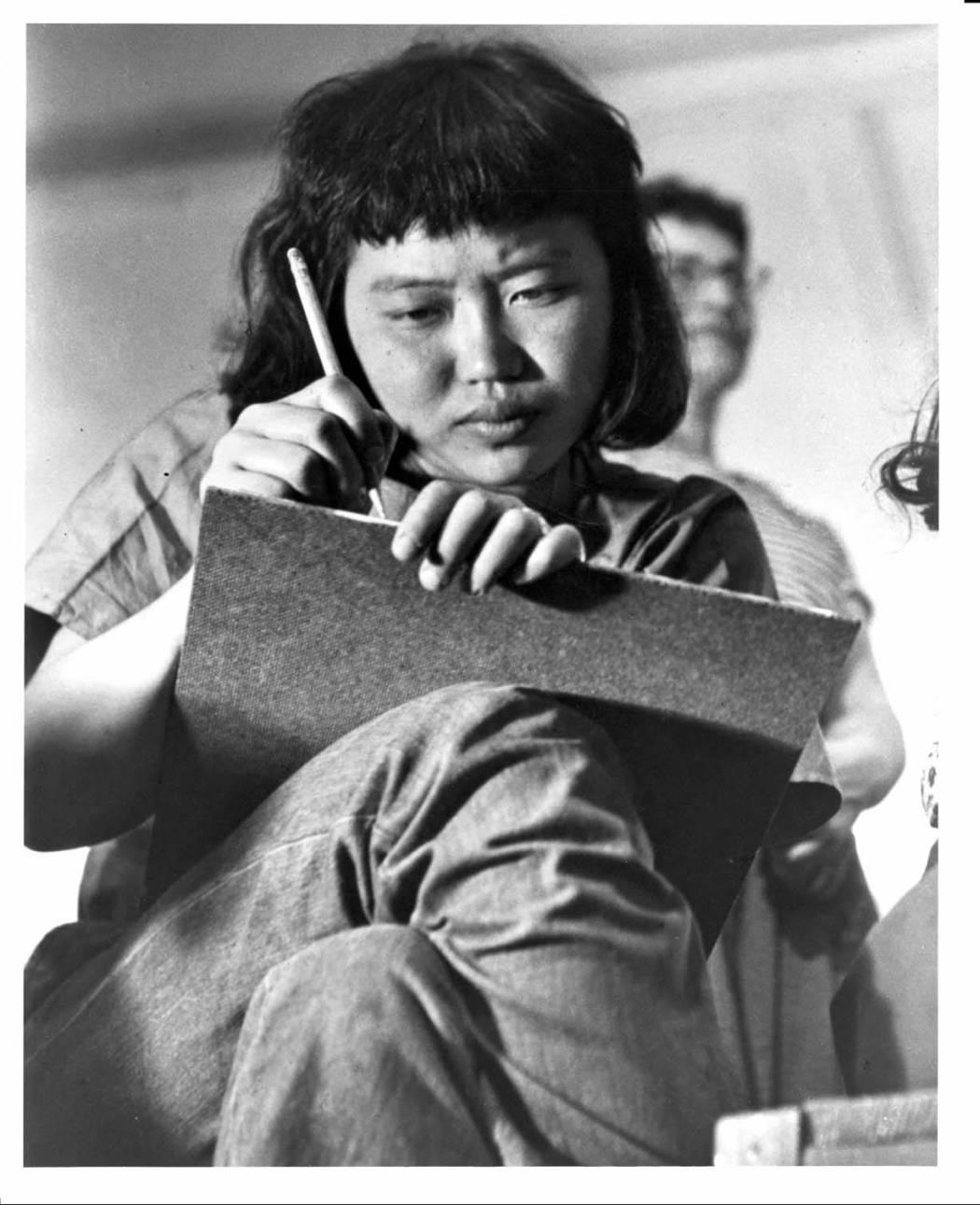
Figure 3. Asawa in art class at Black Mountain College, ca. 1946-1949. Courtesy of Densho.
During a 1947 trip to Mexico with Josef and Anni Albers, Asawa observed local artisans crocheting wire baskets at the Universidad Nacional Autónoma de México (de Young Museum). Inspired by the technique, she adapted it into her sculptural practice, looping industrial wire into hollow, undulating forms that defined space without mass. As Black Mountain College later explained, “As Asawa developed her unique style of wire weaving, she referenced intricate Mexican techniques of looping a single strand of material to create an interlocking basket, eventually creating her iconic rounded forms.”
Asawa returned to Mexico soon after and volunteered to teach art to children in Toluca. In exchange, a local schoolteacher taught her basket-weaving techniques (Black Mountain College). When she returned to Black Mountain, she began producing the wire sculptures that later defined her career.
Personal Life
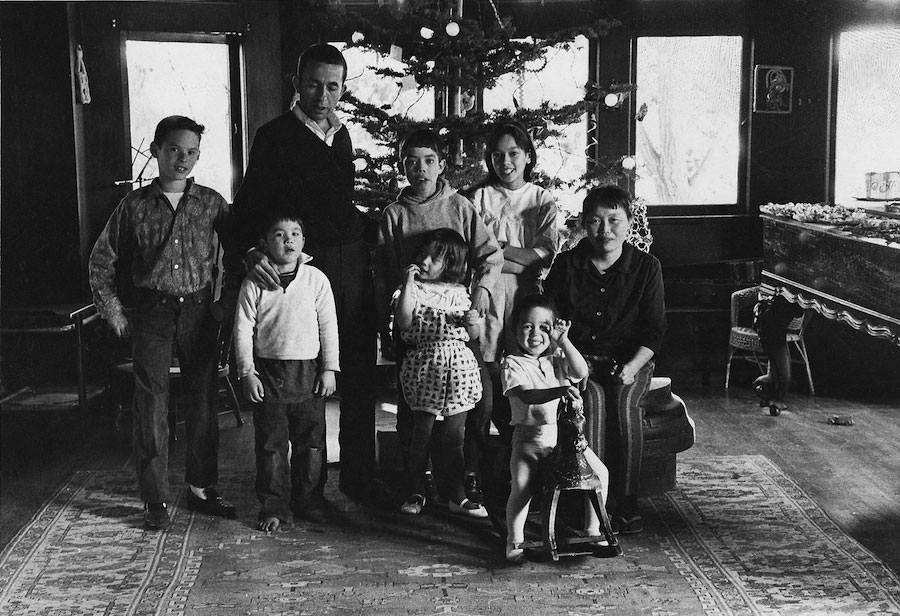
While attending Black Mountain College, Asawa met architecture student Albert Lanier in 1948. Lanier assisted her with mathematics, while Asawa supported his design studies. The couple wished to marry, but California law still prohibited interracial marriage. Rather than seeking parental approval, knowing they would likely face opposition, the couple sought the approval of their professors, who supported their union on the condition that Lanier encouraged Asawa’s artistic work (Japanese American Memorial Pilgrimages). Shortly afterward, the Perez v. Sharp Supreme Court decision overturned California’s anti-miscegenation laws, allowing the couple to marry in San Francisco.
Soon after marrying, Asawa became pregnant. Just before giving birth, the couple learned of a young boy who needed a home and decided to adopt him. Their family became a model of intercultural inclusion decades ahead of broader societal acceptance (Japanese American Memorial Pilgrimages). Over the next nine years, Asawa and Lanier raised six children.
Emergence of the Looped Wire Sculptures
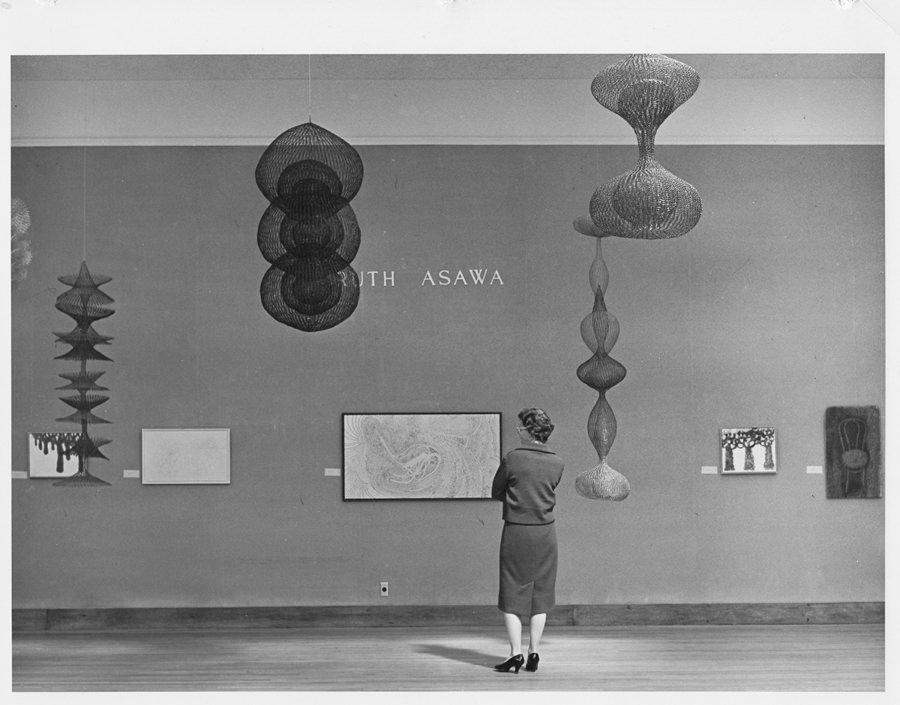
After settling in San Francisco, Asawa began producing the looped wire sculptures for which she became widely known. Suspended from ceilings, the works appeared weightless and organic, evoking seed pods, shells, and bodily forms. Critics initially struggled to categorize the sculptures, often dismissing wire as a craft material rather than a sculptural medium. Asawa rejected these hierarchies and argued that such distinctions limited artistic possibility.
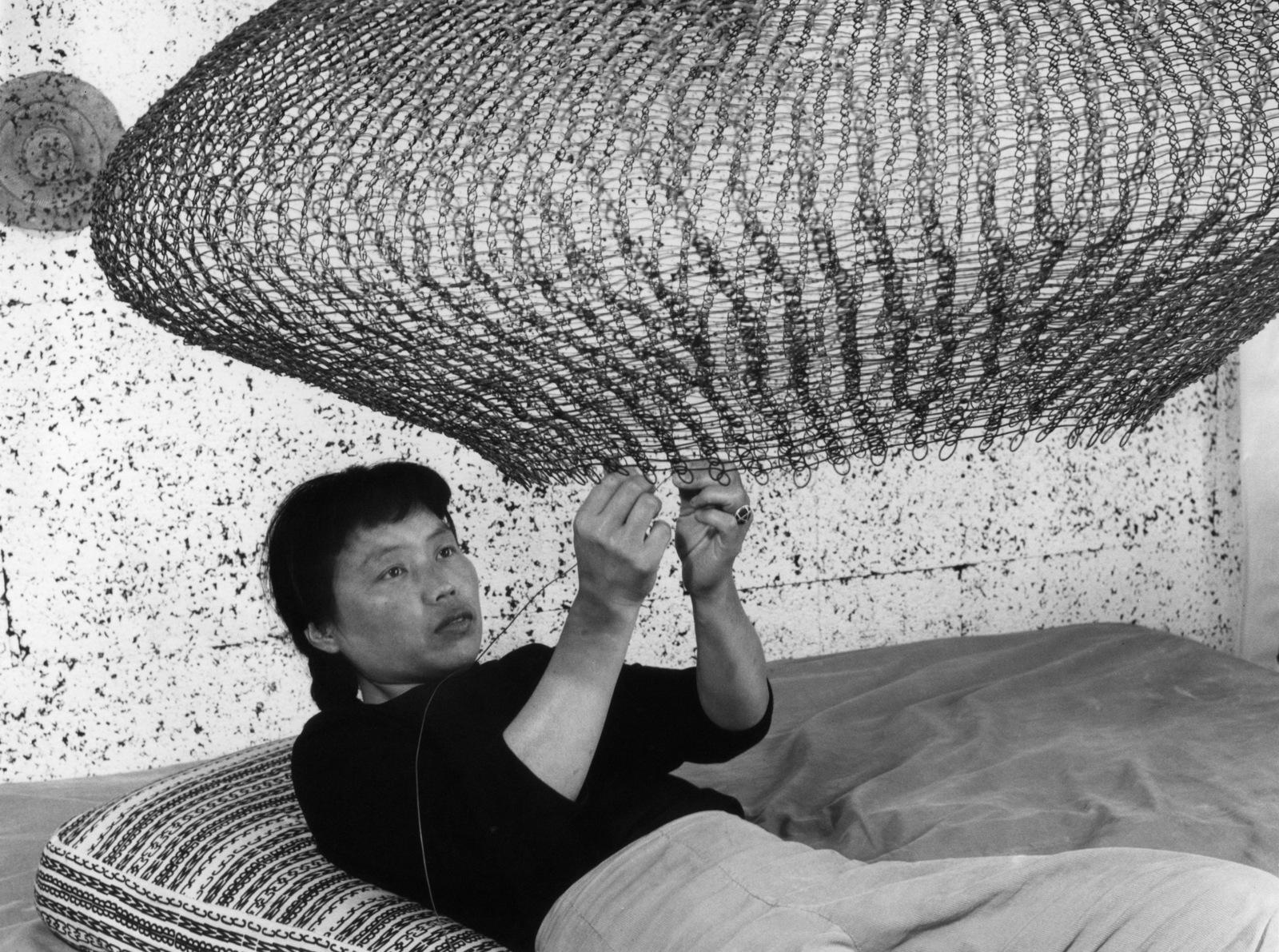
Figure 5. Asawa working on a wire sculpture in her studio, ca. 1950s. Courtesy of Densho.
Despite early skepticism, Asawa gained recognition in the 1950s and held her first solo exhibition in New York at the Peridot Gallery in 1955 (David Zwirner). By the early 1960s, museums and collectors increasingly acknowledged her technical mastery and formal innovation. Major institutions, including the Guggenheim Museum, the Whitney Museum of American Art, and later the Museum of Modern Art, acquired her work.
Public Art and Civic Vision
In the 1960s, Asawa expanded her practice into public space. She believed art belonged in everyday life and should invite public participation. Her public commissions included fountains, memorials, and sculptures integrated throughout San Francisco and the Bay Area. Works such as Andrea (1966–1968) at Ghirardelli Square and the San Francisco Fountain (1970-1973) near Union Square reflected her commitment to accessibility and civic engagement. Asawa stated, “I want to make a sculpture that could be enjoyed by everyone” (Ruth Asawa).
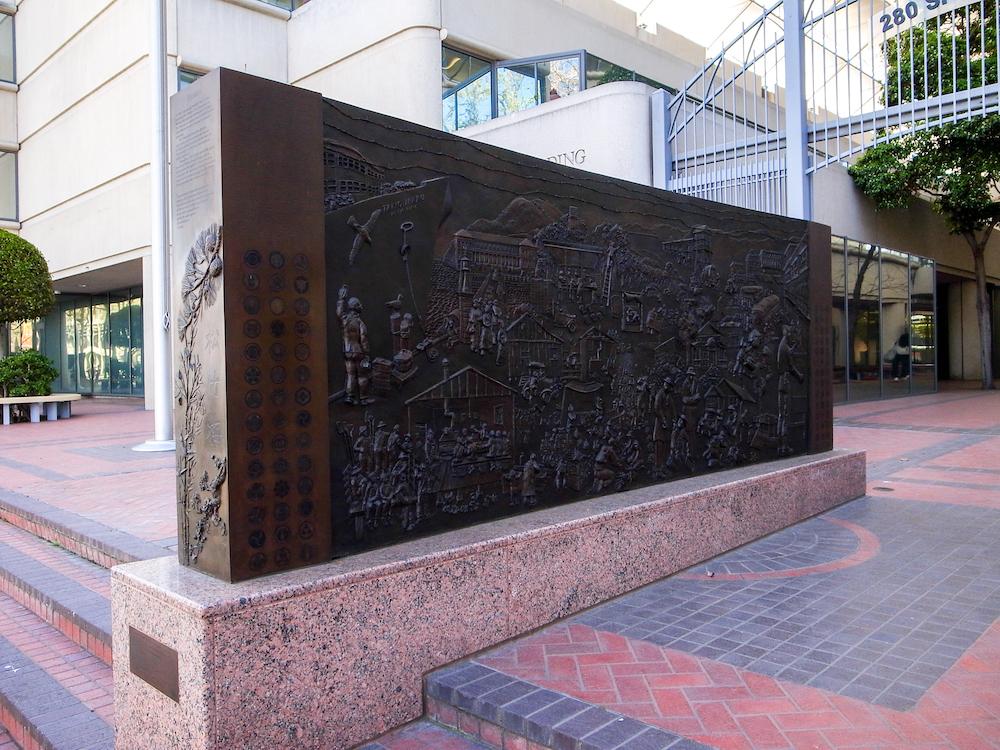
One of her most historically significant public works, the Japanese American Internment Memorial (1990-1994) in San José, directly addressed the injustices of wartime incarceration. Through bronze relief panels and textual elements, Asawa commemorated forced removal, imprisonment, and survival while also creating a visual biography of her own life (Ruth Asawa). By locating the memorial outside a federal courthouse, she transformed public art into a permanent site of remembrance and protest.
Arts Education Advocacy
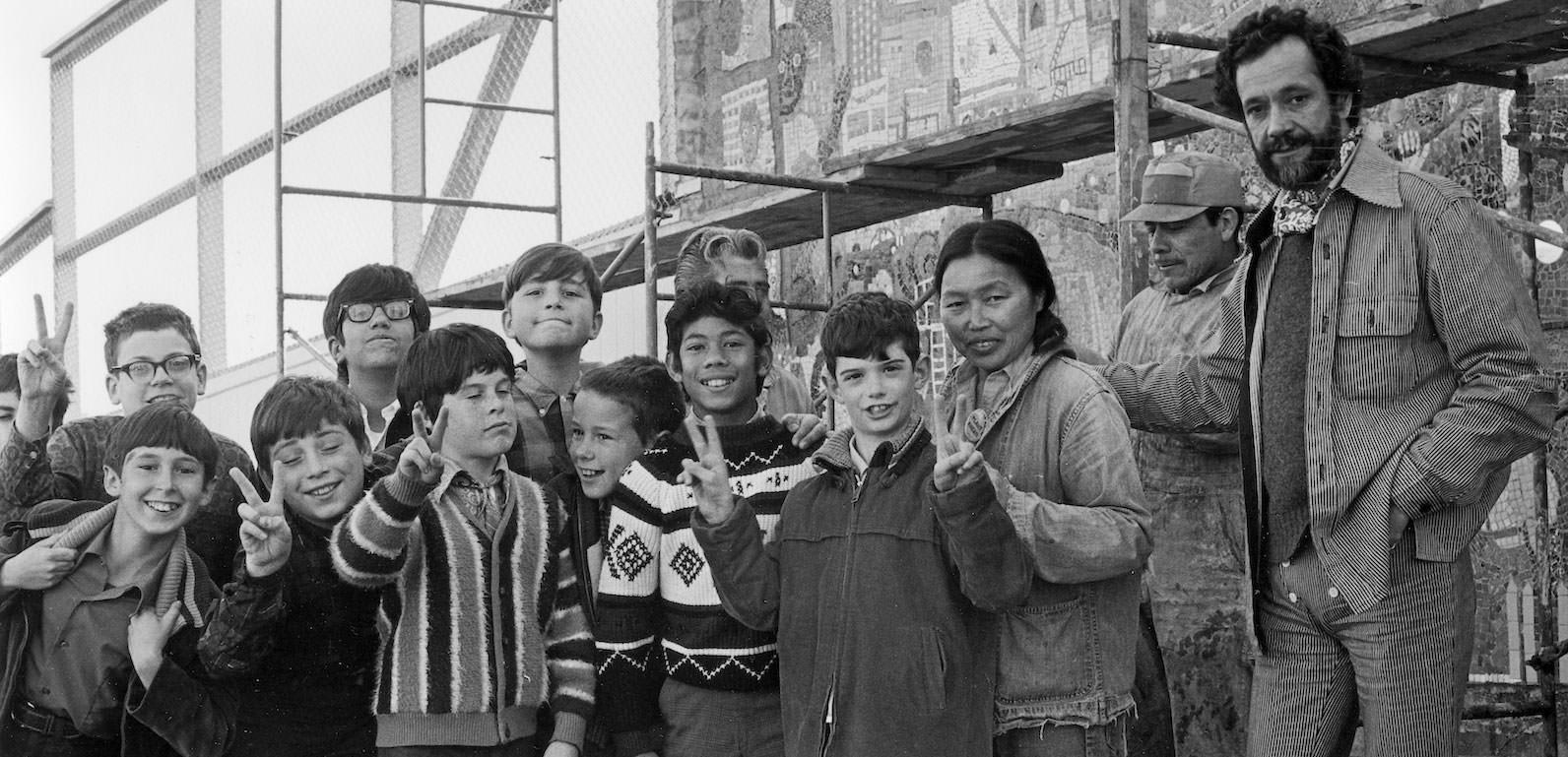
Alongside her sculptural practice, Asawa dedicated decades to arts education advocacy. In 1968, she co-founded the Alvarado School Arts Workshop, which brought practicing artists into public elementary schools and emphasized experimentation using inexpensive, everyday materials (Ruth Asawa). The program prioritized hands-on creativity over technical perfection and eventually expanded to fifty public schools across San Francisco.
Asawa served on the San Francisco Arts Commission, the California Arts Council, and several national arts organizations, consistently advocating for equitable access to arts education (de Young Museum; Ruth Asawa). In 1982, she helped found San Francisco’s first public arts high school, later renamed the Ruth Asawa San Francisco School of the Arts. The school embodied her belief that arts education cultivated critical thinking, empathy, and civic responsibility and should remain deeply connected to the city’s cultural life (de Young Museum).
Later Recognition and Legacy
Although Asawa maintained steady artistic production throughout her life, widespread national recognition arrived late. Major retrospectives at the San Francisco Museum of Modern Art and the Museum of Modern Art in the 2010s and 2020s reframed her work as central to twentieth-century American art. Scholars emphasized her integration of artistic practice, domestic labor, and public service as a radical model of creative citizenship.
For her final public commission, Asawa collaborated with Mark Johnson, Isao Ogura, and Shigeru Namba on Garden of Remembrance (2000-2002) at San Francisco State University. The work memorialized the geographic locations of Japanese American incarceration camps.
Asawa died in her sleep on August 6, 2013, at the age of eighty-seven. In recent years, institutions honored her legacy through U.S. Postal Service stamps, public school curricula, and permanent public installations. Her influence persists in contemporary sculpture and in pedagogical models that prioritize process, material inquiry, and community engagement.
 Primary Source Analysis Strategies

Primary Source Analysis Strategies
Style: Analyzing Photographs and Prints
- Japanese discrimination sign, 1920s
- Caption: A woman gestures toward an anti-Japanese sign displayed outside
her California home during the 1920s. Such signs reflected widespread racial
hostility toward Japanese immigrants and Japanese American families,
reinforced through law, housing practices, and public rhetoric during Ruth
Asawa’s childhood. - Primary source inquiry:
- How does the visibility and placement of the discriminatory sign reveal how racism was normalized and enforced in everyday domestic and public spaces during this period?
- What power dynamics are suggested by the sign’s language and by its presence outside a private home rather than in an official or governmental setting?
- In what ways does this image help contextualize the social and legal environment that shaped Asawa’s early life, particularly regarding belonging, citizenship, and exclusion?
Style: Analyzing Photographs and Prints
- Japanese American Internment Memorial, San Jose, 1990-1994
- Caption: A bronze relief memorial installed outside a federal courthouse in San José. Designed by Ruth Asawa, the work documents Japanese American incarceration during World War II while functioning as a visual autobiography that integrates personal memory with collective history.
- Primary source inquiry:
- How do Asawa’s sculptural choice (material, scale, relief imagery, and text) shape the viewer’s understanding of incarceration as both a personal and collective experience?
- What is the significance of placing this memorial outside a federal building, and how does its location challenge or engage state authority and historical accountability?
- How does the memorial function simultaneously as public art, historical documentation, and political statement, and what does this reveal about Asawa’s belief in art as civic responsibility?
Style: Analyzing Oral Histories
- Archives of American Art Short Film Series: Oral History Interview with Ruth Asawa, 2002
- Caption: Oral history interview with Ruth Asawa and Albert Lanier, recorded June 21–July 5, 2002, as part of the Smithsonian Institution’s Archives of American Art. In the interview, Asawa reflects on her childhood, incarceration, artistic development, and commitment to arts education.
- Primary source inquiry:
- How does Asawa narrate the relationship between lived experience (particularly incarceration and discrimination) and her artistic philosophy and material choices?
- What themes of resilience, labor, and community recur throughout the interview, and how do they complicate traditional narratives of artistic genius or individualism?
- How does the oral history format allow Asawa to assert agency over her own historical record, and what insights does spoken testimony provide that may not appear in visual or written sources?
Asawa, Ruth. “Arts Advocacy.” Ruth Asawa. Accessed April 15, 2026. https://ruthasawa.com/life/arts-advocacy/.
Asawa, Ruth. “Garden of Remembrance, San Francisco State University, 2000–2002.” Ruth Asawa. Accessed April 15, 2026. https://ruthasawa.com/garden-of-remembrance-sf-state-2000-2002/.
Asawa, Ruth. “Japanese American Internment Memorial, San José, 1990–1994.” Ruth Asawa. Accessed April 15, 2026. https://ruthasawa.com/japanese-american-internment-memorial-san-jose-1990-1994/.
Asawa, Ruth. “Life.” Ruth Asawa. Accessed April 15, 2026. https://ruthasawa.com/life/.
Asawa, Ruth. “Life: Incarceration.” Ruth Asawa. Accessed April 15, 2026. https://ruthasawa.com/life/incarceration/.
Asawa, Ruth. “San Francisco Fountain, Union Square, 1970–1973.” Ruth Asawa. Accessed April 15, 2026. https://ruthasawa.com/san-francisco-fountain-union-square-1970-1973/.
Asawa, Ruth. “Sculpture.” Ruth Asawa. Accessed April 15, 2026. https://ruthasawa.com/art/sculpture/.
Asawa, Ruth. “USPS Announces 2020 Ruth Asawa Stamp.” Ruth Asawa. Accessed April
15, 2026. https://ruthasawa.com/usps-announces-2020-ruth-asawa-stamp/.
Black Mountain College. “Ruth Asawa.” Black Mountain College. Accessed April 15, 2026. https://www.blackmountaincollege.org/ruth-asawa/.
Crosbie, Olivia. “Ruth Asawa.” Black Mountain College. Accessed April 15, 2026. https://www.blackmountaincollege.org/blog/olivia-crosbie-ruth-asawa/.
David Zwirner. “Ruth Asawa.” David Zwirner Gallery. Accessed April 15, 2026. https://www.davidzwirner.com/artists/ruth-asawa#biography.
de Young Museum. “Ruth Asawa: A Working Life.” Google Arts & Culture. Accessed April 15, 2026. https://artsandculture.google.com/story/ruth-asawa-a-working-life-de-young-museum/nQUxgGBPp11bIg.
Delaplaine Arts Center. “Artist Inspiration: Ruth Asawa.” Delaplaine Arts Center. Accessed April 15, 2026. https://delaplaine.org/artist-inspiration/ruth-asawa/.
Densho. “Ruth Asawa.” Densho Catalyst. Accessed April 15, 2026. https://densho.org/catalyst/ruthasawa/.
Equal Justice Initiative. “California’s Alien Land Laws.” Equal Justice Initiative. Accessed April 15, 2026. https://eji.org/news/californias-alien-land-laws/.
Immigration History Initiative. “U.S. Immigration Timeline.” ImmigrationHistory.org. Accessed April 15, 2026. https://immigrationhistory.org/timeline/.
Japanese American Memorial Pilgrimages. “Ruth Asawa” (video). YouTube. Accessed April 15, 2026. https://www.youtube.com/watch?v=4VWXGqHNhXM.
National Park Service. “Rohwer Relocation Center Memorial Cemetery.” U.S. Department of the Interior. Accessed April 15, 2026. https://www.nps.gov/places/rohwer-relocation-center-memorial-cemetery.htm.
National Park Service. “Ruth Asawa.” U.S. Department of the Interior. Accessed April 15, 2026. https://www.nps.gov/people/ruth-asawa.htm.
San José, City of. “Japanese American Internment Memorial.” City of San José. Accessed April 15, 2026. https://www.sanjoseca.gov/Home/Components/FacilityDirectory/FacilityDirectory/2575/1396.
Seelmeyer, Lynette. “Japanese American Incarceration and Memory.” StoryMaps, Kent State University Library and Information Science iSchool. Published April 22, 2023. https://storymaps.arcgis.com/stories/21b3dd7589274edf9e48c85dfb704a6c.
Smithsonian Institution. “Ruth Asawa Internment Camp Identification Card.” National Portrait Gallery. Accessed April 15, 2026. https://www.si.edu/object/ruth-asawa-internment-camp-id%3Anpg_NPG.2016.2.
Smithsonian Institution, Archives of American Art. “Oral History Interview with Ruth Asawa and Albert Lanier.” Archives of American Art. Accessed April 15, 2026. https://www.aaa.si.edu/collections/interviews/oral-history-interview-ruth-asawa-
and-albert-lanier-12222.
MLA – Robledo-Allen Yamamoto, Asami. “Susan B. AnthonyRuth Asawa.” National Women’s
History Museum, 2026. Date accessed.
Chicago – Robledo-Allen Yamamoto, Asami. “Susan B. Anthony.Ruth Asawa.” National
Women’s History Museum. 2026 www.womenshistory.org/education-resources/biographies/XXXX
Toshiko Akiyoshi
Miné Okubo