Anna Wintour
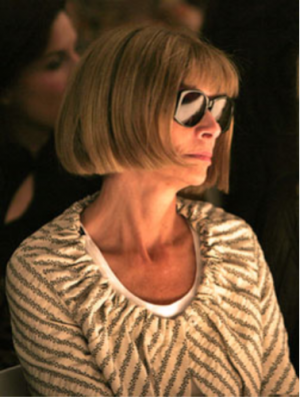
Anna Wintour is a British-American fashion journalist, most known as Editor-in-Chief of Vogue from 1988 until 2025.
Widely regarded as one of the most influential players in the fashion industry, she transformed a waning public interest in fashion by utilizing celebrity culture and supporting underdog designers.
Wintour continues to work as a philanthropist and advocate for social issues such as LGBTQ+ rights and equity in the fashion field.
“I think it’s very important for children to understand that women work and that it’s fulfilling, and it doesn’t mean that they love you any less or care about you any less.”
Interview with Amy Larocca in The Cut.
Early Life
Anna Wintour was born on November 3, 1949, in London to Charles Wintour and Eleanor Trego Baker. Writing clearly ran in the family, and Wintour grew up with a father who was a prominent journalist and editor of the Evening Standard, a mother who was a film critic, and a brother who would become political editor of the Guardian. From a young age, she demonstrated an interest in fashion. While studying at North London Collegiate School, she frequently broke the dress code by hemming her skirts. She loved the magazine Seventeen, which her grandmother sent to her every month from the U.S. Her father supported her interests, arranging for her first fashion job at the Biba boutique in London when she was fifteen.
First Steps in Fashion Journalism
Anna Wintour came of age in the 1960s in London during a major shift in fashion and in women’s roles in public life. She remembers vividly the rebellious environment of her young adulthood. Models and fashion icons such as Grace Coddington would become her lifetime collaborators in her later fashion journalism work. She left school when she was sixteen to begin a training program at Harrods, an important department store in London, and dabbled in some fashion classes at a nearby college.
In 1970, Harper’s Bazaar UK merged with the publication Queen, and their subsequent restructuring gave Wintour a chance at her first job in fashion journalism as an editorial assistant. She moved to New York City in 1975 to become junior fashion editor at Harper’s Bazaar, but her overly complex fashion shoots led to her getting fired within nine months. She went from start-up women’s magazines to more established publications such as New York for years, but she dreamed of working at Vogue.
Vogue
Wintour’s dream became her reality in 1983, when Vogue hired her as their first creative director. Two years later, she became editor of Vogue UK, where she exerted tremendous control to modernize the magazine to meet the needs of a contemporary woman. After a short stint as editor of House & Garden, Wintour became editor-in-chief of U.S. Vogue in 1988. Immediately, her presence at the magazine became known through the then-controversial 1988 November cover, which featured a model in jeans rather on the New York streets rather than the elegant and highly-staged covers of Vogue in the 1970s and earlier 1980s. This change was so radical, that when the printers saw it, they called Vogue’s office to see if it was a mistake.
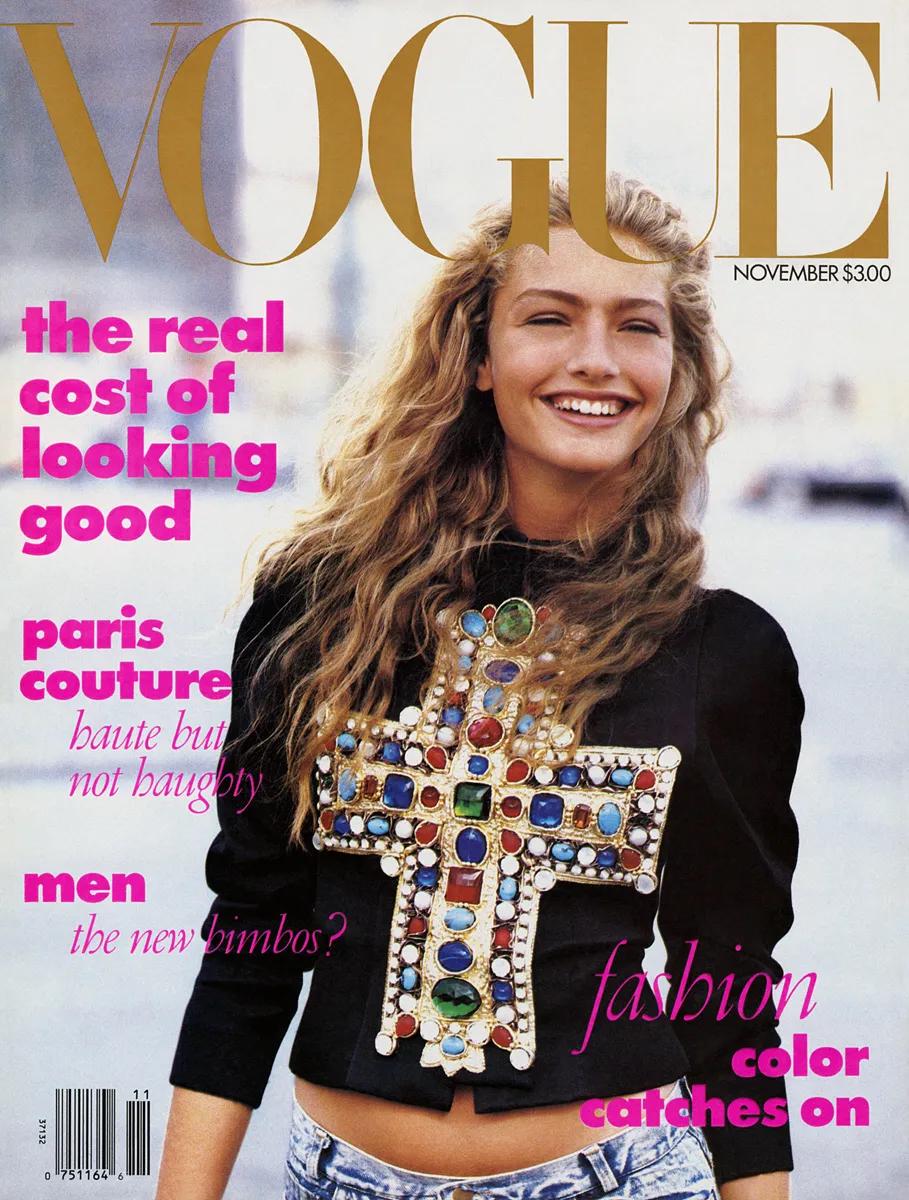
Figure 1. Wintour’s first U.S. Vogue cover in November 1988.
One of the most noticeable changes Wintour made to Vogue was in embracing celebrities as fashion tastemakers and featuring them in the magazines. Instead of the supermodels of the past, Wintour’s Vogue covers frequently featured celebrities and notables from film, music, sports, politics, and beyond.
In 1995, Wintour became a co-chair for the Costume Institute Benefit of the Metropolitan Museum of New York, also known as the Met Gala. She followed in the footsteps of her predecessor at Vogue, Diana Vreeland, who transformed the Met Gala in 1973 from a modest fundraising dinner for the museum into the fusion art, fashion, and popular culture that it is today. Wintour further capitalized on the celebrity culture that she tapped into with her controversial Vogue covers by turning the Met Gala into one of the major popular culture events of the year.
Influence and Philanthropy
During her tenure at Vogue, Wintour became one of the fashion industry’s most powerful and influential players. Many designers such as John Galliano credit Wintour with their early careers due to her role in placing them in historic fashion houses. While at Vogue, she created the Vogue Fund in collaboration with the Council of Fashion Designers of America to provide early career support for fashion designers. While she is no longer the editor-in-chief of Vogue, she serves as a trustee of the Metropolitan Museum of Art in New York and chairperson of the Met Gala, which has raised over $50 million for the Met’s Costume Institute. In her work to support queer communities, she has raised over $10 million for AIDs research.
“Anna Wintour, Behind the Shades.” CBS News. May 14, 2009. https://www.cbsnews.com/news/anna-wintour-behind-the-shades-14-05-2009/
Chanko, Eden. From Fashion to Celebrity Culture: A Review of Journalistic Representations of the Met Gala from Its Founding to the Present. Muhlenberg College, 2023. https://jstor.org/stable/community.35238568.
Conekin, Becky E. “Eugene Vernier and ‘Vogue’ Models in Early ‘Swinging London’: Creating the Fashionable Look of the 1960s.” Women’s Studies Quarterly 41, no. 1/2 (2012): 89–107. http://www.jstor.org/stable/23611773.
Cutler, R. J., director. The September Issue. Roadside Attractions/A&E IndieFilms, 2009.
Harris, Daniel. “Celebrity Clothing.” Salmagundi, no. 168/169 (2010): 233–47. http://www.jstor.org/stable/41638714.
Holland, Oscar. “Remember Anna Wintour’s shocking first Vogue cover?” CNN Style. June 27, 2025. https://edition.cnn.com/2025/06/27/style/anna-wintour-first-vogue-cover
Larocca, Amy. “Anna Wintour on the Future of Print, Hillary, and How She Feels About Her Reputation.” The Cut. May 4, 2015. https://www.thecut.com/2015/05/anna-wintour-amy-larocca-in-conversation.html
Pham, Minh‐Ha T. “The Right to Fashion in the Age of Terrorism.” Signs 36, no. 2 (2011): 385–410. https://doi.org/10.1086/655979.
MLA — NWHM Staff. “Anna Wintour.” National Women’s History Museum, 2026. Date accessed.
Chicago — NWHM Staff. “Anna Wintour.” National Women’s History Museum. 2026. Link.