
Any-Body Can Be a Ballerina
Grade Level
Pre-K • K • 1st
Subject Area
Elementary History & Social Studies
Related Documents
Download Full Lesson Plan +
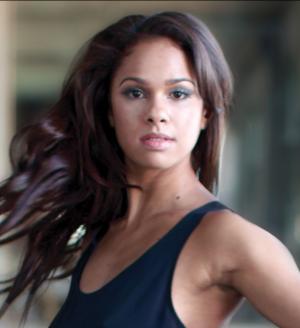
This 2-day lesson will teach younger students about a trailblazer in ballet, Misty Copeland, who overcame lots of obstacles to succeed as a Principal Ballerina for the American Ballet Theater. Using primary sources and read alouds, students will engage in a growth mindset activity and relate Misty’s story to their own lives, learn about equality, fairness, and representation in ballet, and learn about time lines. Plenty of extension opportunities allow this lesson to be as long or as short as you’d like!
Big Ideas
- Who is Misty Copeland and how was she a trailblazer in ballet?
- What can we learn from Misty’s story?
- How can we apply Misty’s growth mindset to our own lives?
- What are some of the main events in Misty’s life?
Two, 45-Minute Sessions*
- Students will be able to verbalize Misty’s name, occupation, and main contributions.
- Students will be able to engage in ‘growth mindset’ discussions, including something they are not yet able to do and how they may reach that goal.
- Students will be able to put the main events of Misty’s life in chronological order using Timeline Cards.
- Students will identify a skill they have not yet mastered and complete a writing prompt.
- Students will use quotes from Misty Copeland to create an inspirational poster.
*Opportunities for Expansion
Essential Vocabulary
Timeline
A visual representation of the major events in a person’s life.
Ballet
A form of dance which usually tells a story.
Ballerina
Someone who dances ballet.
Principal
The highest level a ballet dancer can reach; usually the main character in a ballet.
Inspire or Inspirational
To motivate or something motivational.
Goal
Something you’d like to accomplish.
Think, Pair, Share
To take a few seconds to ‘think’ of an answer, then ‘pair’ with a partner, and a short time to ‘share’ with them.
Primary Source
A first-hand account or direct evidence; usually from the subject themselves (as in a book written by Misty Copeland)
Secondary Source
An account that is not a first-hand account (such as a book written about Misty Copeland)
Primary Sources
- Misty Copeland • Heritage and Harmony: Her Art, Her Voice. NWHM Learning Media Video. ~5 mins
- American Ballet Theater: History of Ballet. Digital Exhibition Page
- Misty Copeland On Changing the Face of Ballet. Time Magazine Feature Video. ~2.5 mins
- Misty Copeland’s Website. Official Website.
- Bunheads by Misty Copeland. Picture Book.
- Misty Copeland Memoir Explores Importance of Mentorship. Excerpt from a PBS Interview with Misty Copeland. ~2 mins
- Misty Copeland. Britannica Kids Info Page.
- Smithsonian Collection’s pictures of ballet items used by Misty Copeland.
- Magical Misty Copeland. PBS Video Interview about Black Dancers. ~5 mins
Others Sources
- Misty Copeland: A Little Golden Book Biography by Sherri Smith
- Misty Copeland. YouTube Kids Video. ~5.5 mins
Materials
- Timeline Cards: Information from Britannica Kids Info Page and NWHM: Misty Copeland- Heritage and Harmony: Her Art, Her Voice.
- Inspirational Poster Template: Inspire Yourself Everyday
- Coloring Supplies: Crayons, Colored Pencils
This lesson should take place over two days (or two time periods). Day 1 is an introduction to who Misty is and engages students in her story. Day 2 is using that information for comprehension and recall, as well as applying Misty’s story to our own.
Day 1: Who is Misty Copeland?
Warm-Up
- Show Pictures of ballet items used by Misty Copeland from the Smithsonian Collection. Ask students to put their thumbs up if they think they know what career these items could be from.
- Introduce Ballet as a career, noting that ballet is something that anyone can do now.
- Let’s learn about a famous ballerina, Misty Copeland who wrote the book Bunheads about being a dancer. Show the cover of the book and ask:
- What do you notice?
- What do you think a ‘bunhead’ might be?
- Can you make any connections to what this book might be about.
- Begin reading the story, stopping to ask comprehension/inference questions such as:
- What is special about Misty?
- How do you think she feels when she dances?
- How would you feel?
- Do you think dancing is easy or hard? How can you tell?
- What does Misty do when something is hard?
- After reading, use the following questions to guide a conversation:
- Do all ballerinas look the same?
- What can we learn from Misty in this story?
- Have you ever tried anything that was tricky at first?
Direct Instruction
- Watch YouTube Kids Video: “Misty Copeland”
- Using picture examples from the Library of Congress: “American Ballet Theater- History of Ballet” Primary Source and the PBS Video about Black dancers (an interview with Misty Copeland) briefly discuss the lack of Black dancers in the field of ballet or in the audience at performances. The ABT Primary Source shows mostly white dancers (mostly male at first) and discusses ballet’s Russian origin, while the PBS Interview with Misty Copeland acknowledges the need for Black female representation in the field.
- Point out some of the barriers Misty came across (being Black, not having the same body type, not coming from high socio-economic status, starting ballet ‘late’ at age 13). NWHM’s video Misty Copeland- Heritage and Harmony: Her Art, Her Voice (~5mins.) and Time Magazine’s Feature on Misty (~2.5mins) are great examples of Misty explaining these barriers herself.
Day 2: How does Misty’s story apply to my own?
Warm-Up
- Show a picture of Misty from Day 1’s lesson to refresh students’ minds. Ask “Who is this?” and “What is so important about her?”
- Remind students that you spent Day 1 learning about Misty Copeland and learning some key facts about her life (major events, main ideas, central ideas, or whichever term your institution uses to describe this concept).
Guided Practice
- Introduce the concept of a ‘timeline’ by defining the term and showing an example by drawing a long line on chart paper, a white board, or digital display (such as a Promethean Board or SMARTBoard). Add 4-5 significant events in your own life along the line. For example, the day you were born, when you graduated High School, graduated college, got married, became a teacher, etc.
- Emphasize the fact that a timeline only shows major events, not everything.
- Complete a short timeline of major events in Misty’s life as a class using the Timeline Cards.
Independent Practice
- Discuss the concept of ‘all bodies can dance’ and everyone can accomplish goals they set for themselves when they work hard, just like Misty.
- Brainstorm some skills or concepts that they haven’t yet mastered.
- Have each student ‘Think, Pair, Share’ to practice completing one of the two prompts: “I am practicing” or “I am trying” to identify a goal they can set for themselves.
- If time, allow pairs to share out to the group.
Summarizer
- Encourage your students to practice a ‘growth mindset’ by choosing an inspirational quote from Misty from the Inspire Yourself Everyday Inspirational Poster Template.
- Students should think about their goals from the ‘Think, Pair, Share’ activity and draw a corresponding picture in the picture box.
- Hang posters around the classroom where students can see them as a daily reminder.
Formative Assessment
- Completion of the Inspire Yourself Everyday Poster
- Participation in ‘Think, Pair, Share’ Activity
Summative Assessment
- Ability to recall information about Misty on Day 2.
- Participation in the Timeline Activity.
Modification & Accommodation
- Oral prompts could be turned into writing prompts.
- Videos could be shortened or clips could be shown if short on time.
Extension & Enrichment Activities
- Read other books by or about Misty Copeland such as:
- Misty Copeland: A Little Golden Book Biography by Sherri Smith
- You Should Meet Misty Copeland by Laurie Calkhoven
- Explore Misty Copeland’s Website.
- Look into other famous ballerinas and compare/contrast their stories (white vs. Black dancers or other POC).
- Safely try out some ballet positions or dance moves.
C3 Framework Standards Addressed
D1.1.K—2. Explain why the compelling question is important to the student.
D2.Civ.2.K—2. Explain how all people, not just official leaders, play important roles in a community.
D2.Div.10.K—2. Compare their own point of view with others’ perspectives.
D2.Civ.14.K—2. Describe how people have tried to improve their communities over time.
D2.His.1.K—2. Create a chronological sequence of multiple events.
D2.His.2.K—2. Compare life in the past to life today.
D2.His.3.K—2. Generate questions about individuals and groups who have shaped a significant historical change.
D2.His.4.K—2. Compare perspectives of people in the past to those of people in the present.
D3.2.K—2. Evaluate a source by distinguishing fact and opinion.
D4.7.K—2. Identify ways to take action to help address local, regional, and global problems.
