
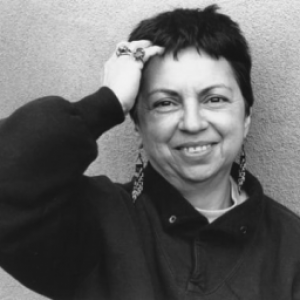
Gloria Anzaldúa
Summary Bullet Points
-
Anzaldúa lived and worked primarily in the U.S.–Mexico borderlands during the late 20th century, drawing from her experiences as a Tejana, lesbian, and woman of color.
-
Anzaldúa is best known for her book Borderlands/La Frontera: The New Mestiza, which blends autobiography, theory, and poetry to explore hybrid identities and cultural resistance.
Quote
“Until I can take pride in my language, I cannot take pride in myself. Until I can accept as legitimate Chicano Texas Spanish, Tex Mex, and all the other languages I speak, I cannot accept the legitimacy of myself. Until I am free to write bilingually and to switch codes without having always to translate, while I still have to speak English or Spanish when I would rather speak Spanglish, and as long as I have to accommodate the English speakers rather than having them accommodate me, my tongue will be illegitimate. I will no longer be made to feel ashamed of existing. I will have my voice. Indian, Spanish, white. I will have my serpent's tongue--my woman's voice, my sexual voice, my poet's voice. I will overcome the tradition of silence.”
-Gloria Anzaldúa in Borderlands/La Frontera: The New Mestiza
Early Life and Cultural Roots
Gloria Evangelina Anzaldúa was born in 1942 in Raymondville, Texas, located in the Rio Grande Valley, often called the RGV or simply “the Valley” (GloriaAnzaldúa.com, n.d.). She was the oldest of four siblings: Hilda, Urbano Jr., and Oscar. Her parents, Urbano and Amalia Anzaldúa, raised the family on a ranch until White farmers acquired the family land. This early encounter with displacement introduced Anzaldúa to the intertwined forces of racism and capitalism.
Her awareness of racial injustice deepened through both personal experience and family history. At around seven years old, she used a quarter her father gave her to buy a small western book at a drugstore. That book sparked her love of reading and her critical consciousness. She later reflected:
“The act of reading forever changed me. In the western I read, the house servants, the villains, and the cantineras (prostitutes) were all Mexicans. But I knew that the first cowboys were Mexicans, that in Texas we outnumbered the Anglos, that my grandmother’s ranch lands had been ripped off by the greedy Anglo. Yet in the pages of these books, the Mexican and Indian were vermin. The racism I would later recognize in my school teachers and never be able to ignore again I found in that first western I read” (G. Anzaldúa, p. 222).
Her family’s history of land loss further shaped her understanding of injustice. She spoke of how her grandparents’ land, originally granted during the Mexican era, was gradually lost through carelessness, language barriers, and White settler trickery. Mineral rights were sold for mere dollars, and land was fragmented among male heirs. Though she inherited twelve acres, Anzaldúa ultimately deeded it to her mother, calling the division “senseless” and reflecting on how private ownership replaced collective land practices under Anglo influence (G. Anzaldúa, 2000).
Anzaldúa was born and raised in Jesús María and Los Vergeles, a small ranch settlement surrounded by other ranches. Her family lived on her maternal grandmother’s land, where schooling was originally in Spanish, as Texas had once been Mexican territory. Even after annexation, local ranches pooled money to hire teachers, since “it wasn’t like the government did anything.” The ranch had no electricity or running water, and Anzaldúa recalled drawing water from windmills and wells, surrounded by cactus in the semidesert landscape. She described the place as peaceful and remembered feeling deeply connected to “the sky and the trees and the dirt.”
Labor, education, and identity formation
As her father became a tenant farmer and sharecropper, the family moved every few years to a different farm within a 30-mile radius. One year, he built a house near the school so Anzaldúa wouldn’t have to ride the bus. The house had a toilet, which made it special, but when they rented it out to White tenants, the property was neglected and damaged. The family returned to the house when Anzaldúa was eleven or twelve.
Growing up, Anzaldúa’s family struggled financially. Each member contributed by working on farms or helping with housework. That year of labor in the fields exposed her to the landscapes of South Texas and the minoritization of Spanish-speaking communities, deepening her awareness of social justice issues (R. Gomez, 2019). In interviews, Anzaldúa discussed the expectations placed on her as a daughter:
“Clean the cupboards, clean the house, iron the clothes, wash, grind the corn, can tomatoes, can corn. Those are the kinds of things I should do. I shouldn’t go out, get dirty, jump across ditches, shoot the twenty-two, go hunting snakes, but it was OK for me to mow the lawn, learn how to drive a tractor, and do that kind of work. My brothers wouldn’t help around the house, so I had to do the men’s work outside—pruning, cutting, watering, putting up the clothesline, fixing the roof, digging holes for the trash. (We buried the tin cans and burned the paper.) It was OK for me to do these male tasks because it helped my mother” (G. Anzaldúa, 2000).
Anzaldúa also worked in the hot fields and described the job as “brutalizing and making you into a numb animal where you only did mechanical things” (G. Anzaldúa, 2000). Reflecting on the social stigma attached to field labor, she noted that “to work in the fields is the lowest job, and to be a migrant worker is even lower.” Families who moved with the harvests were even more minoritized, often forced to pull children out of school and endure exploitative conditions under White growers. Her family migrated only once, during her second year of school, and the disruption led her father to vow never to do it again. “We were the kind of people who worked in the fields but didn’t migrate,” she said, emphasizing her father’s insistence that his children stay in school and his hope that she would attend college—an aspiration few around her understood.
Despite the instability, Anzaldúa remained in the same school district, though different buses picked her up depending on where the family lived. Her classrooms were overwhelmingly Mexican, as White families refused to send their children to school with Mexican students. Occasionally, a White family new to the area would enroll their children, but most White students were bussed to a nearby city where schools had better resources. Anzaldúa’s teachers were all White, and most held prejudiced views, thinking that “Mexicans were dirty and dumb,” but Anzaldúa resisted the stereotype, she wrote “I was very smart, so I was the exception” (G. Anzaldúa, 2000), she also noted that her aspirations were higher than those of her peers, not because they lacked intelligence, but because they had internalized the racism they were taught.
One teacher, Mrs. Garrison, encouraged her, and another, Mr. Leidner, allowed her to assist in class, even letting her teach and create tests. Anzaldúa helped classmates with reading and math, often during recess or before school. Her sensitivity and intelligence made her respected and alienated. However, she described herself as “a freak,” growing rapidly due to a hormone imbalance, and feeling emotionally exposed. During an interview she said, “I was wide open to everything people were feeling, thinking, sensing” (G. Anzaldúa, 2000). Though classmates sometimes teased her, they were generally kind.
Chronic pain and loss
As she grew, Anzaldúa resisted farm labor because it took time away from reading and caused physical pain. Likely related to her hormone imbalance, she experienced severe menstrual cycles and continued working through the discomfort, using the pain of field labor to distract herself from her own bodily pain. Anzaldúa became accustomed to living with such high amount of pain that she once lived at least two months with Hepatitis and an intestinal tract infection but could not tell a difference from her normal amount of pain. She expressed, “Pain was a way of life, my normal way of life,” (G. Anzaldúa, 2000). Later on, before turning 40 years old, Anzaldúa underwent a hysterectomy to help with the pain and the hormonal fluctuations. Despite the surgery, chronic pain and illness continue to be a theme throughout her life.
When she was fourteen, she experienced another hardship. Tragically, her father’s aorta burst while he was driving, and he passed. His death left her with financial responsibilities that required her to continue working in the fields throughout high school and college, all while nurturing her passion for reading, writing, and drawing. Despite all the hardships, health struggles, and trauma, Anzaldúa graduated from Edinburgh High School at 20 years old in 1962.
Education and Intellectual Formation
Despite systemic barriers, Anzaldúa pursued higher education with determination. From 1963-1964, she attended Texas Women’s University in Denton, Texas. She returned home a year later due to financial difficulties. From 1965-1968, she attended Pan American University, which is now the University of Texas Rio Grande Valley, where she majored in English, Art, and Secondary Education. She took on many different jobs to afford school, she worked as a library clerk, a packing shed worker, and a farm worker where she picked melons.

Figure 2 Anzaldúa's yearbook photographs while attending Pan American University from 1966-1968. Image courtesy of https://gloriaeanzaldua.com/about/
From 1969 to 1973, Gloria Anzaldúa worked as a teacher across multiple grade levels within various Texas Independent School Districts. During this time, she also pursued her education, attending summer school at the University of Texas at Arlington and earning her master’s degree in English and Education in 1972 (TexLibris, 2019). In May 1973, she moved to Indiana, where she worked as a liaison between the public school system and the children of migrant farm workers (Keating, n.d.). This role, which lasted until September 1974, allowed her to advocate directly for students whose educational experiences were shaped by labor exploitation and displacement. A cause she knew all too well.
Breaking the rules
In 1974, Anzaldúa returned to Texas and enrolled in a doctoral program in Comparative Literature at the University of Texas at Austin. However, she struggled to find institutional support for her work. In the foreword to the third edition of This Bridge Called My Back, she reflected on her time at UT, writing, “As a Chicana, I felt invisible, alienated from the gringo university and dissatisfied with both el movimiento Chicano and the feminist movement… I rebelled, using my writing to work through my frustrations and make sense of my experiences” (Anzaldúa, 1981, p. 262). Her dissertation, which blended creative writing, theory, and personal narrative, was ultimately rejected by the university for not conforming to “traditional” academic standards (TexLibris, 2019).
By September 1977, Anzaldúa left UT Austin to fully commit to her writing and drove to California. While leaving home is difficult, Anzaldúa believed, “I am a turtle, wherever I go I carry ‘home’ on my back,” (Anzaldúa, 1987, p. 21) Within a year, she joined the Feminist Writers’ Guild National Steering Committee.
Anzaldúa’s experience with the Feminist Writers Guild was both formative and fraught. She and Cherríe Moraga, who would later become a co-editor in project, were the only “third-world women” in the organization at the time. Anzaldúa joined the group hoping to connect her identities, Chicana, lesbian, feminist, and writer, in a community that she believed would support that intersectionality. Instead, she found herself confronting veiled racism and overt classism. While homophobia wasn’t a major issue, Anzaldúa recalled that the Guild was not receptive to conversations about the specific oppressions faced by third-world women. “They were interested in our being third world,” she said, “but they weren’t interested in anything about the oppression, or in being asked, ‘When are you going to deal with your racist shit?’” (Anzaldúa, 2000). Meetings were often held in upper-middle-class homes, which highlighted the class divide and made Anzaldúa feel further alienated. Despite these tensions, the Guild was a turning point for her. It was where she met lesbian writers who became close friends and collaborators. The Guild also gave her access to national feminist networks, expanding her reach beyond local activism. Her experience in the Guild underscored the limitations of mainstream feminist spaces and fueled her commitment to creating platforms for women of color.
Teaching, writing, and her legacy
In February 1979, Anzaldúa attended a workshop that inspired her to create an anthology of writings by feminist women of color. She began soliciting work for what was initially called the Radical Third World Women’s Anthology. During this period, Anzaldúa also lectured in the Women’s Studies Program at San Francisco State University, teaching feminist journal writing and Third World women’s literature.
Figure 3, Students reflect on Anzaldúa's writing and artwork. Video courtesy of Pan Am University (now The University of Texas, Rio Grande Valley)
Her writing career gained momentum in the early 1980s. Her most influential book, Borderlands/La Frontera: The New Mestiza, was published in 1987. The book was named one of the Best Books of the Year by Library Journal and was selected as one of the 100 Best Books of the Century by Hungry Mind Review and by Utne Reader. The book was also temporarily added to the list of banned books by the Tucson Unified School Systems from 2012-2017.
From 1988 to 1992, she attended the University of California, Santa Cruz, where she completed doctoral coursework, passed qualifying exams, and began work on her dissertation, which she did not finish. In 1991, she received a National Endowment for the Arts Award in Fiction, and in 1992, she received the Sappho Award of Distinction. That same year, she faced her biggest health struggle, she was diagnosed with Type I Diabetes. Despite health challenges, Anzaldúa continued publishing until 2002, producing works such as the bilingual children’s book Prietita and the Ghost Woman/Prietita y la Llorona (1995), Interviews/Entrevistas (2000), and this bridge we call home: radical visions for transformation (2002).

Figure 4, A drawing part of Anzaldúa’s UCSC dissertation. Now a part of Chapter 4, “Light in the Dark”. Image courtesy of https://gloriaeanzaldua.com/art-arte/.
Anzaldúa passed away in May 2004 due to complications related to diabetes. She was awarded her PhD posthumously in 2005 by UCSC. Her dissertation, Light in the Dark/Luz en lo Oscuro:Rewriting Identity, Spirituality, Reality was later published by her trusted colleague in 2015. In her honor, the Chicana/o/x Latina/o/x Research Center at UCSC awards the annual Gloria E. Anzaldúa Award by the American Studies Association. Additionally, the Gloria E. Anzaldúa Poetry Prize is awarded by the Anzaldúa Literary Trust. Similarly, The National Women’s Studies Association created the Gloria E. Anzaldúa Book Prize. Also in her honor, in 2007, the Society for the Study of Gloria Anzaldúa was created.
 Primary Source Analysis Strategies

Style: Analyzing Primary Sources
Annotated Timeline of Anzaldúa’s Creative Life
Caption: An annotated timeline of Anzaldúa’s life compiled by AnaLouise Keating
Primary source inquiry:
-
What might be omitted in this timeline (silences or gaps) and how might those absences affect our understanding of Anzaldúa’s life and legacy?
-
How does the presentation of her major works, awards, and turning points in the timeline help us trace Anzaldúa’s evolving sense of purpose or activism?
-
How might the timeline’s visual format itself affect the way we interpret chronology, causality, and emphasis in Anzaldúa’s creative life?
Style: Analyzing Books and Other Printed Texts
Caption: Anzaldúa’s influential essay on language, identity, and power that argues for the political and personal centrality of Chicana/o/x Spanish, code-switching, and linguistic survivance.
Primary source inquiry:
-
How does Anzaldúa define the relationship between language and identity, and what rhetorical strategies does she use to make language itself an act of resistance?
-
In what specific ways does the essay document pressures to assimilate linguistically (schools, institutions, social shame), and how can those examples be corroborated or complicated by contemporaneous educational policies or oral histories?
-
How does Anzaldúa’s mixing of Spanish, English, and nahuatl, plus “nonstandard” spelling and code-switching, shape reader access and the essay’s political claims? What audiences is she writing for and excluding?
Style: Analyzing Books and Other Printed Texts
Caption: Anzaldúa interrogates race, colorism, familial history, and belonging.
Primary source inquiry:
-
How does Anzaldúa narrate racialized experience and color-based hierarchy within family and community, and which narrative moments does she use to move from the particular to the structural?
-
What intersections of race, gender, class, and regional belonging emerge in the essay, and how do those intersections shape the Anzaldúa’s sense of self and political positioning?
-
How does Anzaldúa use memory, anecdote, and cultural reference (songs, local practices, religious imagery) as historical evidence? What can and can’t these forms of testimony tell us about the social conditions she describes?
-
Where does the essay foreground conflict within Chicana/o/x communities (e.g., internalized racism, policing of language/behavior), and how might other primary sources (oral histories, newspapers, community records) confirm or contest Anzaldúa’s account?
Sources/Works Cited
Anzaldúa, G. E. (n.d.). About. https://gloriaeanzaldua.com/about/
Anzaldúa, G. E. (2000). Interviews / Entrevistas (A. Keating, Ed.). Routledge. https://doi.org/10.4324/9780203950265
Anzaldúa, G. E. (2009). La Prieta. In A. Keating (Ed.), The Gloria Anzaldúa Reader (pp. 26–36). Duke University Press. https://doi.org/10.1215/9780822391272-010
Celebrating the Birth and Life of Gloria Anzaldúa. (2019, September). Texlibris, University of Texas Libraries. https://texlibris.lib.utexas.edu/2019/09/celebrating-the-birth-and-life-of-gloria-anzaldua/
Cuevas, J. (2016, February 11; updated 2021, April 14). Anzaldúa, Gloria Evangelina. In Handbook of Texas Online. Texas State Historical Association. https://www.tshaonline.org/handbook/entries/anzaldua-gloria-evangelina
Gloria E. Anzaldúa Literary Trust. (2022). Gloria Anzaldúa timeline [Infographic]. GloriaEAnzaldua.com. https://gloriaeanzaldua.com/art-arte/
Gomez, S. (2019, May 3). Author Biography: Gloria E. Anzaldúa. Literary Ladies Guide. Updated March 25, 2024. https://www.literaryladiesguide.com/author-biography/gloria-e-anzaldua/
Poetry Foundation. (n.d.). Gloria E. Anzaldúa. https://www.poetryfoundation.org/poets/gloria-e-anzaldua
Shadowmere, G. (2024, July 22). Gloria Anzaldúa: Chicana/Borderlands Theorist. Rock & Art. https://www.rockandart.org/gloria-anzaldua-chicana-borderlands-theorist/#early-life-and-education-a-journey-against-the-odds
shift7. (2020, January 19). 20for2020: Gloria E. Amy Smart Girls. https://amysmartgirls.com/20for2020-gloria-e-f42d713a3ec7
Texas State Library and Archives Commission. (n.d.). Literary Landmark: Gloria E. Anzaldúa. https://www.tsl.texas.gov/literarylandmark/anzaldua
Additional Resources
Lesson Plan
Related Biographies
Carry The Torch
How to Cite this Page
Include the MLA and Chicago Citations for this biography. Eg:
MLA – Robledo-Allen Yamamoto, Asami. “Gloria Anzaldúa.” National Women’s History Museum, 2025. Date accessed.
Chicago – Robledo-Allen Yamamoto, Asami. “Gloria Anzaldúa.” National Women’s History Museum. 2025 www.womenshistory.org/education-resources/biographies/gloria-anzaldúa.