Patrisse Cullors
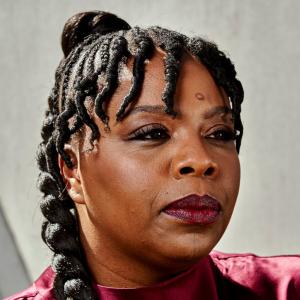
Patrisse Cullors is an artist, activist, and co-founder of the Black Lives Matter movement, which she helped launch in 2013 to combat systemic racism and state violence against Black communities.
Through her work with organizations like Dignity and Power Now and Reform L.A. Jails, as well as her advocacy for mental health and prison abolition, Cullors has reshaped conversations about gender, race, and justice, ensuring that Black women’s leadership and experiences are at the forefront of systemic change.
“Our fight must challenge White supremacist and state violence; otherwise, we will face the complete erosion of American democracy.”
Patrisse Cullors, On Trayvon Martin’s birthday, we remember his life and why we fight for Black lives.
Early Life
Patrisse Cullors is an artist, organizer, educator, and influential public speaker dedicated to fighting systemic injustice and uplifting Black communities. Born in 1983 in Los Angeles, California, she was raised by her mother as a Jehovah’s Witness in Section 8 housing alongside her three siblings. From an early age, she witnessed the harsh realities of systemic oppression, including the violent treatment of her brothers by police. These experiences deeply shaped her worldview, planting the seed for her future activism.
At 16, Cullors came out as Queer and was forced out of her home. She continued to practice her faith despite her exile (TIME). Over time, she reevaluated her beliefs and found that Ifa aligned more closely with her spiritual path (Influence Watch). That same year, her brother Monte was incarcerated. Diagnosed with schizoaffective disorder, he experienced severe mistreatment in custody, including alleged beatings, choking, and being forced to drink toilet water (Black Women’s Religious Activism). Cullors said, “…his incarceration was the breaking point, the watershed moment that drove her into activism (The Guardian).
Figure 1. Cullors talks about her brother, Monte
Cullors became deeply involved in social justice efforts, joining the Bus Riders Union, now part of the Labor Community Strategy Center—and enrolling in a social justice magnet program. These experiences exposed her to revolutionary thought, critical theory, and global social movements, solidifying her commitment to advocacy. She later attended the University of California, Los Angeles (UCLA), earning a degree in religion and philosophy. She continued her studies at the University of Southern California (USC), where she obtained a Master of Fine Arts (MFA) (LA Phil).
From Spark to Flame: Founding BLM
The tragic and unjust murder of Trayvon Martin in 2012 in Sanford, Florida and the subsequent acquittal of his murderer in 2013 deeply impacted Ayo Tometi, Alicia Garza, and Cullors. Together, they co‑founded the Black Lives Matter (BLM) movement to confront systemic violence and discrimination against Black Americans, particularly by law enforcement. Tometi helped establish BLM’s online presence by creating Tumblr and Twitter accounts. Cullors had met Garza at a conference, and when she read Garza’s Facebook post, “A Love Letter to Black People,” she responded by summarizing its message with the hashtag #BlackLivesMatter. Garza, unfamiliar with hashtags at the time, later recalled, “I thought it was a pound sign!” Cullors explained their significance, and from that moment the movement took shape, growing into a global call for justice (Biography).
In 2014, the murder of Mike Brown by a Ferguson police officer sparked national outrage and activism. Over Labor Day weekend, Darnell Moore and Patrisse Cullors organized the Black Life Matters Ride, bringing over 600 people to St. Louis in solidarity. Organizers committed to supporting the Ferguson community and expanding advocacy efforts nationwide, recognizing that Ferguson reflected a broader pattern of injustice.
Inspired by Ferguson’s activism, organizers from eighteen cities established Black Lives Matter chapters, broadening the movement’s reach. In response to this demand for action, the Black Lives Matter Global Network formed, creating a decentralized structure to empower Black leaders and communities to challenge state‑sanctioned violence. The movement’s global recognition stemmed from the dedication of those who first mobilized in St. Louis and Ferguson, who continued to fight for justice and Black liberation (Black Lives Matter).
Born out of a social media post, the Black Lives Matter movement sparked discussion about race and inequality across the world. In a conversation with Mia Birdsong, the movement’s three founders shared what they had learned about leadership and what provided them with hope and inspiration in the face of painful realities. Their advice on sustaining activism: join something, start something, and “sharpen each other, so that we all can rise” (TED).
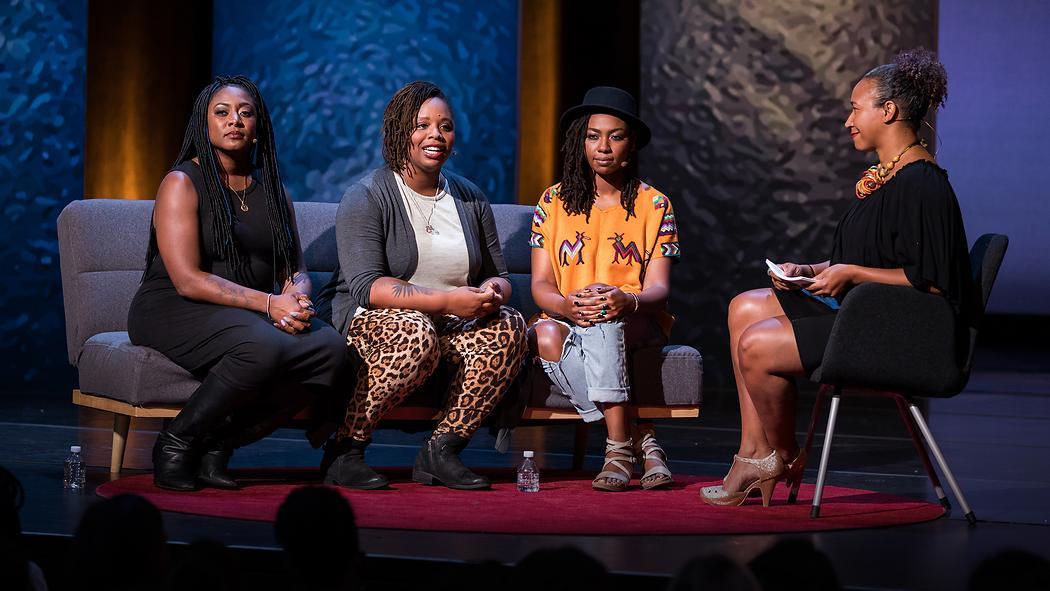
Figure 2. Cullors, Garza, and Tometi are interviewed about BLM by TED
In January 2018, Cullors published her memoir, When They Call You a Terrorist: A Black Lives Matter Memoir, which became an instant New York Times bestseller. Through her storytelling, she amplified the voices of those affected by systemic violence and challenged narratives that sought to undermine the movement. In 2021, she published her second book, An Abolitionist’s Handbook: 12 Steps to Changing Yourself and the World, offering a practical guide to dismantling systemic oppression through abolitionist principles. She emphasized healing, accountability, and collective action to build a more just and compassionate society.
Ongoing Legacy
Cullors’ contributions earned her widespread recognition and numerous accolades. She was honored with awards such as the Black Woman of the Year Award (2015) from the National Congress of Black Women, the Civil Rights Leader for the 21st Century Award (2015) from the Los Angeles Times, and the Community Change Agent Award (2016) from BLACK GIRLS ROCK! (Northwestern). Additionally, Glamour named her Woman of the Year for the Justice Seekers Award in 2016 and ESSENCE presented her with its first-ever Woke Award.
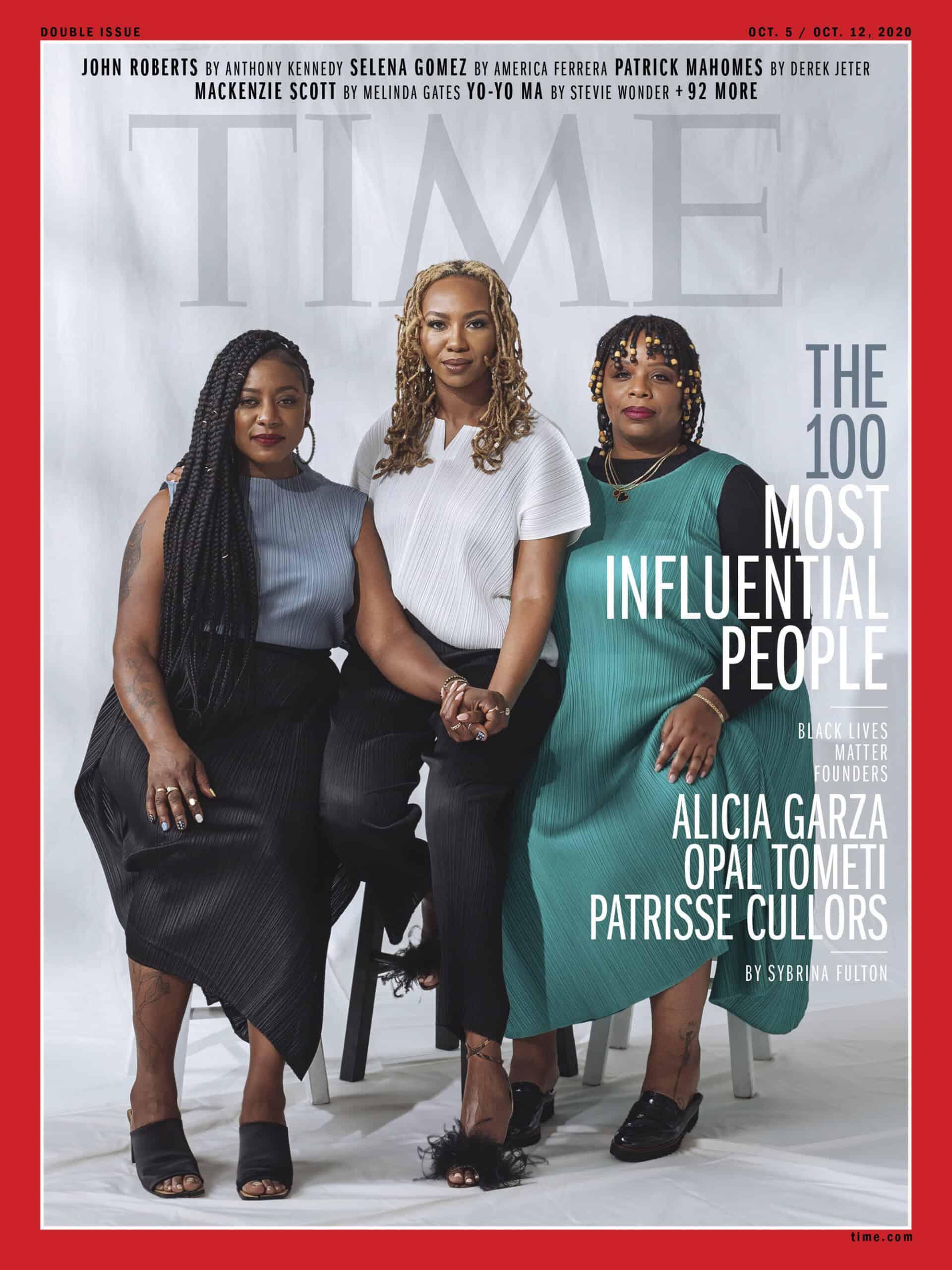
Figure 3. The BLM co-founders on the Time’s Cover for the 100 Most Influential People
Alongside her Black Lives Matter co‑founders, Cullors received the Sydney Peace Prize and an honorary PhD. She appeared on the covers of major magazines and earned recognition from Forbes, Marie Claire, and Cosmopolitan’s “Most Influential People” lists and TIME’s 100’s Most Influential Women of the Century and TIME’s 100 Most Influential People of 2020.
 Classroom Resources

Democracy Now! “Patrisse Cullors on the Importance of Art in Social Movements.” YouTube video, 4:07. February 27, 2018. https://youtu.be/EdeYPX_9Ybc.
BET. “Patrisse Cullors: An Open Letter on Behalf of My Brother.” BET, n.d. https://www.bet.com/article/malmkc/patrisse-cullors-an-open-letter-on-behalf-of-my-brother.
Black Women’s Religious Activism. “Patrisse Khan-Cullors.” Black Women’s Religious Activism, n.d. https://blackwomensreligiousactivism.org/activists/patrisse-khan-cullors/.
Catt Center for Women and Politics. “Patrisse Khan-Cullors.” Archives of Women’s Political Communication, n.d. https://awpc.cattcenter.iastate.edu/directory/patrisse-khan-cullors/.
Dworak-Peck School of Social Work. “Aiming for Evolution: A Conversation with Black Lives Matter Co-Founder Patrisse Khan-Cullors.” USC Suzanne Dworak-Peck School of Social Work, n.d. https://dworakpeck.usc.edu/news/aiming-for-evolution-conversation-black-lives-matter-co-founder-patrisse-khan-cullors.
Influence Watch. “Patrisse Cullors.” Influence Watch, n.d. https://www.influencewatch.org/person/patrisse-cullors/.
LA LGBT Center. “Juneteenth Is a Promise: Patrisse Cullors on the Twin Goals of Queer Liberation and Abolition.” Los Angeles LGBT Center, n.d. https://lalgbtcenter.org/vanguard/juneteenth-is-a-promise-patrisse-cullors-on-the-twin-goals-of-queer-liberation-and-abolition/.
LA Phil. “Patrisse Cullors.” Los Angeles Philharmonic Association, n.d. https://www.laphil.com/musicdb/artists/8314/patrisse-cullors#:~:text=Cullors%20designed%20a%20new%20online,social%20justice%20and%20community%20organizing.
Lartey, Jamiles. “Patrisse Khan-Cullors: The Woman Behind Black Lives Matter.” The Guardian, January 28, 2018. https://www.theguardian.com/us-news/2018/jan/28/patrisse-khan-cullors-black-lives-matter-interview.
Levin, Sam. “Patrisse Cullors on Black Lives Matter and Keenan Anderson’s Death.” The Guardian, February 5, 2023. https://www.theguardian.com/world/2023/feb/05/patrisse-cullors-black-lives-matter-keenan-anderson
NBC News. “On Trayvon Martin’s Birthday, We Remember His Life—and Why We Must Keep Fighting.” NBC News, February 5, 2018. https://www.nbcnews.com/think/opinion/trayvon-martin-s-birthday-we-remember-his-life-why-we-ncna844711.
Northwestern University. “Black Lives Matter Co-Founder Patrisse Cullors in Discussion at Northwestern Thursday.” Northwestern Now, January 22, 2019. https://news.northwestern.edu/stories/2019/01/black-lives-matter-co-founder-patrisse-cullors-in-discussion-at-northwestern-thursday/.
Patrisse Cullors Official Website. “About.” PatrisseCullors.com, n.d. https://www.patrissecullors.com/about.
The Guardian. “‘I Have a Lot of Resentment’: Patrisse Cullors on Co-Founding Black Lives Matter, the Backlash, and Why the Police Must Go.” The Guardian, February 28, 2022. https://www.theguardian.com/world/2022/feb/28/i-have-a-lot-of-resentment-patrisse-cullors-on-co-founding-black-lives-matter-the-backlash-and-why-the-police-must-go.
The Strategy Center. “Bus Riders Union.” The Strategy Center, n.d. https://thestrategycenter.org/projects/bus-riders-union/.
TIME. “Black Lives Matter’s Patrisse Cullors.” TIME, February 27, 2018. https://time.com/5171270/black-lives-matter-patrisse-cullors/.
Images
Levin, Sam. “Patrisse Cullors on Black Lives Matter and Keenan Anderson’s Death.” The Guardian, February 5, 2023. https://www.theguardian.com/world/2023/feb/05/patrisse-cullors-black-lives-matter-keenan-anderson
TED. “An Interview with the Founders of Black Lives Matter.” Accessed March 12, 2025. https://www.ted.com/talks/alicia_garza_patrisse_cullors_and_opal_tometi_an_int.
TIME. “100 Most Influential People 2020: Black Lives Matter Founders.” Photograph by Kayla Feefer. Accessed March 12, 2025. https://time.com/collection/100-most-influential-people-2020/5888228/black-lives-matter-founders/.
MLA — “Patrisse Cullors.” National Women’s History Museum, 2026. Date accessed.
Chicago — “Patrisse Cullors.” National Women’s History Museum. 2026. https://www.womenshistory.org/education-resources/biographies/patrisse-cullors.
Classroom Resources
Elementary School Bell Ringer: Word Association
-
Prompt: Write down three words that come to mind when you hear the phrase “Black Lives Matter.” Then, write one sentence explaining why you chose each word.
-
Follow-up Discussion: What do your words tell us about the importance of the movement?
Middle School Bell Ringer: Reflection
-
Prompt: Patrisse Cullors helped start the Black Lives Matter movement to make the world a better place. What is one issue you care about, and what is one way you could take action to help? Write 2-3 sentences about how you can make a difference.
-
Follow-up Discussion: Why is it important to stand up for what you believe in?