Elizabeth Freeman
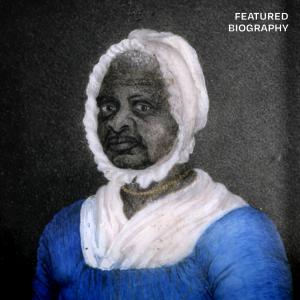
Elizabeth Freeman, named “Mum Bett” by her enslavers, bravely utilized the language of the new Massachusetts Constitution to sue for freedom in 1781.
Her case set a precedent for the Quock Walker case and led to the abolition of slavery outright in Massachusetts, ensuring freedom not just for her, but for generations to follow her.
She remained close to the family of Theodore Sedgewick, the lawyer who helped her win her case, and lived the rest of her life in freedom.
“Any time while I was a slave, if one minute’s freedom had been offered to me, and I had been told I must die at the end of that minute, I would have taken it—just to stand one minute on God’s earth a free woman—I would.”
Elizabeth Freeman, according to Catherine Sedgwick, 1853. Massachusetts Historical Society.
Early Life
Less than one year after the adoption of the Massachusetts State Constitution, an enslaved woman utilized the document’s proposed principles to fight for her freedom. Motivated by the promise of liberty, Elizabeth Freeman, born “Mum Bett,” became the first African American woman to successfully file a lawsuit for freedom in the state of Massachusetts. This case marked the beginning of a group of “freedom suits” that would ultimately lead the Massachusetts Supreme Judicial Court to outlaw slavery in their state.
Bett was born in Claverack, Columbia County, New York into enslavement. Although her exact birthdate is unknown, it is believed that she was born around the year 1744. She grew up on the plantation of Pieter Hogeboom with her younger sister Lizzie. Bett was a young girl when Hogeboom’s daughter, Hannah, married Colonel John Ashley, and he gave Bett and her sister to the new couple. The two girls never saw their parents again in their lifetimes. During her time at the Ashley’s, Bett gave birth to a daughter, but the identity of the father is unknown. Mrs. Ashley was frequently violent to Bett. On one occasion, which Bett recounted to her later biographer Catharine Maria Sedgewick, Ashley attempted to strike Bett’s sister with a heated kitchen shovel. Bett protected her sister by blocking Ashley’s strike, receiving a serious wound on her arm that never healed. Instead of covering her arm, she left her wound visible as evidence of her mistreatment. This outraged Ashley, likely desiring to be seen as a fair and unviolent mistress in front of her guests in the increasingly abolitionist-leaning urban Massachusetts environment. The injury on her arm made it more difficult for her to perform the demanding labor that Ashley required, which only incited her rage more. Bett relied on the help and support of her sister in this time to survive.
In Pursuit of Freedom
Colonel Ashley, was a wealthy citizen of Sheffield, Massachusetts. He served as a judge of the Berkshire Court of Common Pleas. In January of 1773, he moderated the local committee that wrote the Sheffield Declaration, which is most likely the document that exposed Bett to the idea that she was born with the right to freedom. This declaration was approved on January 12, 1773. It stated that “mankind in a state of nature are equal, free, and independent of each other, and have a right to the undisturbed enjoyment of their lives, their liberty and property.” This same language was used in the Massachusetts Constitution of 1780, particularly when it stated that “all men are born free and equal.” Although she could not read or write, Bett likely overheard when Colonel Ashley’s discussions of the Sheffield discussion and the new constitution in his home and also heard the Sheffield Declaration when it was read aloud in the public square. The statement that “mankind in a state of nature are equal, free, and independent of each other,” to her, were a confirmation of her right to freedom and the call to resistance she had already demonstrated in protecting her sister and defying the Ashleys. Seeking freedom, Bett turned to Theodore Sedgwick, a former Massachusetts delegate to the Continental Congress and a prominent attorney who helped draft the Sheffield Declaration with Colonel Ashley. Sedgwick would also later serve in the earliest U.S. Congress in the House of Representatives and as a Senator representing Massachusetts. Bett along with a man named Brom who was enslaved by the Ashley’s son-in-law, began the process of fighting for their freedom. Historians note that Sedgwick, along with many of the lawyers in the area, decided to use the case as a “test case” to determine if slavery was constitutional under the new Massachusetts Constitution.
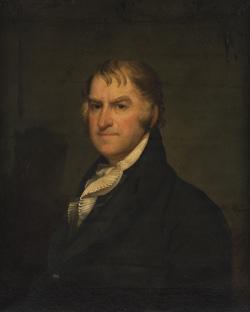
Portrait of Sedgwick, by Ezra Ames, before 1836. Massachusetts Historical Society
In May of 1781, Sedgwick and his team filed a document called a “writ of replevin” with the Berkshire Court of Common Pleas. This document ordered Colonel Ashley to release Bett and Brom. The Berkshire Court stated that Bett and Brom were not Colonel Ashley’s legitimate property. However, he refused to release them from his possession. By August 1781, the case went to the County Court of Common Pleas of Great Barrington in the case known as Brom and Bett v. Ashley. During the case, Sedgwick argued that the Massachusetts Constitution, particularly the language “all men are born free and equal” functionally outlawed slavery. The jury agreed with Sedgwick and decided that Bett and Brom were not Colonel Ashley's property. Bett and Brom were set free and awarded 30 shillings and the costs of the trial. Colonel Ashley filed an appeal to the Supreme Judicial Court but dropped his case a few months later. All of the people he had enslaved were released from bondage, including Bett’s sister Lizzie. Bett’s case was a deciding factor in the legal battle which dozens of enslaved people participated in during this period, which ultimately resulted in Massachusetts courts upholding the interpretation Sedgwick argued that the Massachusetts Constitution outlawed slavery.
Later Life and Legacy
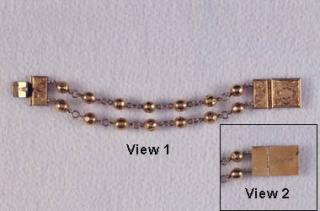
Once she gained her freedom, she left behind her enslaved name, Mum Bett, and chose the name Elizabeth Freeman. Colonel Ashley asked her several times to return to his home as a paid servant, but she declined. Instead, she became a paid domestic worker in Sedgwick’s household. Freeman also worked as a prominent healer, midwife, and nurse. She cared for the Sedgwick’s children, Elizabeth, Frances, Theodore, Catharine, Henry, Robert, Catharine Maria, and Charles, and for Sedgwick’s wife Pamela, who suffered from mental illness after losing three children in childbirth. The two women bonded over their shared experiences of loss. After 20 years of work in the Sedgwick house, she was able to buy her own land for $75, which had a small house and barn. There, she lived and spent time with her children, her grandchildren, and great-grandchildren. Elizabeth Freeman died on December 28, 1829 and was buried in the Sedgwick family plot in Stockbridge, Massachusetts. She is believed to have been 85 years old and is the only non-Sedgwick buried in the “inner circle” of the Sedgwick family plot. Catherine Sedgewick, the daughter of Theodore Sedgwick, admired her strength and recorded her life from recollections of what Freeman had told her in a biography written in 1853.
 Primary Source Analysis Strategies

Biography of Elizabeth Freeman
Mum Bett’s character was composed of few & strong
elements. Action was the law of her nature & conscious of
superiority to all around her a state of servitude
was intolerable. It was not the work, work
was play to her. Her power of execution was
marvellous. Nor was it awe of her kind master,
or fear of her despotic mistress, but it was
the galling of the harness, the irrepressible
longing for liberty. I have heard her
say with an emphatic shake of the head
peculiar to her, "Any time, any time while
I was a slave, if one minute's freedom had
been offered to me & I had been told I
must die at the end of that minute I
would have taken it—just to stand one
minute on God's earth a free woman—
I would”
Catherine Maria Sedgwick, Transcript of Page 19.
- How does Sedgwick describe Freeman? What adjectives would you use to describe her, either in your own words or from the text?
- According to Sedgwick, what motivated Freeman to sue for her freedom? Use evidence from the text to support your claim.
Bacon, Tiffany. “Meet Elizabeth Freeman.” Performance written by Teresa Miller for the Museum of the American Revolution. https://www.amrevmuseum.org/meet-elizabeth-freeman-performance
Blanck, Emily. “Seventeen Eighty-Three: The Turning Point in the Law of Slavery and Freedom in Massachusetts.” The New England Quarterly 75, no. 1 (2002): 24–51. https://doi.org/10.2307/1559880.
Browne-Marshall, Gloria J. “1619 to 1819: Tell Them We Fought Back, A Socio-Legal Perspective.” Phylon (1960-) 57, no. 1 (2020): 37–55. https://www.jstor.org/stable/26924986.
Commonwealth of Massachusetts Court System. “Massachusetts Constitution and the Abolition of Slavery.” Accessed January 07, 2019. https://www.mass.gov/guides/massachusetts-constitution-and-the-abolition-of-slavery.
Massachusetts Historical Society. “The Legal End of Slavery in Massachusetts.” Accessed January 07, 2019. https://www.masshist.org/endofslavery/index.php?id=54.
Mass Humanities. “Jury Decides in Favor of Elizabeth “Mum Bett” Freeman.” Accessed January 07, 2019. https://www.massmoments.org/moment-details/jury-decides-in-favor-of-elizabeth-mum-bett-freeman.html.
New England Historical Society. “Elizabeth Freeman, Illiterate Slave, Wins Freedom and Honor.” August 14, 2014. http://www.newenglandhistoricalsociety.com/elizabeth-freeman-illiterate-slave-wins-freedom-honor/.
Piper, Emilie, and David Levinson. One Minute a Free Woman: Elizabeth Freeman and the Struggle for Freedom. Salisbury, CT: Upper Housatonic Valley National Heritage Area, 2010.
Sesay, Chernoh M. “The Revolutionary Black Roots of Slavery’s Abolition in Massachusetts.” The New England Quarterly 87, no. 1 (2014): 99–131. http://www.jstor.org/stable/43285055.
Zilversmit, Arthur. “Quok Walker, Mumbet, and the Abolition of Slavery in Massachusetts.” The William and Mary Quarterly 25, no. 4 (1968): 614–24. https://doi.org/10.2307/1916801.
Image Credit
‘Mumbet.’ Painted by Susan Anne Livingston Ridley Sedgwick, 1811. Watercolor on ivory. Photo courtesy of Massachusetts Historical Society, Boston. Licensed under Public domain via Wikimedia Commons.
MLA — “Elizabeth Freeman.” National Women's History Museum. National Women's History Museum, 2019. Revised 2026. Date accessed.
Chicago — “Elizabeth Freeman.” National Women's History Museum. 2019. Revised 2026. www.womenshistory.org/education-resources/biographies/elizabeth-freeman.
Long Road to Justice: The African American Experience in the Massachusetts Courts. “Mum Bett Challenges Slavery.” Accessed January 07, 2019. http://www.longroadtojustice.org/topics/slavery/mum-bett.php.
PBS “Elizabeth Freeman (Mum Bett).” Africans in America: Part 2. 1999. https://www.pbs.org/wgbh/aia/part2/2p39.html.
Sojourner Truth
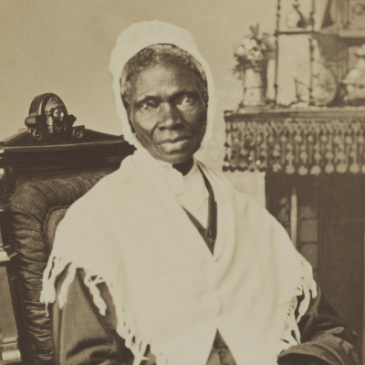
Harriet Beecher Stowe