Alicia Garza

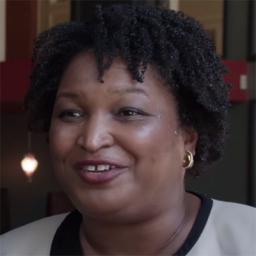
Alicia Garza is a lifelong activist, community organizer, and co-founder of the Black Lives Matter movement. Her work in racial and social justice extends beyond BLM through initiatives like the Black Futures Lab, where she focuses on empowering Black communities politically, ensuring their voices are heard in policymaking, and advocating for structural changes that address systemic inequality.
Garza has worked extensively in grassroots organizing, including with the National Domestic Workers Alliance, to uplift the labor rights of women of color and has continuously pushed for intersectional feminism that addresses economic justice, political representation, and leadership opportunities for Black women.
“If we perpetuate the same dynamics that we aim to disrupt in our movements for change, we are not interrupting power and we are not creating change—we are merely rebranding the same set of practices and the same dysfunctions.”
Alicia Garza in The Purpose of Power: How We Come Together When We Fall Apart
Early Life
Born on January 4, 1981, in Oakland, California, Alicia Garza grew up in a mixed‑race, mixed‑religion household (Black Women’s Religious Activism). From a young age, she was aware of racial disparities. She recalled being one of the only Black people in her community and witnessing how police frequently stopped her mother because neighbors assumed they didn’t belong (Think). These early experiences shaped Garza’s lifelong dedication to advocacy for minoritized communities.
At just 12 years old, she took her first stand for justice, campaigning for comprehensive sex education and access to birth control in her school district (Black Women’s Religious Activism). Garza credited her mother for instilling in her a passion for activism (Influence Watch). This early advocacy set the stage for her future in social justice movements.
Garza attended the University of California, San Diego (UCSD), where she studied anthropology and sociology. While at UCSD, she actively organized around racial and gender justice. In 2002, she led the first Women of Color Conference, creating a space for marginalized voices in academia (Black Women’s Religious Activism). After graduating, she returned to the Bay Area and worked with grassroots organizations to fight for economic and social justice.
From Spark to Flame: Founding Black Lives Matter
The tragic and unjust murder of Trayvon Martin in 2012 in Sanford, Florida, and the subsequent acquittal of his murderer in 2013 deeply impacted Ayo Tometi, Alicia Garza, and Patrisse Cullors. Together, they co‑founded the Black Lives Matter (BLM) movement to confront systemic violence and discrimination against Black Americans, particularly by law enforcement. Garza penned a heartfelt Facebook post titled “A Love Letter to Black People,” expressing her anguish and reaffirming the value of Black lives. Her friend and fellow activist, Cullors, shared the post with the hashtag #BlackLivesMatter, which quickly gained traction on social media (The Guardian).
Listen to the Podcast with NBC.
In 2014, the murder of Mike Brown by a Ferguson police officer sparked national outrage and activism. Over Labor Day weekend, Darnell Moore and Cullors organized the Black Life Matters Ride, bringing over 600 people to St. Louis in solidarity. Organizers committed to supporting the Ferguson community and expanding advocacy efforts nationwide, recognizing that Ferguson reflected a broader pattern of injustice.
Inspired by Ferguson’s activism, organizers from eighteen cities established Black Lives Matter chapters, broadening the movement’s reach. In response to this growing demand for action, the Black Lives Matter Global Network formed, creating a decentralized structure to empower Black leaders and communities to challenge state‑sanctioned violence. The movement’s global recognition stemmed from the dedication of those who first mobilized in St. Louis and Ferguson, who continued to fight for justice and Black liberation (Black Lives Matter).
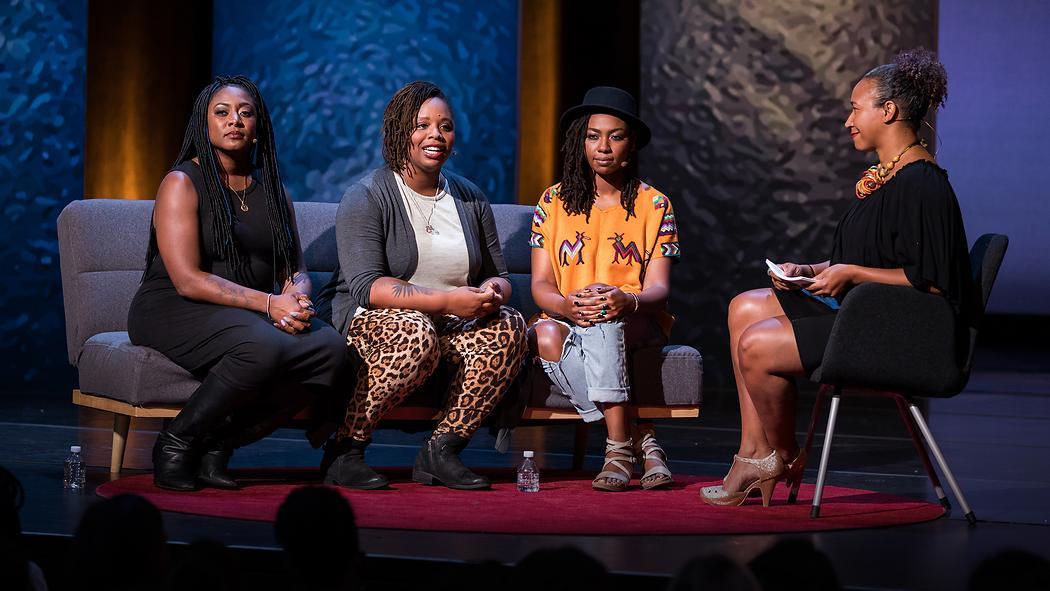
Figure 1. Garza, Cullors, and Tometi are interviewed about BLM by TED.
As the movement grew, so did Garza’s role as a leader in broader racial and economic justice efforts. She worked with the National Domestic Workers Alliance, advocating for better wages and protections for domestic workers, many of whom were women of color (Yale Law School). In 2018, she founded the Black Futures Lab, an organization that built Black political power by conducting research, shaping policies, and mobilizing voters. Recognizing the need for intersectional activism, she co‑founded Supermajority in 2019, a national initiative that empowered women to take political action (Supermajority).
Ongoing Legacy
In 2020, Garza published The Purpose of Power: How We Come Together When We Fall Apart. In the book, she reflected on her experiences in activism, the founding of BLM, and the strategies needed to create lasting change. Her work, including opinion pieces in The New York Times, The Washington Post, The Guardian, Essence, and TIME, provided guidance for activists working toward justice (Supermajority).
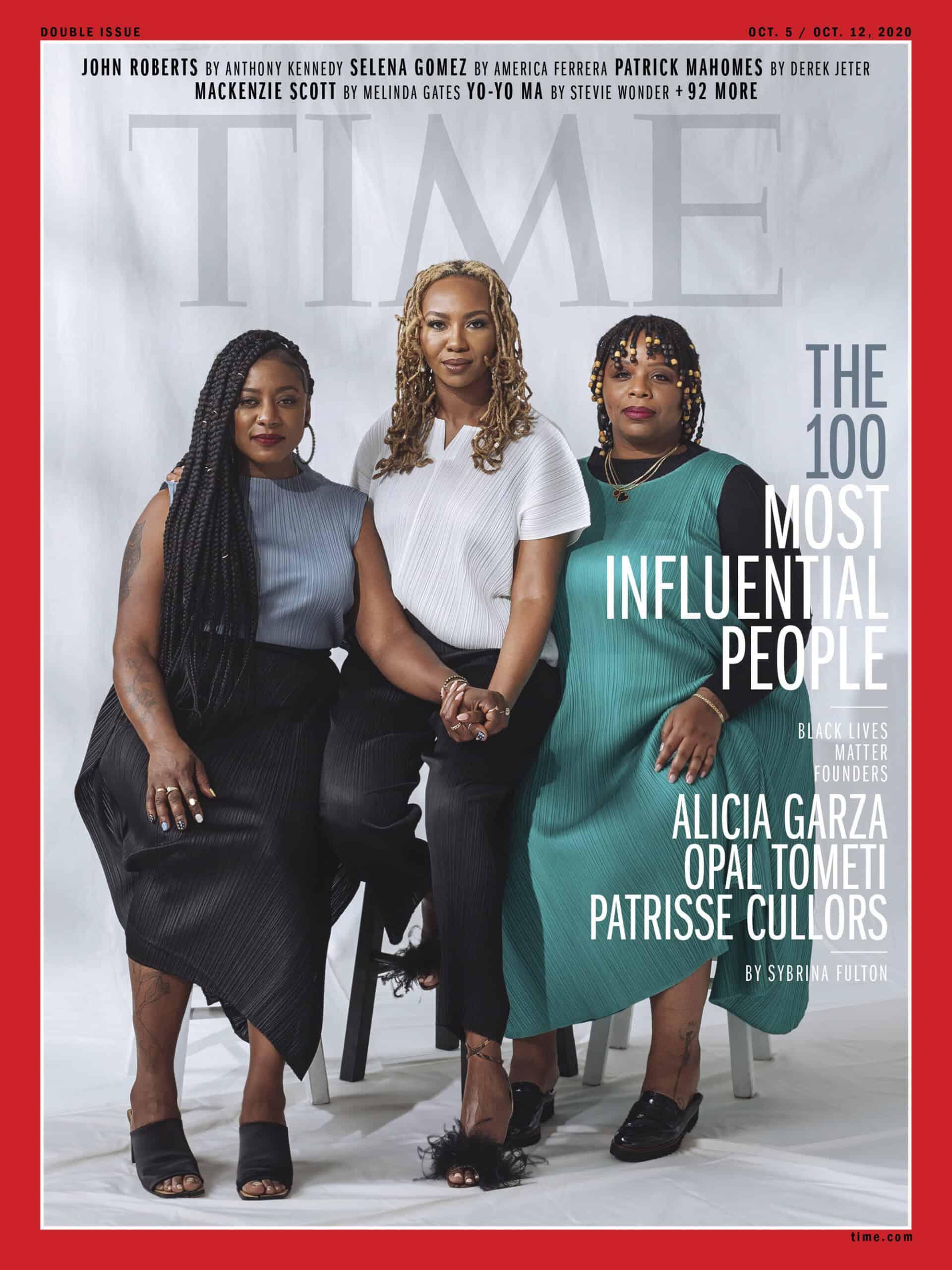
Figure 2. The BLM co-founders on the Time’s Cover for the 100 Most Influential People. Photograph by Kayla Feefer for TIME.
Alongside her Black Lives Matter co‑founders, Garza received the Sydney Peace Prize. She also appeared on the covers of major magazines and earned recognition from Forbes, Marie Claire, and Cosmopolitan’s “Most Influential People” lists and TIME’s 100’s Most Influential Women of the Century and TIME’s 100 Most Influential People of 2020. In an interview with Elle Magazine, Garza stated, “My work is to transform grief and despair and rage into the love that we need to push us forward. I am not, and we are not, defined by what we lack—we are defined by how we come together when we fall apart” (ELLE).
 Carry the Torch

Alicia Garza. Archives of Women’s Political Communication. Iowa State University, Carrie Chapman Catt Center for Women and Politics. Accessed March 15, 2025. https://awpc.cattcenter.iastate.edu/directory/alicia-garza/.
“Alicia Garza.” Black Women’s Religious Activism. Accessed March 15, 2025. https://blackwomensreligiousactivism.org/activists/alicia-garza/.
“Alicia Garza.” Influence Watch. Accessed March 15, 2025. https://www.influencewatch.org/person/alicia-garza/.
“The Black Lives Matter Co-Founder Alicia Garza on Leadership Today: ‘It Doesn't Look Like Martin Luther King’.” The Guardian, October 17, 2020. https://www.theguardian.com/world/2020/oct/17/black-lives-matter-alicia-garza-leadership-today-doesnt-look-like-martin-luther-king.
“Domestic Workers.” National Domestic Workers Alliance. Accessed March 15, 2025. https://www.domesticworkers.org/about-ndwa/.
Garza, Alicia. The Purpose of Power: How We Come Together When We Fall Apart. Excerpt in Elle, November 3, 2020. https://www.elle.com/culture/a34507841/alicia-garza-the-purpose-of-power-excerpt/.
iHeartRadio. “Lady Don’t Take No with Alicia Garza.” iHeartRadio Podcasts. Accessed March 15, 2025. https://www.iheart.com/podcast/269-lady-dont-take-no-62266249/.
NBC News. “Remembering Why Black Lives Matter: Alicia Garza Podcast Transcript.” NBC News Think. Accessed March 15, 2025. https://www.nbcnews.com/think/opinion/remembering-why-black-lives-matter-alicia-garza-podcast-transcript-ncna1013901.
Schnall, Marianne. “Interview with #BlackLivesMatter Co-Founder Alicia Garza: Fight Against Despair and Keep Doing the Work Needed to Change the World.” Forbes, January 15, 2021. https://www.forbes.com/sites/marianneschnall/2021/01/15/interview-with-blacklivesmatter-cofounder-alicia-garza-fight-against-despair-and-keep-doing-the-work-needed-to-change-the-world/.
Yale Law School. “Alicia Garza.” Gruber Program for Global Justice and Women’s Rights. Accessed March 15, 2025. https://law.yale.edu/centers-workshops/gruber-program-global-justice-and-womens-rights/gruber-lectures/alicia-garza.
Images:
Schnall, Marianne. “Interview with #BlackLivesMatter Co-Founder Alicia Garza: Fight Against Despair and Keep Doing the Work Needed to Change the World.” Forbes, January 15, 2021. https://www.forbes.com/sites/marianneschnall/2021/01/15/interview-with-blacklivesmatter-cofounder-alicia-garza-fight-against-despair-and-keep-doing-the-work-needed-to-change-the-world/.
TED. “An Interview with the Founders of Black Lives Matter.” Accessed March 12, 2025. https://www.ted.com/talks/alicia_garza_patrisse_cullors_and_opal_tometi_an_int.
TIME. “100 Most Influential People 2020: Black Lives Matter Founders.” Photograph by Kayla Feefer. Accessed March 12, 2025. https://time.com/collection/100-most-influential-people-2020/5888228/black-lives-matter-founders/.
MLA — “Alicia Garza.” National Women’s History Museum, 2026. Date accessed.
Chicago — “Alicia Garza.” National Women’s History Museum. 2026. www.womenshistory.org/education-resources/biographies/alicia-garza
The Purpose of Power: How We Come Together When We Fall Apart
Classroom Resources
Elementary school bell ringer: Word association
-
Prompt: Write down three words that come to mind when you hear the phrase “Black Lives Matter.” Then, write one sentence explaining why you chose each word.
-
Follow-up Discussion: What do your words tell us about the importance of the movement?
Middle school bell ringer: Reflection
-
Prompt: Alicia Garza helped start the Black Lives Matter movement to make the world a better place. What is one issue you care about, and what is one way you could take action to help? Write 2-3 sentences about how you can make a difference.
-
Follow-up Discussion: Why is it important to stand up for what you believe in?